3NJY image
Deposition Date 2010-06-18
Release Date 2010-12-08
Last Version Date 2023-11-01
Entry Detail
PDB ID:
3NJY
Title:
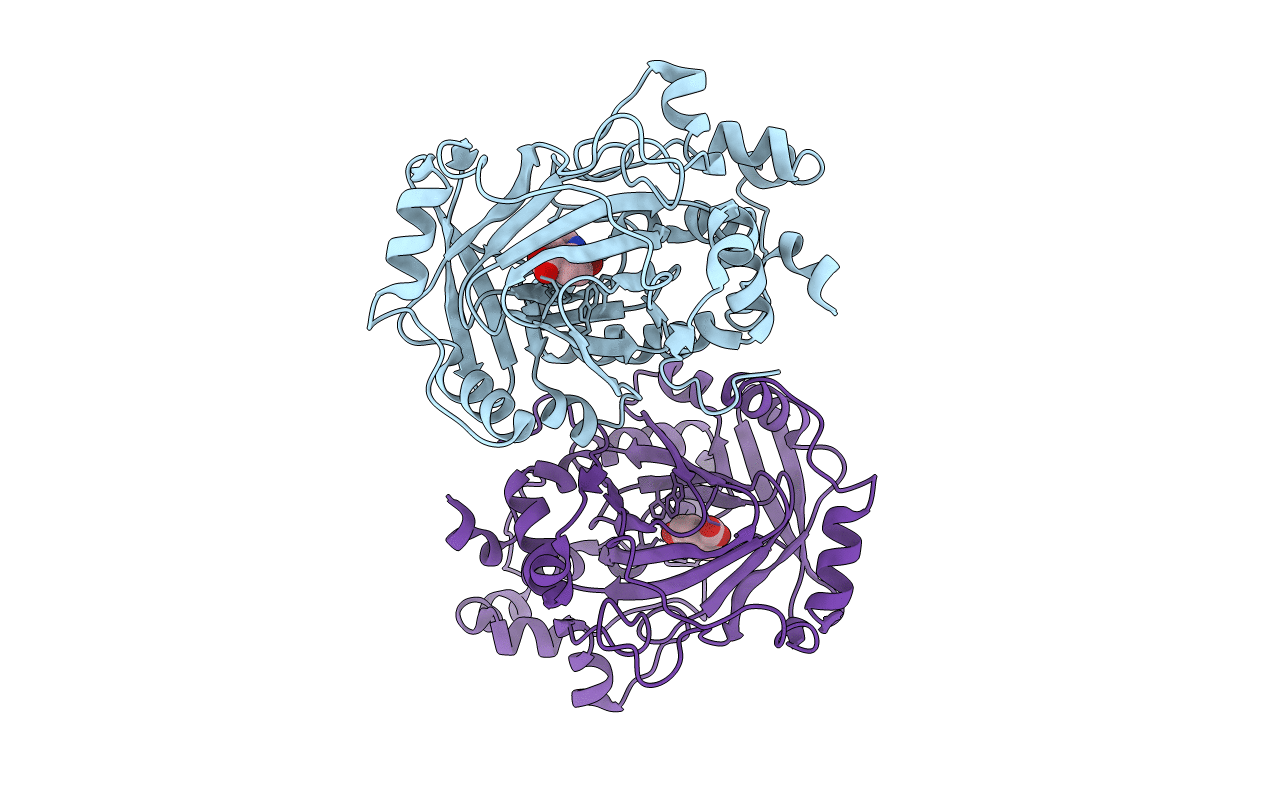
Crystal structure of JMJD2A complexed with 5-carboxy-8-hydroxyquinoline
Biological Source:
Source Organism:
Homo sapiens (Taxon ID: 9606)
Host Organism:
Method Details:
Experimental Method:
Resolution:
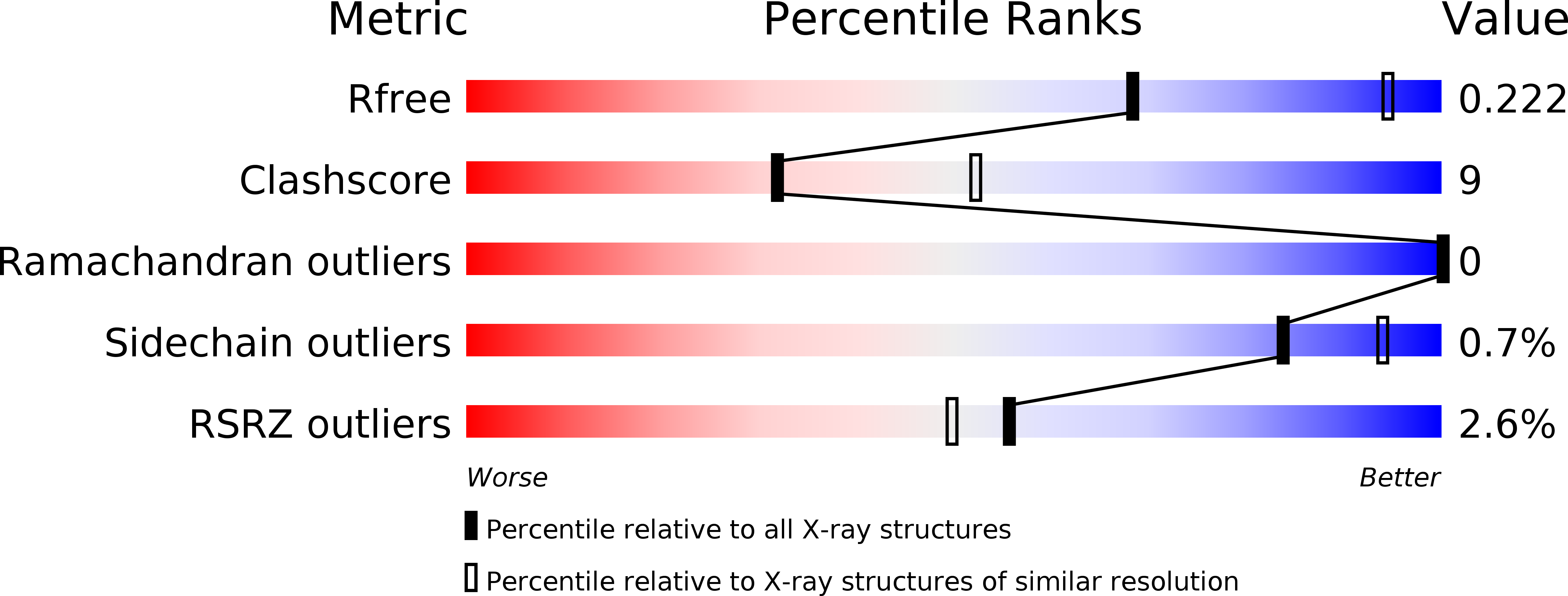
2.60 Å
R-Value Free:
0.22
R-Value Work:
0.18
R-Value Observed:
0.18
Space Group:
P 21 21 2
Macromolecular Entities
Structures with similar UniProt ID
Protein Blast
Polymer Type:polypeptide(L)
Molecule:Lysine-specific demethylase 4A
Gene (Uniprot):KDM4A
Chain IDs:A, B
Chain Length:381
Number of Molecules:2
Biological Source:Homo sapiens
Primary Citation
Quantitative high-throughput screening identifies 8-hydroxyquinolines as cell-active histone demethylase inhibitors
Plos One 5 e15535 e15535 (2010)
PMID: 21124847 DOI: 10.1371/journal.pone.0015535

Abstact

BACKGROUND Small molecule modulators of epigenetic processes are currently sought as basic probes for biochemical mechanisms, and as starting points for development of therapeutic agents. N(ε)-Methylation of lysine residues on histone tails is one of a number of post-translational modifications that together enable transcriptional regulation. Histone lysine demethylases antagonize the action of histone methyltransferases in a site- and methylation state-specific manner. N(ε)-Methyllysine demethylases that use 2-oxoglutarate as co-factor are associated with diverse human diseases, including cancer, inflammation and X-linked mental retardation; they are proposed as targets for the therapeutic modulation of transcription. There are few reports on the identification of templates that are amenable to development as potent inhibitors in vivo and large diverse collections have yet to be exploited for the discovery of demethylase inhibitors. PRINCIPAL FINDINGS High-throughput screening of a ∼236,000-member collection of diverse molecules arrayed as dilution series was used to identify inhibitors of the JMJD2 (KDM4) family of 2-oxoglutarate-dependent histone demethylases. Initial screening hits were prioritized by a combination of cheminformatics, counterscreening using a coupled assay enzyme, and orthogonal confirmatory detection of inhibition by mass spectrometric assays. Follow-up studies were carried out on one of the series identified, 8-hydroxyquinolines, which were shown by crystallographic analyses to inhibit by binding to the active site Fe(II) and to modulate demethylation at the H3K9 locus in a cell-based assay. CONCLUSIONS These studies demonstrate that diverse compound screening can yield novel inhibitors of 2OG dependent histone demethylases and provide starting points for the development of potent and selective agents to interrogate epigenetic regulation.

Legend

Protein

Chemical

Disease

Primary Citation of related structures
Feedback Form
Name
Email
Institute
Feedback