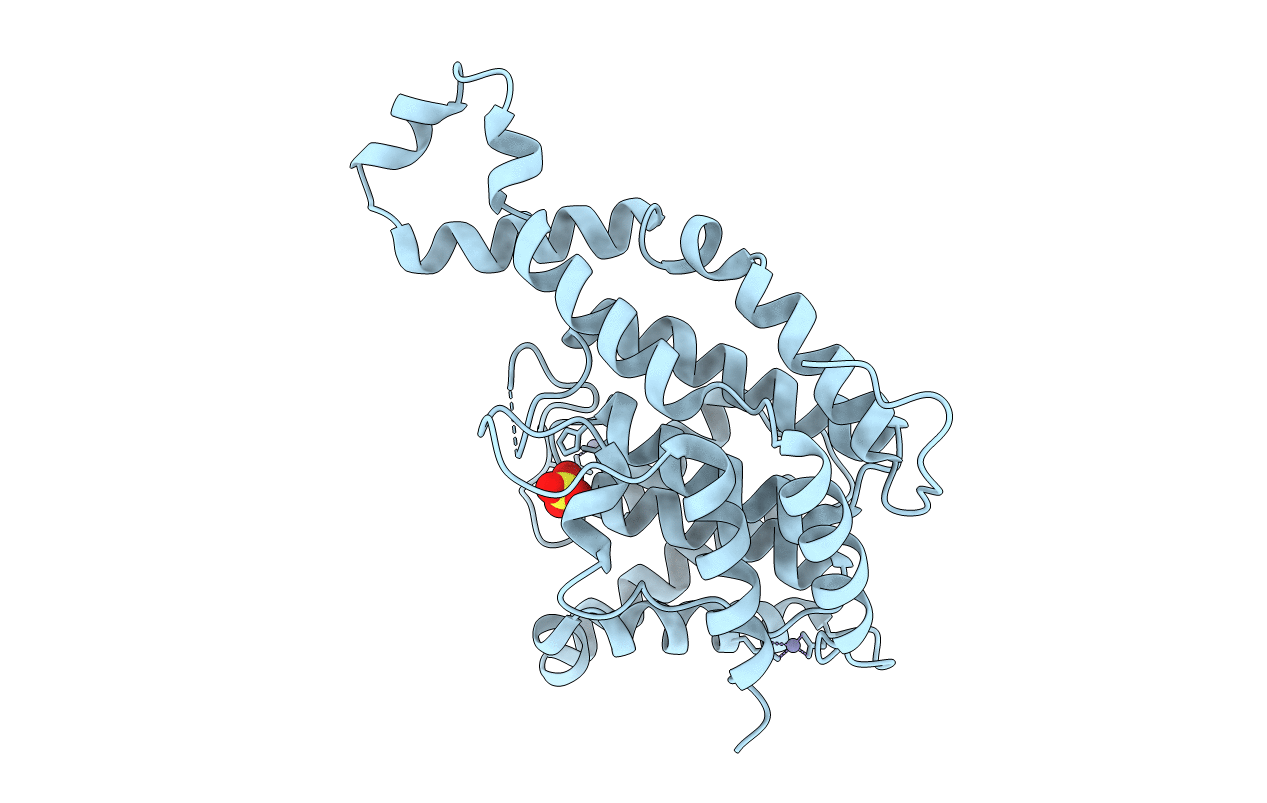
3N3U image
Deposition Date 2010-05-20
Release Date 2010-07-14
Last Version Date 2024-02-21
Entry Detail
PDB ID:
3N3U
Keywords:
Title:
Crystal Structure of IbpAFic2
Biological Source:
Source Organism(s):
Expression System(s):
Method Details:
Experimental Method:
Resolution:
1.85 Å
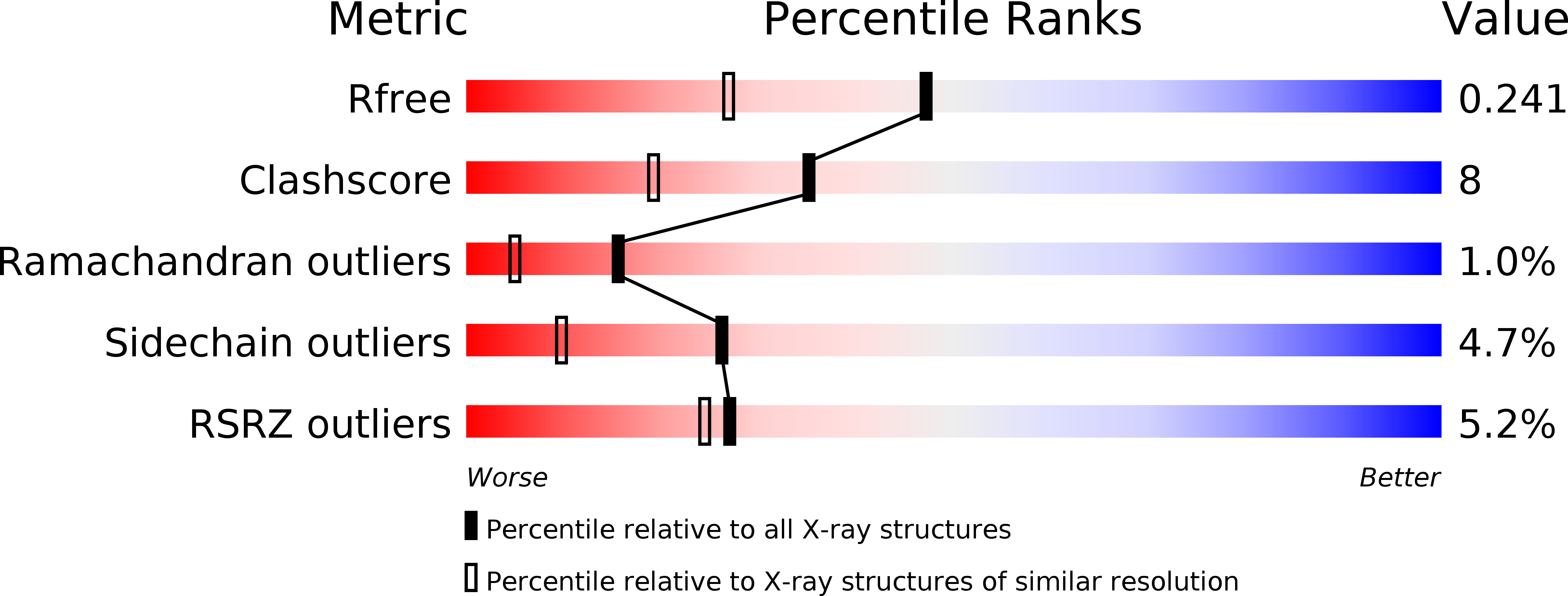
R-Value Free:
0.24
R-Value Work:
0.21
R-Value Observed:
0.21
Space Group:
P 31 2 1
Macromolecular Entities
Structures with similar UniProt ID
Protein Blast
Polymer Type:polypeptide(L)
Molecule:Adenosine monophosphate-protein transferase ibpA
Gene (Uniprot):ibpA
Chain IDs:A
Chain Length:299
Number of Molecules:1
Biological Source:Histophilus somni
Primary Citation
Structural basis of Fic-mediated adenylylation.
Nat.Struct.Mol.Biol. 17 1004 1010 (2010)
PMID: 20622875 DOI: 10.1038/nsmb.1867

Abstact

The Fic family of adenylyltransferases, defined by a core HPFx(D/E)GN(G/K)R motif, consists of over 2,700 proteins found in organisms from bacteria to humans. The immunoglobulin-binding protein A (IbpA) from the bacterial pathogen Histophilus somni contains two Fic domains that adenylylate the switch1 tyrosine residue of Rho-family GTPases, allowing the bacteria to subvert host defenses. Here we present the structure of the second Fic domain of IbpA (IbpAFic2) in complex with its substrate, Cdc42. IbpAFic2-bound Cdc42 mimics the GDI-bound state of Rho GTPases, with both its switch1 and switch2 regions gripped by IbpAFic2. Mutations disrupting the IbpAFic2-Cdc42 interface impair adenylylation and cytotoxicity. Notably, the switch1 tyrosine of Cdc42 is adenylylated in the structure, providing the first structural view for this post-translational modification. We also show that the nucleotide-binding mechanism is conserved among Fic proteins and propose a catalytic mechanism for this recently discovered family of enzymes.

Legend

Protein

Chemical

Disease

Primary Citation of related structures
Feedback Form
Name
Email
Institute
Feedback