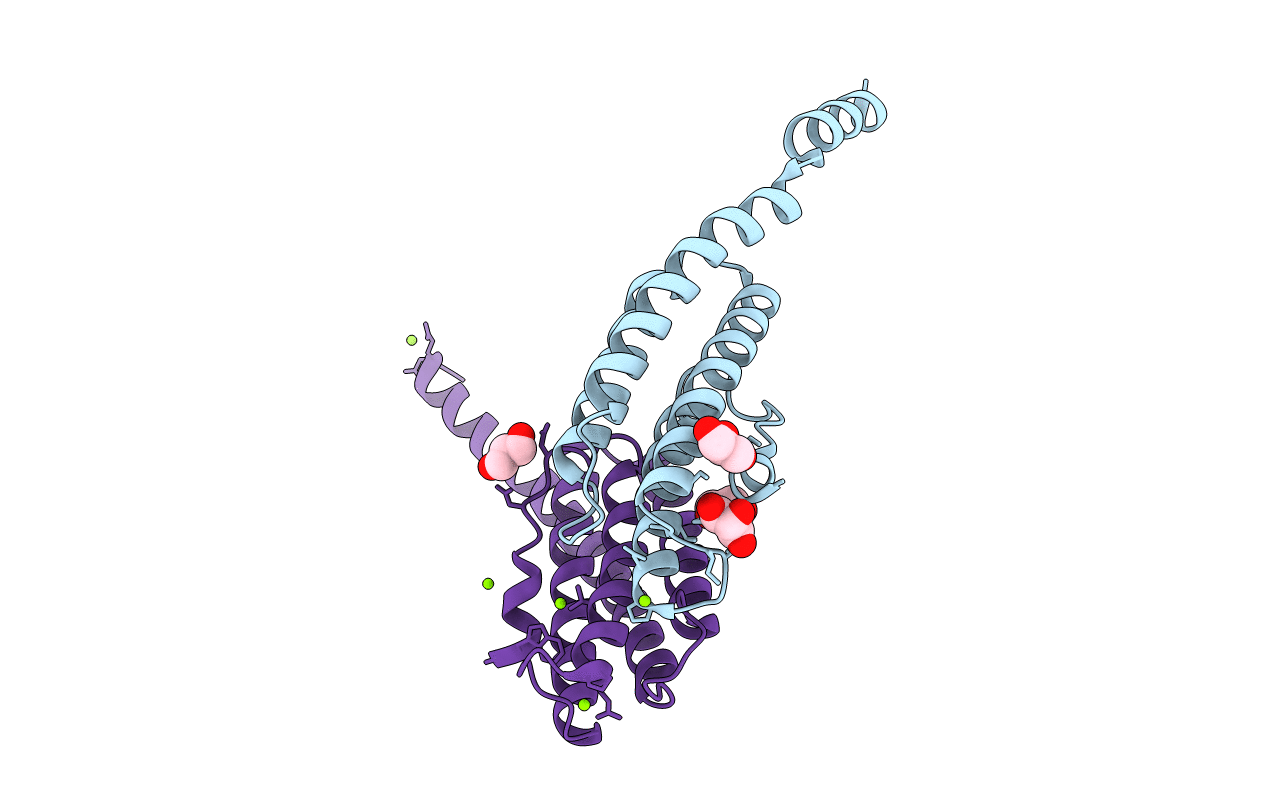
3N1E image
Deposition Date 2010-05-15
Release Date 2010-07-14
Last Version Date 2024-02-21
Entry Detail
PDB ID:
3N1E
Title:
Vps54 C-terminal domain
Biological Source:
Source Organism:
Mus musculus (Taxon ID: 10090)
Host Organism:
Method Details:
Experimental Method:
Resolution:
1.70 Å
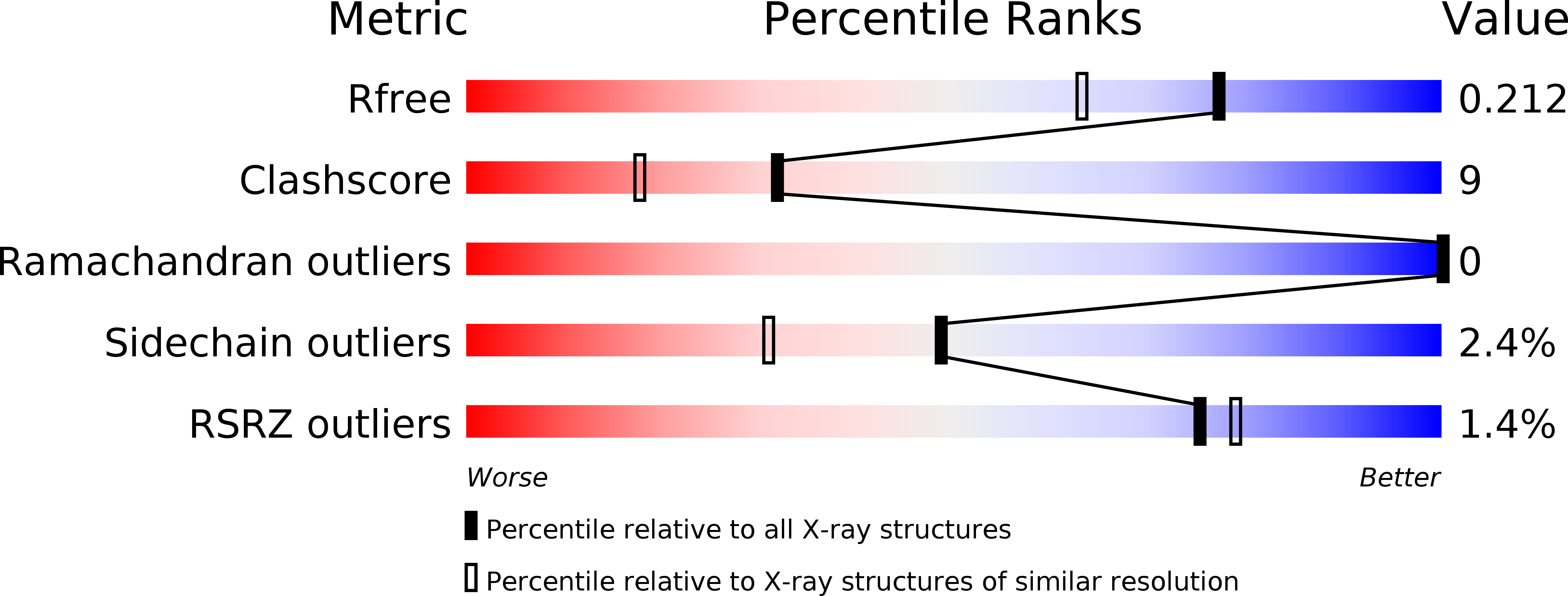
R-Value Free:
0.21
R-Value Work:
0.17
R-Value Observed:
0.17
Space Group:
P 21 21 21
Macromolecular Entities
Structures with similar UniProt ID
Protein Blast
Polymer Type:polypeptide(L)
Molecule:Vacuolar protein sorting-associated protein 54
Gene (Uniprot):Vps54
Chain IDs:A, B
Chain Length:141
Number of Molecules:2
Biological Source:Mus musculus
Primary Citation
Structural basis for the wobbler mouse neurodegenerative disorder caused by mutation in the Vps54 subunit of the GARP complex.
Proc.Natl.Acad.Sci.USA 107 12860 12865 (2010)
PMID: 20615984 DOI: 10.1073/pnas.1004756107

Abstact

The multisubunit Golgi-associated retrograde protein (GARP) complex is required for tethering and fusion of endosome-derived transport vesicles to the trans-Golgi network. Mutation of leucine-967 to glutamine in the Vps54 subunit of GARP is responsible for spinal muscular atrophy in the wobbler mouse, an animal model of amyotrophic lateral sclerosis. The crystal structure at 1.7 A resolution of the mouse Vps54 C-terminal fragment harboring leucine-967, in conjunction with comparative sequence analysis, reveals that Vps54 has a continuous alpha-helical bundle organization similar to that of other multisubunit tethering complexes. The structure shows that leucine-967 is buried within the alpha-helical bundle through predominantly hydrophobic interactions that are critical for domain stability and folding in vitro. Mutation of this residue to glutamine does not prevent integration of Vps54 into the GARP complex but greatly reduces the half-life and levels of the protein in vivo. Severely reduced levels of mutant Vps54 and, consequently, of the whole GARP complex underlie the phenotype of the wobbler mouse.

Legend

Protein

Chemical

Disease

Primary Citation of related structures
Feedback Form
Name
Email
Institute
Feedback