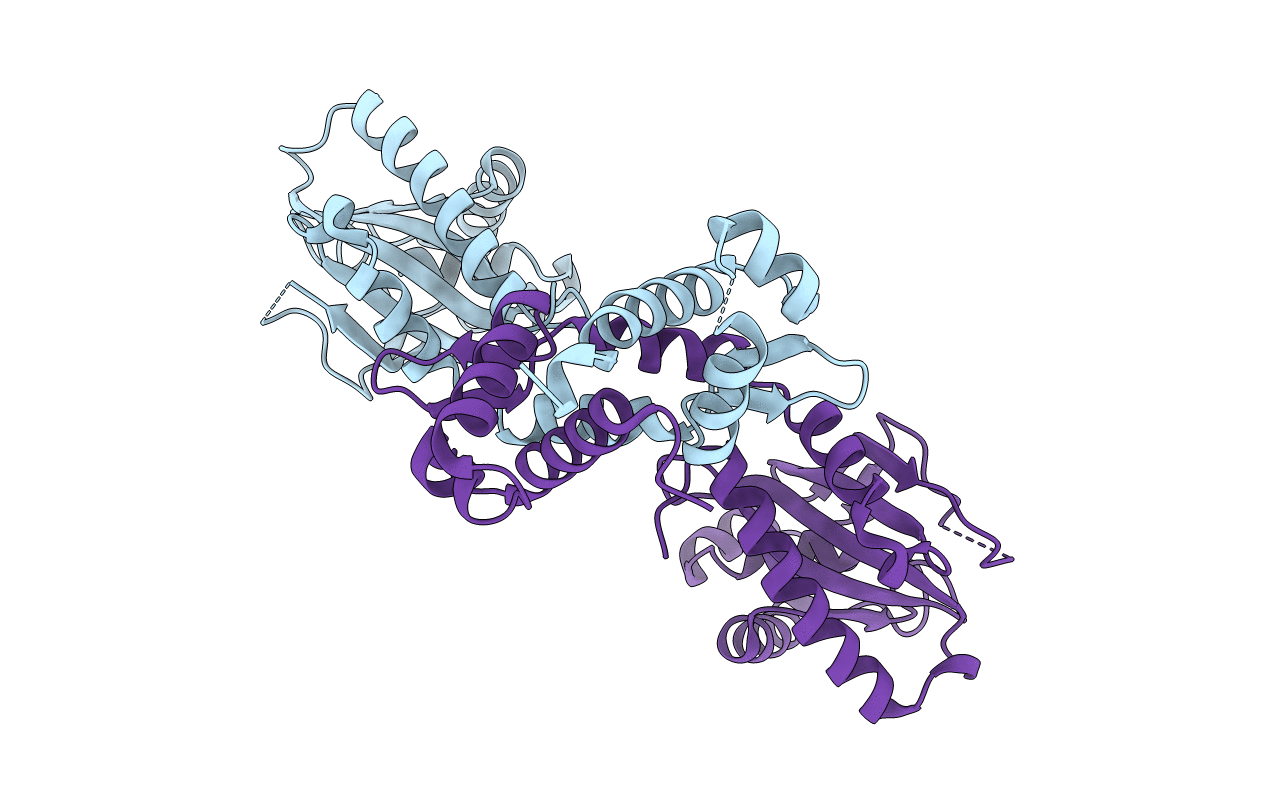
3MQ0 image
Deposition Date 2010-04-27
Release Date 2011-03-30
Last Version Date 2024-02-21
Entry Detail
PDB ID:
3MQ0
Title:
Crystal Structure of Agobacterium tumefaciens repressor BlcR
Biological Source:
Source Organism:
Host Organism:
Method Details:
Experimental Method:
Resolution:
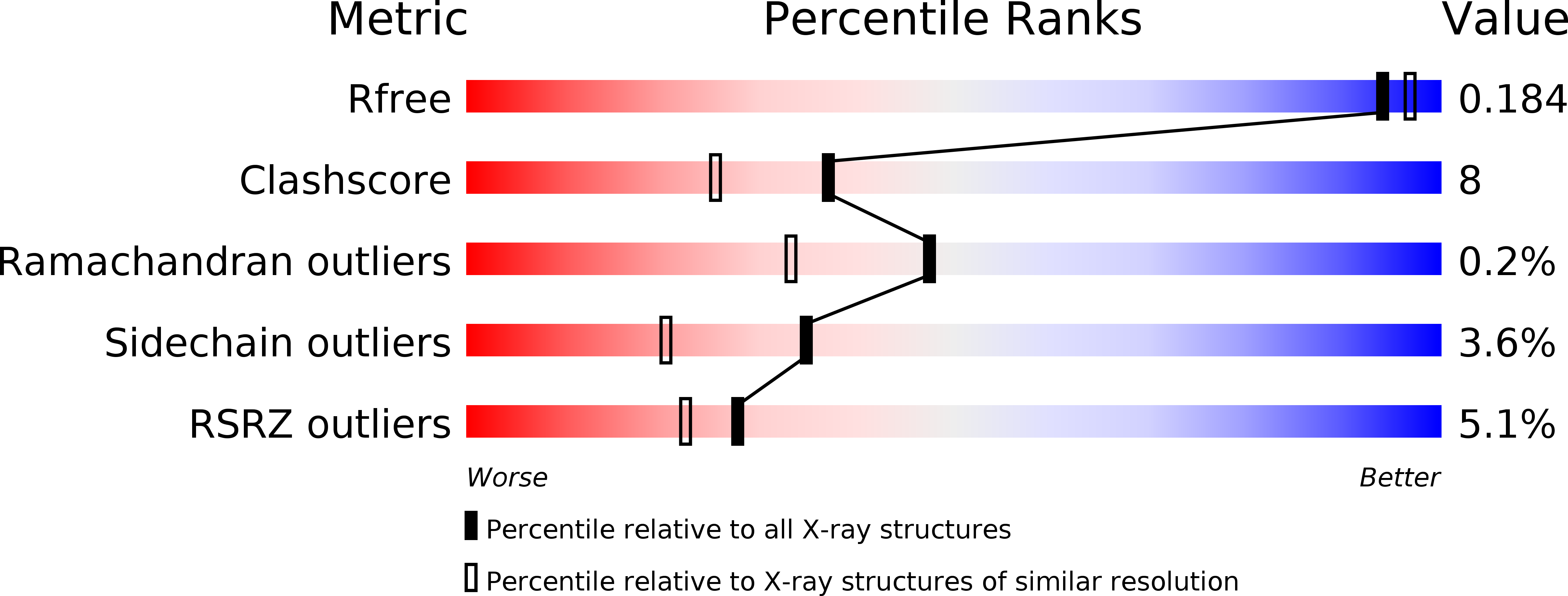
1.79 Å
R-Value Free:
0.21
R-Value Work:
0.18
R-Value Observed:
0.18
Space Group:
P 21 21 21
Macromolecular Entities
Structures with similar UniProt ID
Protein Blast
Polymer Type:polypeptide(L)
Molecule:Transcriptional repressor of the blcABC operon
Gene (Uniprot):attJ
Chain IDs:A, B
Chain Length:275
Number of Molecules:2
Biological Source:Agrobacterium tumefaciens
Primary Citation
The Agrobacterium tumefaciens Transcription Factor BlcR Is Regulated via Oligomerization.
J.Biol.Chem. 286 20431 20440 (2011)
PMID: 21467043 DOI: 10.1074/jbc.M110.196154

Abstact

The Agrobacterium tumefaciens BlcR is a member of the emerging isocitrate lyase transcription regulators that negatively regulates metabolism of γ-butyrolactone, and its repressing function is relieved by succinate semialdehyde (SSA). Our crystal structure showed that BlcR folded into the DNA- and SSA-binding domains and dimerized via the DNA-binding domains. Mutational analysis identified residues, including Phe(147), that are important for SSA association; BlcR(F147A) existed as tetramer. Two BlcR dimers bound to target DNA and in a cooperative manner, and the distance between the two BlcR-binding sequences in DNA was critical for BlcR-DNA association. Tetrameric BlcR(F147A) retained DNA binding activity, and importantly, this activity was not affected by the distance separating the BlcR-binding sequences in DNA. SSA did not dissociate tetrameric BlcR(F147A) or BlcR(F147A)-DNA. As well as in the SSA-binding site, Phe(147) is located in a structurally flexible loop that may be involved in BlcR oligomerization. We propose that SSA regulates BlcR DNA-binding function via oligomerization.

Legend

Protein

Chemical

Disease

Primary Citation of related structures
Feedback Form
Name
Email
Institute
Feedback