3MMT image
Deposition Date 2010-04-20
Release Date 2010-05-19
Last Version Date 2024-11-20
Entry Detail
PDB ID:
3MMT
Keywords:
Title:
Crystal structure of fructose bisphosphate aldolase from Bartonella henselae, bound to fructose bisphosphate
Biological Source:
Source Organism:
Host Organism:
Method Details:
Experimental Method:
Resolution:
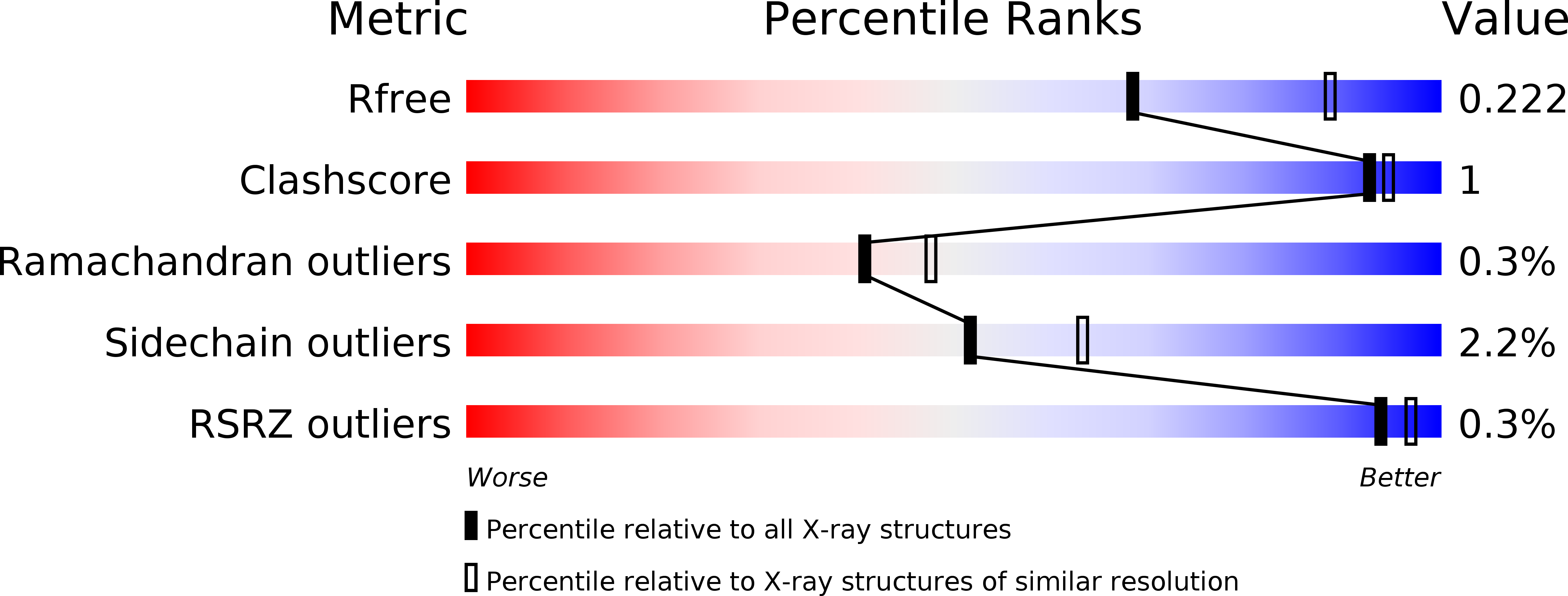
2.35 Å
R-Value Free:
0.22
R-Value Work:
0.17
R-Value Observed:
0.17
Space Group:
P 21 21 21
Macromolecular Entities
Structures with similar UniProt ID
Protein Blast
Polymer Type:polypeptide(L)
Molecule:Fructose-bisphosphate aldolase
Gene (Uniprot):fbab
Chain IDs:A, B, C, D
Chain Length:347
Number of Molecules:4
Biological Source:Bartonella henselae
Ligand Molecules
Primary Citation
Structure of fructose bisphosphate aldolase from Bartonella henselae bound to fructose 1,6-bisphosphate.
Acta Crystallogr.,Sect.F 67 1051 1054 (2011)
PMID: 21904049 DOI: 10.1107/S174430911101894X

Abstact

Fructose bisphosphate aldolase (FBPA) enzymes have been found in a broad range of eukaryotic and prokaryotic organisms. FBPA catalyses the cleavage of fructose 1,6-bisphosphate into glyceraldehyde 3-phosphate and dihydroxyacetone phosphate. The SSGCID has reported several FBPA structures from pathogenic sources, including the bacterium Brucella melitensis and the protozoan Babesia bovis. Bioinformatic analysis of the Bartonella henselae genome revealed an FBPA homolog. The B. henselae FBPA enzyme was recombinantly expressed and purified for X-ray crystallographic studies. The purified enzyme crystallized in the apo form but failed to diffract; however, well diffracting crystals could be obtained by cocrystallization in the presence of the native substrate fructose 1,6-bisphosphate. A data set to 2.35 Å resolution was collected from a single crystal at 100 K. The crystal belonged to the orthorhombic space group P2(1)2(1)2(1), with unit-cell parameters a=72.39, b=127.71, c=157.63 Å. The structure was refined to a final free R factor of 22.2%. The structure shares the typical barrel tertiary structure and tetrameric quaternary structure reported for previous FBPA structures and exhibits the same Schiff base in the active site.

Legend

Protein

Chemical

Disease

Primary Citation of related structures
Feedback Form
Name
Email
Institute
Feedback