3MDJ image
Deposition Date 2010-03-30
Release Date 2011-03-30
Last Version Date 2024-11-27
Entry Detail
PDB ID:
3MDJ
Title:
ER Aminopeptidase, ERAP1, Bound to the Zinc Aminopeptidase Inhibitor, Bestatin
Biological Source:
Source Organism:
Homo sapiens (Taxon ID: 9606)
Host Organism:
Method Details:
Experimental Method:
Resolution:
2.95 Å
R-Value Free:
0.26
R-Value Work:
0.19
R-Value Observed:
0.20
Space Group:
P 1 21 1
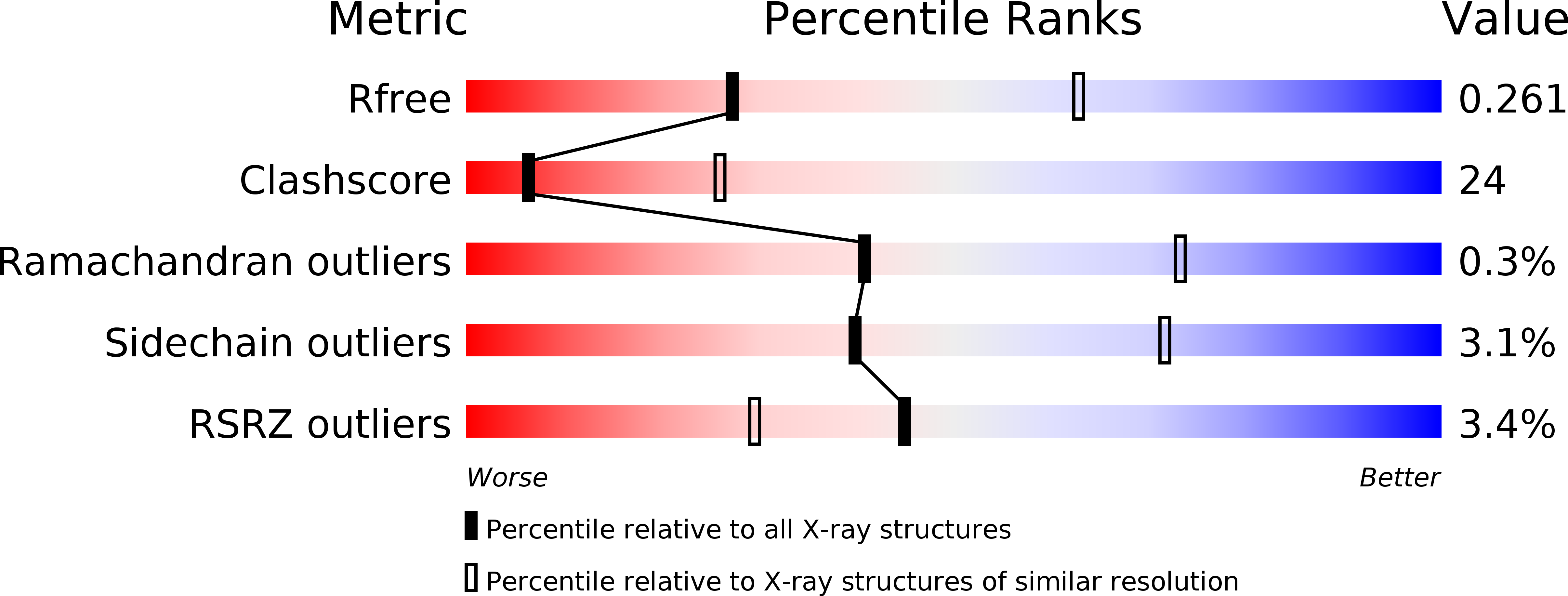
Macromolecular Entities
Structures with similar UniProt ID
Protein Blast
Polymer Type:polypeptide(L)
Molecule:Endoplasmic reticulum aminopeptidase 1
Gene (Uniprot):ERAP1
Chain IDs:A, B, C
Chain Length:921
Number of Molecules:3
Biological Source:Homo sapiens
Modified Residue
Compound ID Chain ID Parent Comp ID Details 2D Image
ASN A ASN GLYCOSYLATION SITE
Primary Citation
Structural basis for antigenic peptide precursor processing by the endoplasmic reticulum aminopeptidase ERAP1.
Nat.Struct.Mol.Biol. 18 604 613 (2011)
PMID: 21478864 DOI: 10.1038/nsmb.2021

Abstact

ERAP1 trims antigen precursors to fit into MHC class I proteins. To fulfill this function, ERAP1 has unique substrate preferences, trimming long peptides but sparing shorter ones. To identify the structural basis for ERAP1's unusual properties, we determined the X-ray crystal structure of human ERAP1 bound to bestatin. The structure reveals an open conformation with a large interior compartment. An extended groove originating from the enzyme's catalytic center can accommodate long peptides and has features that explain ERAP1's broad specificity for antigenic peptide precursors. Structural and biochemical analyses suggest a mechanism for ERAP1's length-dependent trimming activity, whereby binding of long rather than short substrates induces a conformational change with reorientation of a key catalytic residue toward the active site. ERAP1's unique structural elements suggest how a generic aminopeptidase structure has been adapted for the specialized function of trimming antigenic precursors.

Legend

Protein

Chemical

Disease

Primary Citation of related structures
Feedback Form
Name
Email
Institute
Feedback