3LXA image
Deposition Date 2010-02-25
Release Date 2010-05-05
Last Version Date 2024-10-09
Entry Detail
PDB ID:
3LXA
Keywords:
Title:
Interconversion of Human Lysosomal Enzyme Specificities
Biological Source:
Source Organism:
Homo sapiens (Taxon ID: 9606)
Host Organism:
Method Details:
Experimental Method:
Resolution:
3.04 Å
R-Value Free:
0.24
R-Value Work:
0.21
R-Value Observed:
0.21
Space Group:
P 21 21 21
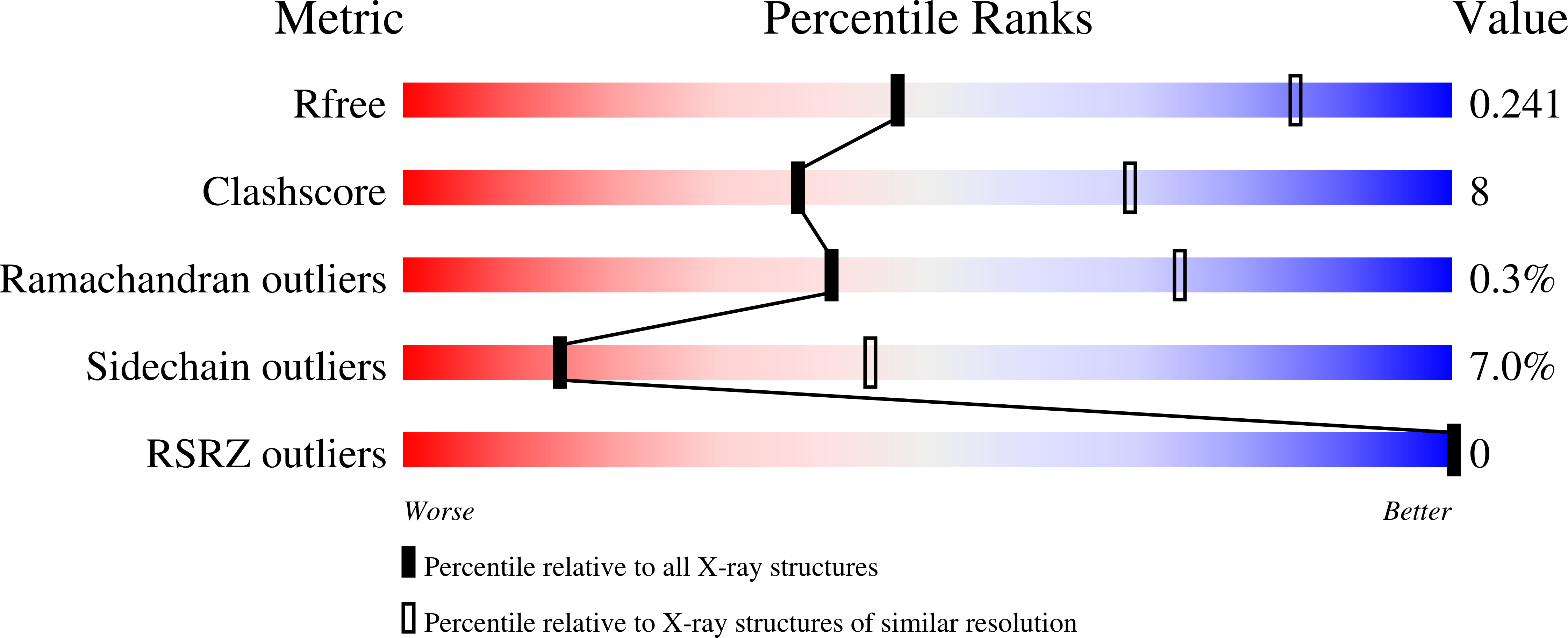
Macromolecular Entities
Structures with similar UniProt ID
Protein Blast
Polymer Type:polypeptide(L)
Molecule:Alpha-galactosidase A
Gene (Uniprot):GLA
Mutagens:E203S L206A
Chain IDs:A, B
Chain Length:404
Number of Molecules:2
Biological Source:Homo sapiens
Modified Residue
Compound ID Chain ID Parent Comp ID Details 2D Image
ASN B ASN GLYCOSYLATION SITE
Primary Citation
Interconversion of the specificities of human lysosomal enzymes associated with Fabry and Schindler diseases.
J.Biol.Chem. 285 21560 21566 (2010)
PMID: 20444686 DOI: 10.1074/jbc.M110.118588

Abstact

The human lysosomal enzymes alpha-galactosidase (alpha-GAL, EC 3.2.1.22) and alpha-N-acetylgalactosaminidase (alpha-NAGAL, EC 3.2.1.49) share 46% amino acid sequence identity and have similar folds. The active sites of the two enzymes share 11 of 13 amino acids, differing only where they interact with the 2-position of the substrates. Using a rational protein engineering approach, we interconverted the enzymatic specificity of alpha- GAL and alpha-NAGAL. The engineered alpha-GAL (which we call alpha-GAL(SA)) retains the antigenicity of alpha-GAL but has acquired the enzymatic specificity of alpha-NAGAL. Conversely, the engineered alpha-NAGAL (which we call alpha-NAGAL(EL)) retains the antigenicity of alpha-NAGAL but has acquired the enzymatic specificity of the alpha-GAL enzyme. Comparison of the crystal structures of the designed enzyme alpha-GAL(SA) to the wild-type enzymes shows that active sites of alpha-GAL(SA) and alpha-NAGAL superimpose well, indicating success of the rational design. The designed enzymes might be useful as non-immunogenic alternatives in enzyme replacement therapy for treatment of lysosomal storage disorders such as Fabry disease.

Legend

Protein

Chemical

Disease

Primary Citation of related structures
Feedback Form
Name
Email
Institute
Feedback