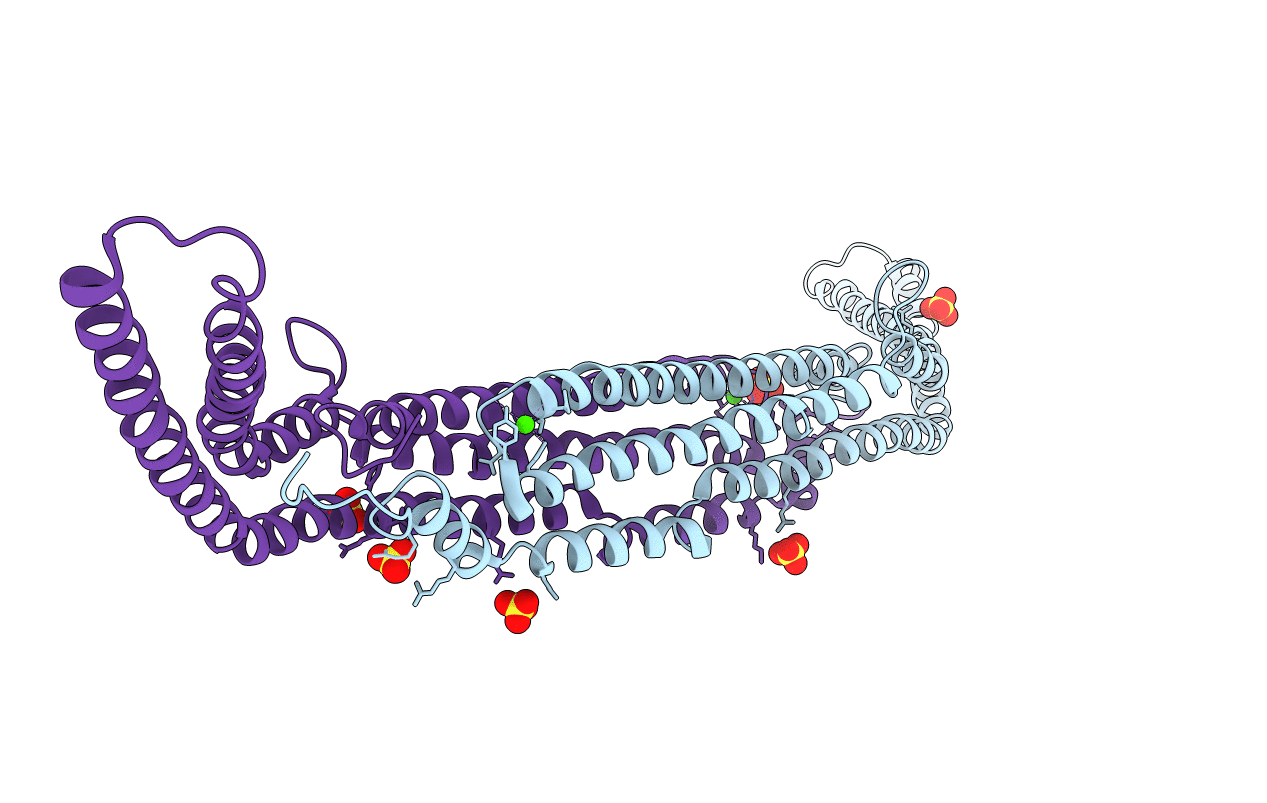
3LLL image
Deposition Date 2010-01-29
Release Date 2010-05-26
Last Version Date 2023-09-06
Entry Detail
PDB ID:
3LLL
Keywords:
Title:
Crystal structure of mouse pacsin2 F-BAR domain
Biological Source:
Source Organism:
Mus musculus (Taxon ID: 10090)
Host Organism:
Method Details:
Experimental Method:
Resolution:
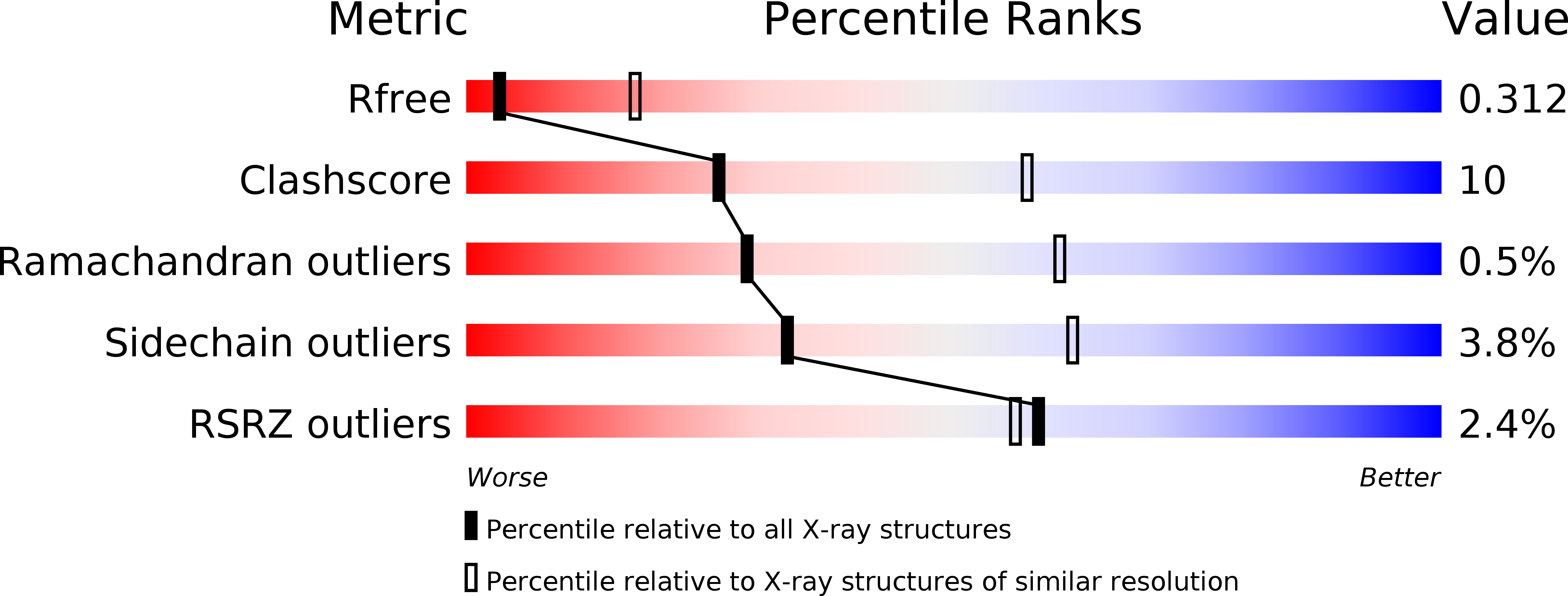
3.30 Å
R-Value Free:
0.29
R-Value Work:
0.25
R-Value Observed:
0.25
Space Group:
P 21 21 21
Macromolecular Entities
Structures with similar UniProt ID
Protein Blast
Polymer Type:polypeptide(L)
Molecule:Protein kinase C and casein kinase substrate in neurons protein 2
Gene (Uniprot):Pacsin2
Chain IDs:A, B
Chain Length:287
Number of Molecules:2
Biological Source:Mus musculus
Primary Citation
A hinge in the distal end of the PACSIN 2 F-BAR domain may contribute to membrane-curvature sensing.
J.Mol.Biol. 400 129 136 (2010)
PMID: 20471395 DOI: 10.1016/j.jmb.2010.05.008

Abstact

The protein kinase C and casein kinase 2 substrates in neurons (PACSINs) represent a subfamily of membrane-binding proteins characterized by an amino-terminal Bin-Amphiphysin-Rvs (F-BAR) domain. PACSINs link membrane trafficking with actin dynamics and regulate the localization of distinct cargo molecules. The F-BAR domain forms a dimer essential for lipid binding. We have obtained crystals of authentic murine PACSIN 2 that contain an ordered F-BAR domain, indicating that additional domains are flexibly connected to F-BAR. The structure shares similarity to other BAR domains and exhibits special features unique to PACSINs. These include the uneven distribution of charged residues on the concave molecular surface and a so-called wedge loop that is driven into the membrane upon binding of PACSIN. The murine PACSIN 2 F-BAR domain requires dimerization for sensing of curved membranes, and the present structure also provides a mechanism for higher-order oligomer formation. Importantly, comparison of murine with human and Drosophila PACSIN 2 F-BAR domains reveals stark differences in the orientation of distal helical segments leading to a wider crescent shape of murine PACSIN 2. We define hinge residues for these movements that may help PACSINs sense and concomitantly reinforce membrane curvature.

Legend

Protein

Chemical

Disease

Primary Citation of related structures
Feedback Form
Name
Email
Institute
Feedback