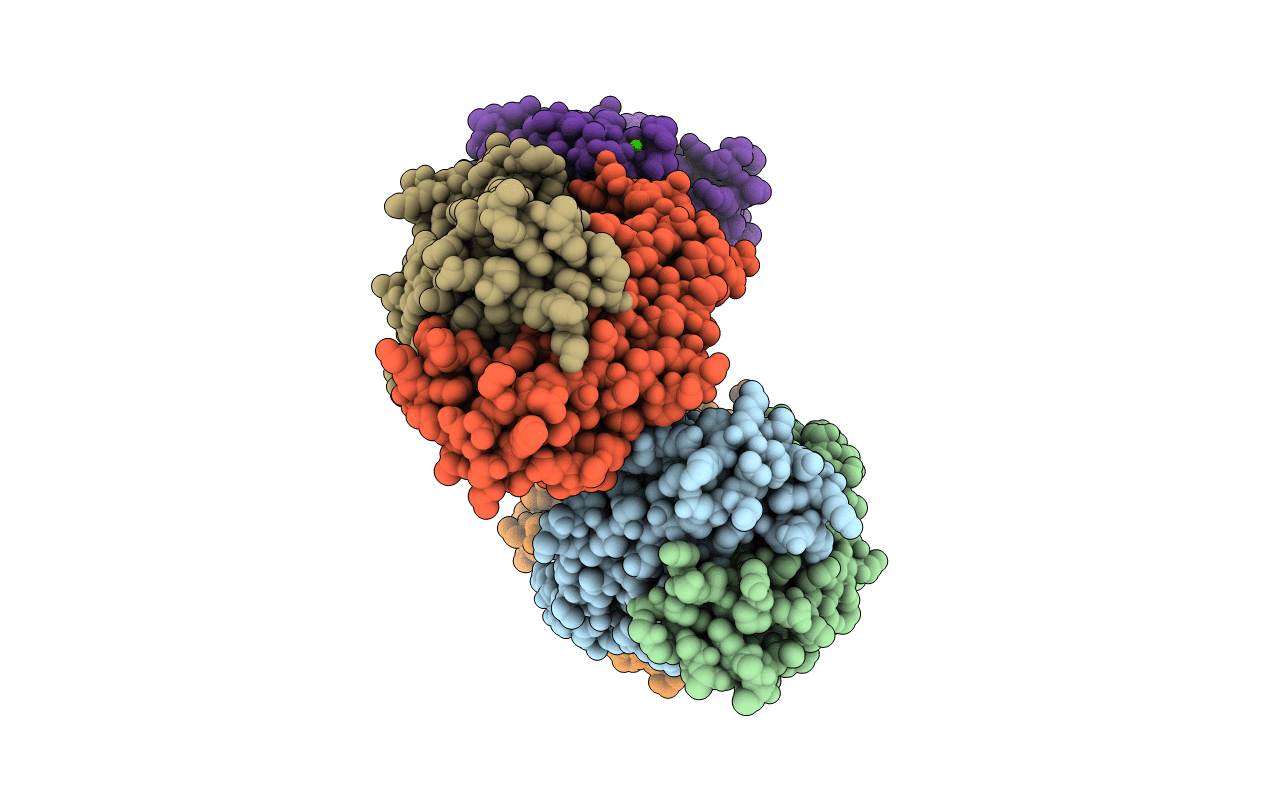
3L95 image
Deposition Date 2010-01-04
Release Date 2010-03-09
Last Version Date 2024-11-20
Entry Detail
PDB ID:
3L95
Keywords:
Title:
Crystal structure of the human Notch1 Negative Regulatory Region (NRR) bound to the fab fragment of an antagonist antibody
Biological Source:
Source Organism:
Homo sapiens (Taxon ID: 9606)
Host Organism:
Method Details:
Experimental Method:
Resolution:
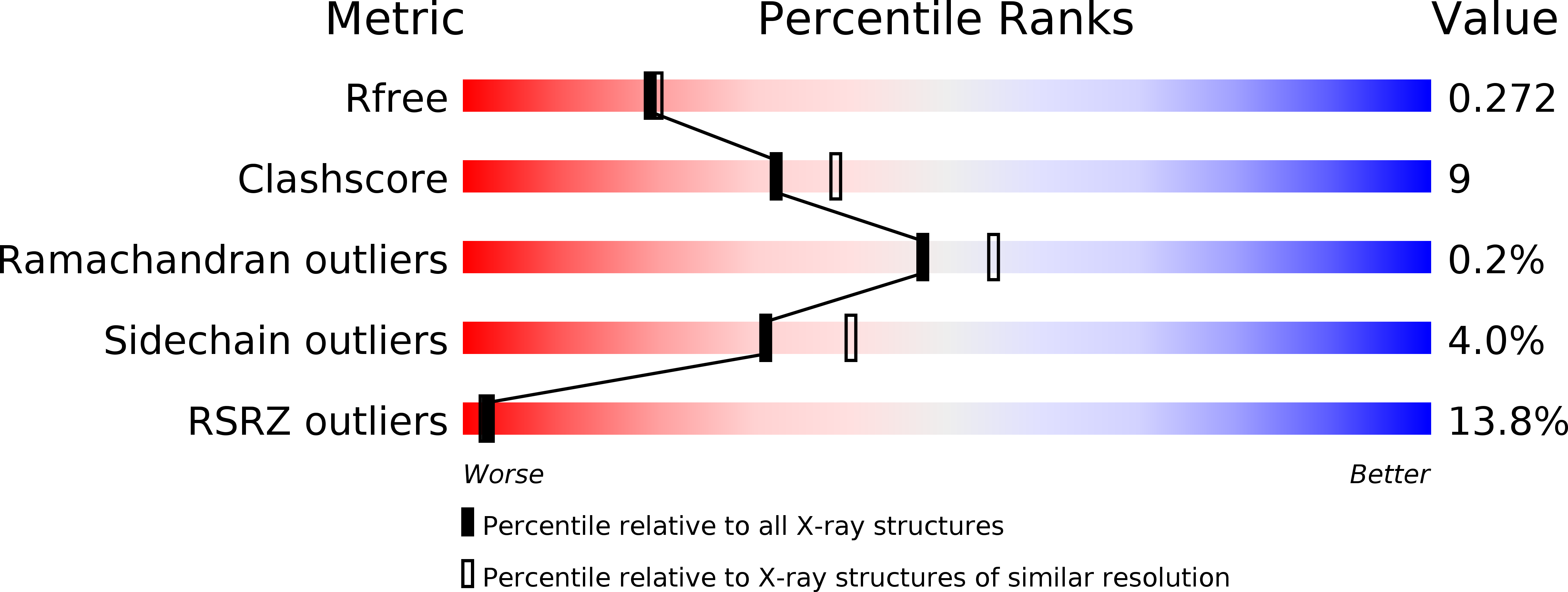
2.19 Å
R-Value Free:
0.27
R-Value Work:
0.22
R-Value Observed:
0.22
Space Group:
P 21 21 21
Macromolecular Entities
Polymer Type:polypeptide(L)
Molecule:anti-NRR1 fab fragment light chain
Chain IDs:A, D (auth: L)
Chain Length:214
Number of Molecules:2
Biological Source:Homo sapiens
Polymer Type:polypeptide(L)
Molecule:anti-NRR1 fab fragment heavy chain
Chain IDs:B, E (auth: H)
Chain Length:227
Number of Molecules:2
Biological Source:Homo sapiens
Structures with similar UniProt ID
Protein Blast
Polymer Type:polypeptide(L)
Molecule:Neurogenic locus notch homolog protein 1
Gene (Uniprot):NOTCH1
Chain IDs:C (auth: X), F (auth: Y)
Chain Length:244
Number of Molecules:2
Biological Source:Homo sapiens
Modified Residue
Compound ID Chain ID Parent Comp ID Details 2D Image
ASN C ASN GLYCOSYLATION SITE
Primary Citation

Abstact

The four receptors of the Notch family are widely expressed transmembrane proteins that function as key conduits through which mammalian cells communicate to regulate cell fate and growth. Ligand binding triggers a conformational change in the receptor negative regulatory region (NRR) that enables ADAM protease cleavage at a juxtamembrane site that otherwise lies buried within the quiescent NRR. Subsequent intramembrane proteolysis catalysed by the gamma-secretase complex liberates the intracellular domain (ICD) to initiate the downstream Notch transcriptional program. Aberrant signalling through each receptor has been linked to numerous diseases, particularly cancer, making the Notch pathway a compelling target for new drugs. Although gamma-secretase inhibitors (GSIs) have progressed into the clinic, GSIs fail to distinguish individual Notch receptors, inhibit other signalling pathways and cause intestinal toxicity, attributed to dual inhibition of Notch1 and 2 (ref. 11). To elucidate the discrete functions of Notch1 and Notch2 and develop clinically relevant inhibitors that reduce intestinal toxicity, we used phage display technology to generate highly specialized antibodies that specifically antagonize each receptor paralogue and yet cross-react with the human and mouse sequences, enabling the discrimination of Notch1 versus Notch2 function in human patients and rodent models. Our co-crystal structure shows that the inhibitory mechanism relies on stabilizing NRR quiescence. Selective blocking of Notch1 inhibits tumour growth in pre-clinical models through two mechanisms: inhibition of cancer cell growth and deregulation of angiogenesis. Whereas inhibition of Notch1 plus Notch2 causes severe intestinal toxicity, inhibition of either receptor alone reduces or avoids this effect, demonstrating a clear advantage over pan-Notch inhibitors. Our studies emphasize the value of paralogue-specific antagonists in dissecting the contributions of distinct Notch receptors to differentiation and disease and reveal the therapeutic promise in targeting Notch1 and Notch2 independently.

Legend

Protein

Chemical

Disease

Primary Citation of related structures
Feedback Form
Name
Email
Institute
Feedback