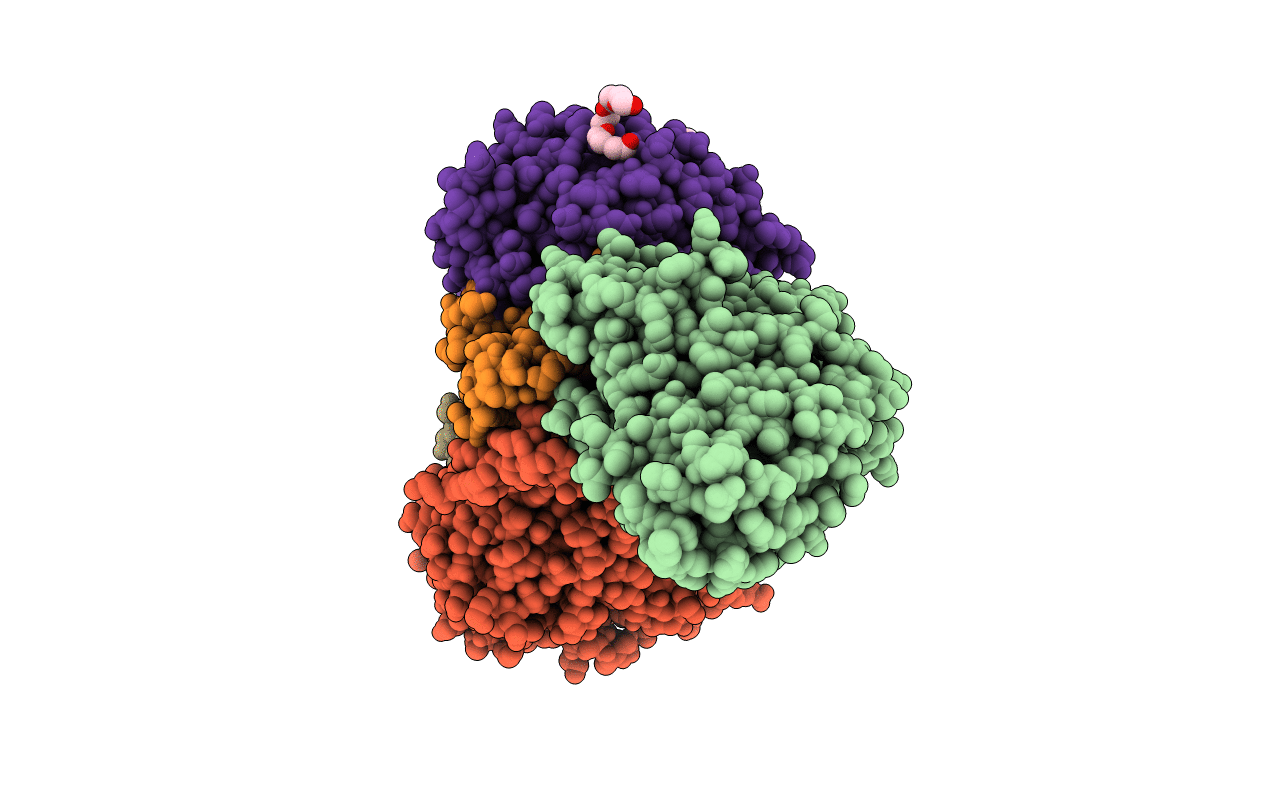
3L4O image
Deposition Date 2009-12-21
Release Date 2010-03-23
Last Version Date 2023-09-06
Entry Detail
PDB ID:
3L4O
Title:
Crystal Structure of the MauG/pre-Methylamine Dehydrogenase Complex After Treatment with Hydrogen Peroxide
Biological Source:
Source Organism:
Method Details:
Experimental Method:
Resolution:
2.05 Å
R-Value Free:
0.19
R-Value Work:
0.14
R-Value Observed:
0.14
Space Group:
P 1
Macromolecular Entities
Structures with similar UniProt ID
Protein Blast
Polymer Type:polypeptide(L)
Molecule:Methylamine utilization protein mauG
Gene (Uniprot):mauG
Chain IDs:A, B
Chain Length:373
Number of Molecules:2
Biological Source:Paracoccus denitrificans
Structures with similar UniProt ID
Protein Blast
Polymer Type:polypeptide(L)
Molecule:Methylamine dehydrogenase light chain
Mutagens:Hydroxylated Trp57 has been converted to the full-quinone form due to hydrogen peroxide-assisted catalysis by MauG in the crystal.
Chain IDs:C, E
Chain Length:137
Number of Molecules:2
Biological Source:Paracoccus denitrificans
Structures with similar UniProt ID
Protein Blast
Polymer Type:polypeptide(L)
Molecule:Methylamine dehydrogenase heavy chain
Gene (Uniprot):Pden_4730
Chain IDs:D, F
Chain Length:386
Number of Molecules:2
Biological Source:Paracoccus denitrificans
Modified Residue
Compound ID Chain ID Parent Comp ID Details 2D Image
TRQ C TRP ?
Primary Citation
In crystallo posttranslational modification within a MauG/pre-methylamine dehydrogenase complex.
Science 327 1392 1394 (2010)
PMID: 20223990 DOI: 10.1126/science.1182492

Abstact

MauG is a diheme enzyme responsible for the posttranslational modification of two tryptophan residues to form the tryptophan tryptophylquinone (TTQ) cofactor of methylamine dehydrogenase (MADH). MauG converts preMADH, containing monohydroxylated betaTrp57, to fully functional MADH by catalyzing the insertion of a second oxygen atom into the indole ring and covalently linking betaTrp57 to betaTrp108. We have solved the x-ray crystal structure of MauG complexed with preMADH to 2.1 angstroms. The c-type heme irons and the nascent TTQ site are separated by long distances over which electron transfer must occur to achieve catalysis. In addition, one of the hemes has an atypical His-Tyr axial ligation. The crystalline protein complex is catalytically competent; upon addition of hydrogen peroxide, MauG-dependent TTQ synthesis occurs.

Legend

Protein

Chemical

Disease

Primary Citation of related structures
Feedback Form
Name
Email
Institute
Feedback