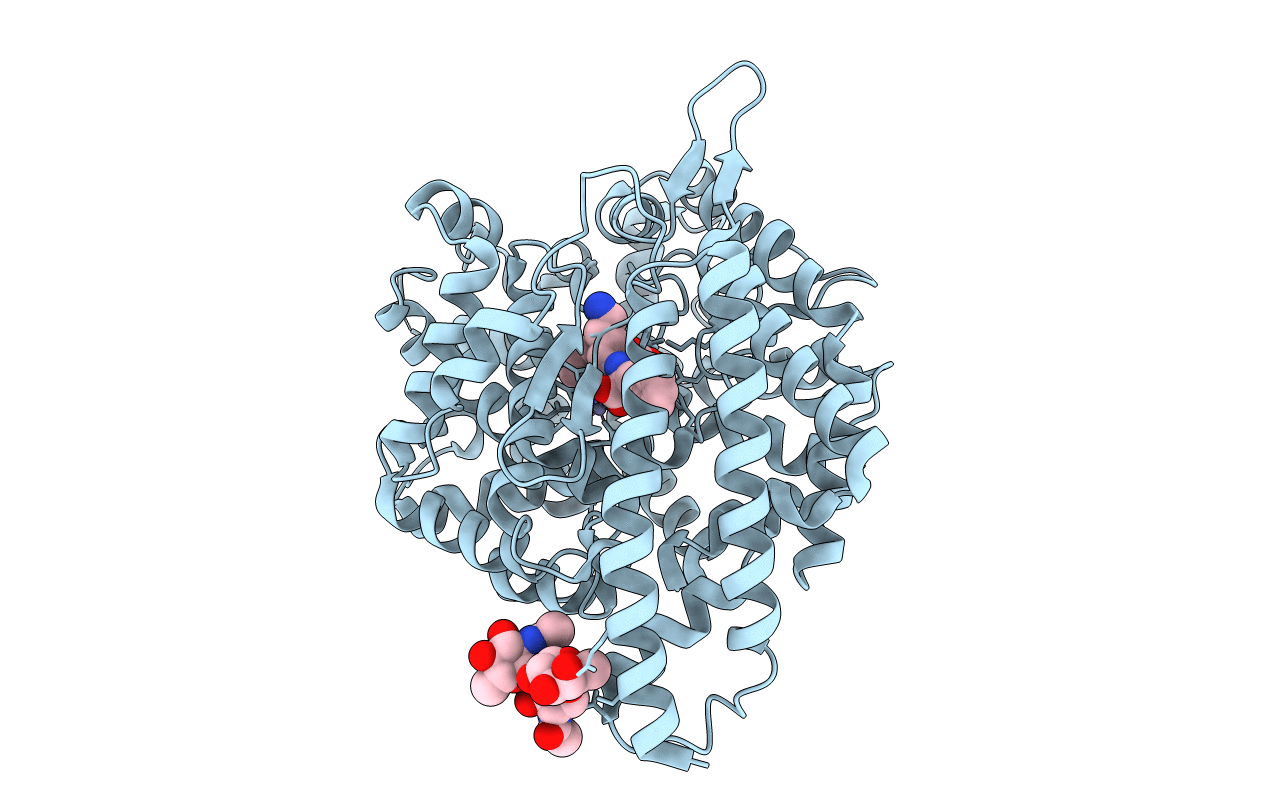
3L3N image
Deposition Date 2009-12-17
Release Date 2010-04-28
Last Version Date 2024-10-30
Entry Detail
PDB ID:
3L3N
Keywords:
Title:
Testis ACE co-crystal structure with novel inhibitor lisW
Biological Source:
Source Organism:
Homo sapiens (Taxon ID: 9606)
Host Organism:
Method Details:
Experimental Method:
Resolution:
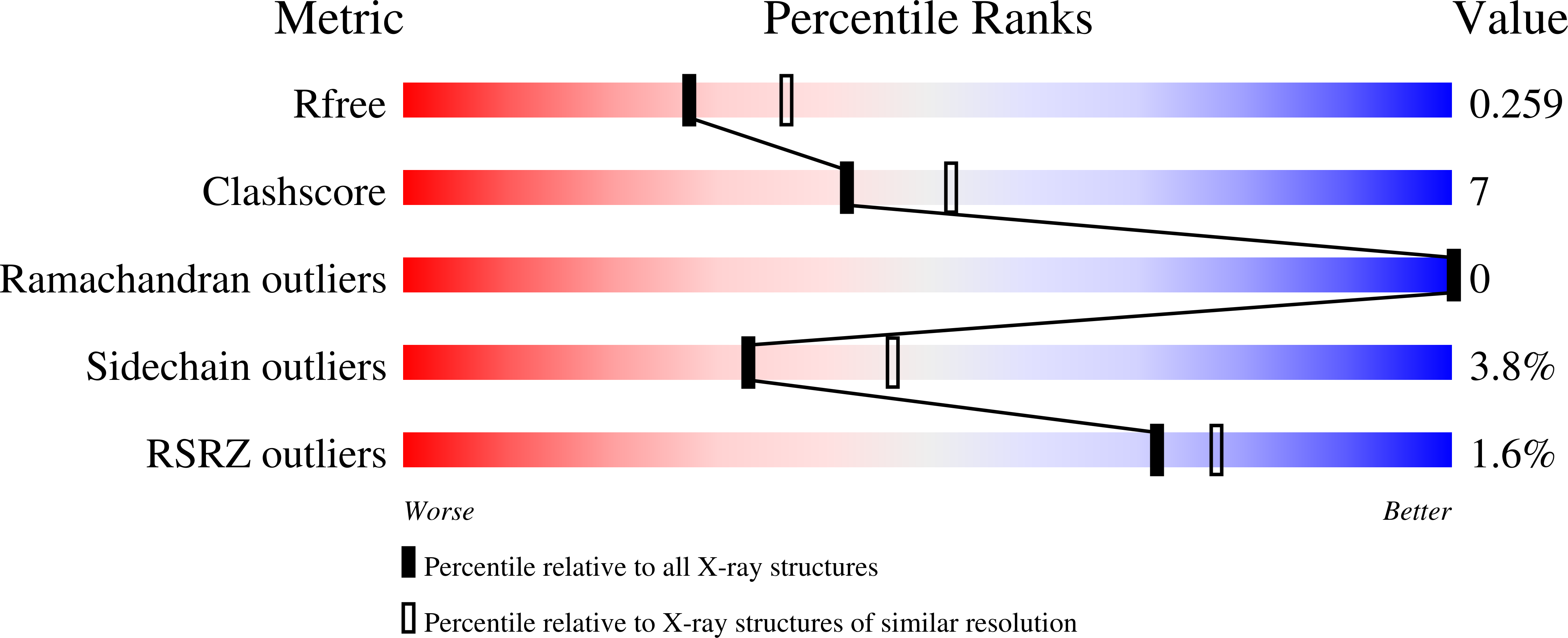
2.30 Å
R-Value Free:
0.26
R-Value Work:
0.22
Space Group:
P 21 21 21
Macromolecular Entities
Structures with similar UniProt ID
Protein Blast
Polymer Type:polypeptide(L)
Molecule:Angiotensin-converting enzyme
Gene (Uniprot):ACE
Mutagens:E669G, N695Q,N760Q,N942Q,N1191Q
Chain IDs:A
Chain Length:591
Number of Molecules:1
Biological Source:Homo sapiens
Modified Residue
Compound ID Chain ID Parent Comp ID Details 2D Image
ASN A ASN GLYCOSYLATION SITE
Primary Citation
Characterization of domain-selective inhibitor binding in angiotensin-converting enzyme using a novel derivative of lisinopril.
Biochem.J. 428 67 74 (2010)
PMID: 20233165 DOI: 10.1042/BJ20100056

Abstact

Human ACE (angiotensin-converting enzyme) (EC 3.4.15.1) is an important drug target because of its role in the regulation of blood pressure via the renin-angiotensin-aldosterone system. Somatic ACE comprises two homologous domains, the differing substrate preferences of which present a new avenue for domain-selective inhibitor design. We have co-crystallized lisW-S, a C-domain-selective derivative of the drug lisinopril, with human testis ACE and determined a structure using X-ray crystallography to a resolution of 2.30 A (1 A=0.1 nm). In this structure, lisW-S is seen to have a similar binding mode to its parent compound lisinopril, but the P2' tryptophan moiety takes a different conformation to that seen in other inhibitors having a tryptophan residue in this position. We have examined further the domain-specific interactions of this inhibitor by mutating C-domain-specific active-site residues to their N domain equivalents, then assessing the effect of the mutation on inhibition by lisW-S using a fluorescence-based assay. Kinetics analysis shows a 258-fold domain-selectivity that is largely due to the co-operative effect of C-domain-specific residues in the S2' subsite. The high affinity and selectivity of this inhibitor make it a good lead candidate for cardiovascular drug development.

Legend

Protein

Chemical

Disease

Primary Citation of related structures
Feedback Form
Name
Email
Institute
Feedback