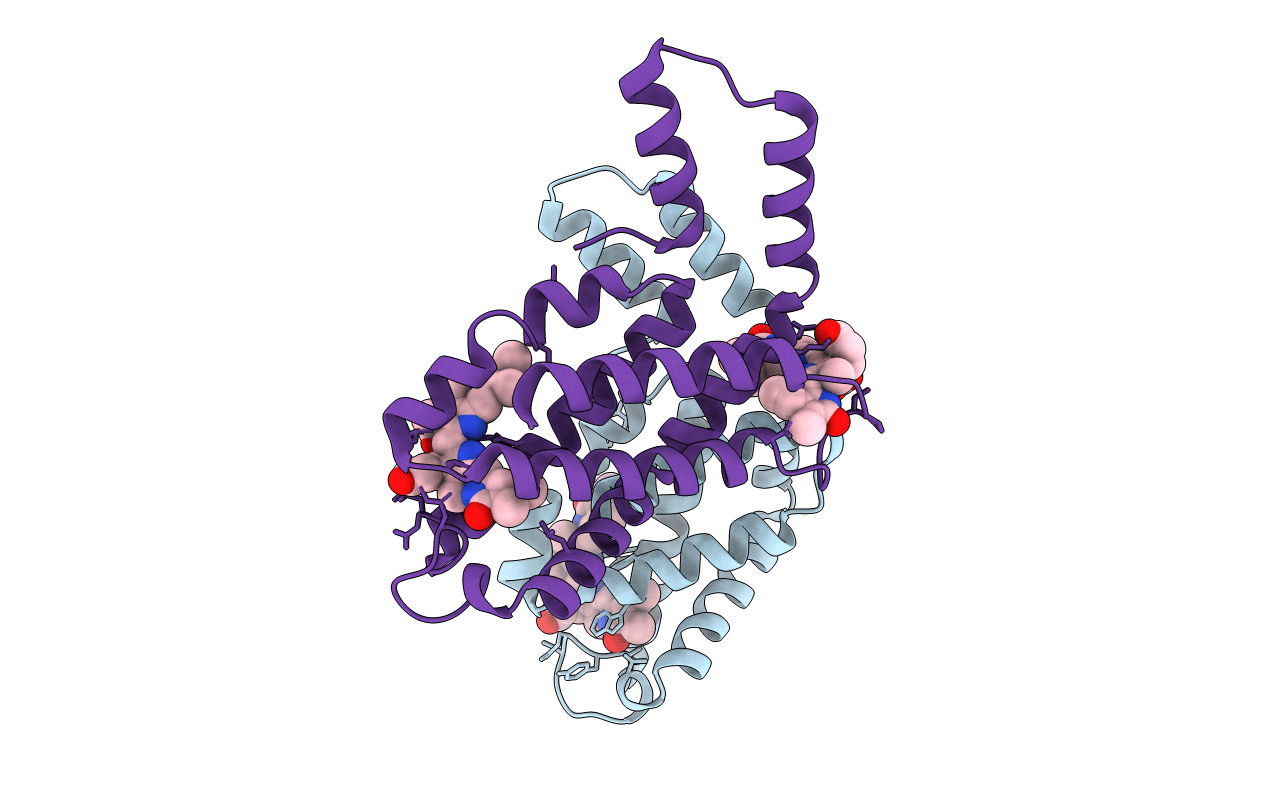
3L0F image
Deposition Date 2009-12-09
Release Date 2010-12-29
Last Version Date 2023-09-20
Entry Detail
PDB ID:
3L0F
Keywords:
Title:
High resolution structure of C-Phycocyanin from Thermosynechococcus elongatus
Biological Source:
Source Organism(s):
Method Details:
Experimental Method:
Resolution:
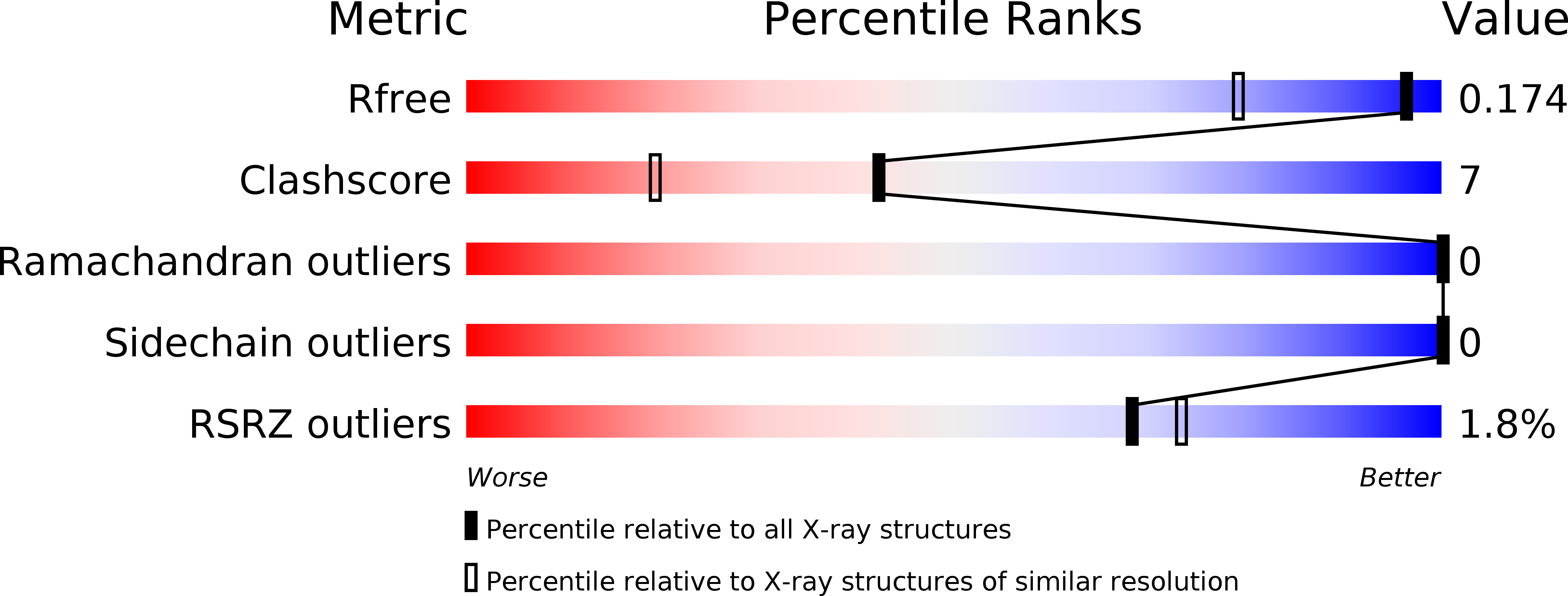
1.35 Å
R-Value Free:
0.17
R-Value Work:
0.13
R-Value Observed:
0.13
Space Group:
H 3 2
Macromolecular Entities
Structures with similar UniProt ID
Protein Blast
Polymer Type:polypeptide(L)
Molecule:C-phycocyanin alpha chain
Gene (Uniprot):cpcA
Chain IDs:A
Chain Length:162
Number of Molecules:1
Biological Source:Thermosynechococcus elongatus
Structures with similar UniProt ID
Protein Blast
Polymer Type:polypeptide(L)
Molecule:C-phycocyanin beta chain
Gene (Uniprot):cpcB
Chain IDs:B
Chain Length:172
Number of Molecules:1
Biological Source:Thermosynechococcus elongatus
Modified Residue
Compound ID Chain ID Parent Comp ID Details 2D Image
MEN B ASN N-METHYL ASPARAGINE
Ligand Molecules
Primary Citation
Serial femtosecond crystallography of soluble proteins in lipidic cubic phase.
Iucrj 2 545 551 (2015)
PMID: 26306196 DOI: 10.1107/S2052252515013160

Abstact

Serial femtosecond crystallography (SFX) at X-ray free-electron lasers (XFELs) enables high-resolution protein structure determination using micrometre-sized crystals at room temperature with minimal effects from radiation damage. SFX requires a steady supply of microcrystals intersecting the XFEL beam at random orientations. An LCP-SFX method has recently been introduced in which microcrystals of membrane proteins are grown and delivered for SFX data collection inside a gel-like membrane-mimetic matrix, known as lipidic cubic phase (LCP), using a special LCP microextrusion injector. Here, it is demonstrated that LCP can also be used as a suitable carrier medium for microcrystals of soluble proteins, enabling a dramatic reduction in the amount of crystallized protein required for data collection compared with crystals delivered by liquid injectors. High-quality LCP-SFX data sets were collected for two soluble proteins, lysozyme and phycocyanin, using less than 0.1 mg of each protein.

Legend

Protein

Chemical

Disease

Primary Citation of related structures
Feedback Form
Name
Email
Institute
Feedback