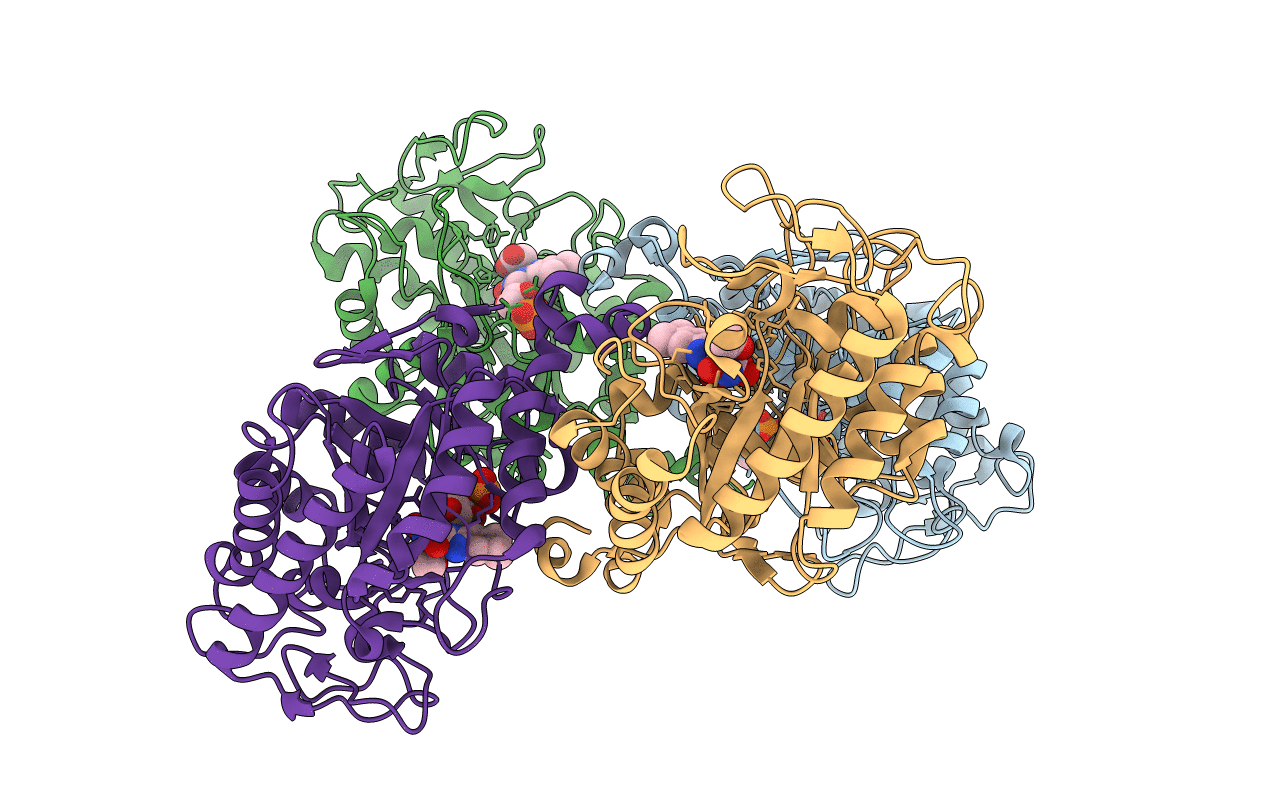
3KRU image
Deposition Date 2009-11-19
Release Date 2009-12-08
Last Version Date 2024-03-20
Entry Detail
PDB ID:
3KRU
Keywords:
Title:
Crystal Structure of the Thermostable Old Yellow Enzyme from Thermoanaerobacter pseudethanolicus E39
Biological Source:
Host Organism:
Method Details:
Experimental Method:
Resolution:
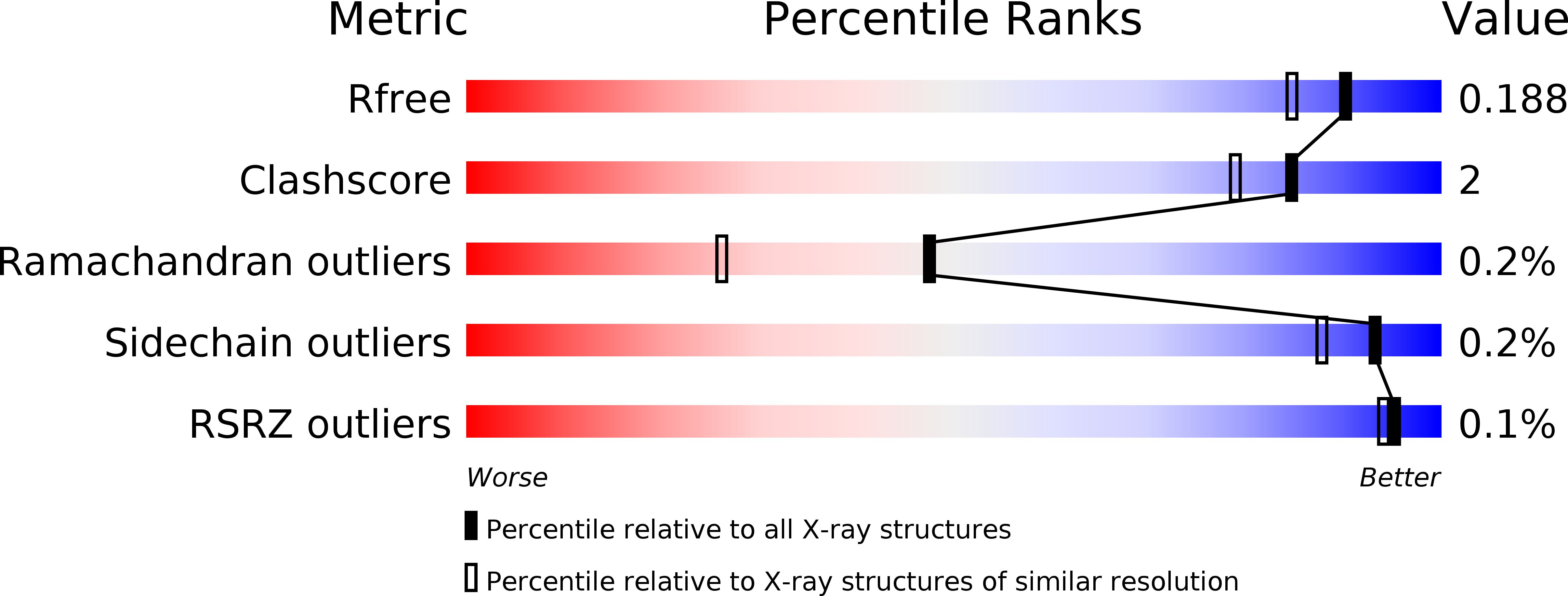
1.60 Å
R-Value Free:
0.17
R-Value Work:
0.15
R-Value Observed:
0.15
Space Group:
P 1 21 1
Macromolecular Entities
Structures with similar UniProt ID
Protein Blast
Polymer Type:polypeptide(L)
Molecule:NADH:flavin oxidoreductase/NADH oxidase
Gene (Uniprot):Teth39_0012
Chain IDs:A, B, C, D
Chain Length:343
Number of Molecules:4
Biological Source:Thermoanaerobacter pseudethanolicus ATCC 33223
Primary Citation
Biocatalysis with thermostable enzymes: structure and properties of a thermophilic 'ene'-reductase related to old yellow enzyme.
Chembiochem 11 197 207 (2010)
PMID: 19943268 DOI: 10.1002/cbic.200900570

Abstact

We report the crystal structure of a thermophilic "ene" reductase (TOYE) isolated from Thermoanaerobacter pseudethanolicus E39. The crystal structure reveals a tetrameric enzyme and an active site that is relatively large compared to most other structurally determined and related Old Yellow Enzymes. The enzyme adopts higher order oligomeric states (octamers and dodecamers) in solution, as revealed by sedimentation velocity and multiangle laser light scattering. Bead modelling indicates that the solution structure is consistent with the basic tetrameric structure observed in crystallographic studies and electron microscopy. TOYE is stable at high temperatures (T(m)>70 degrees C) and shows increased resistance to denaturation in water-miscible organic solvents compared to the mesophilic Old Yellow Enzyme family member, pentaerythritol tetranitrate reductase. TOYE has typical ene-reductase properties of the Old Yellow Enzyme family. There is currently major interest in using Old Yellow Enzyme family members in the preparative biocatalysis of a number of activated alkenes. The increased stability of TOYE in organic solvents is advantageous for biotransformations in which water-miscible organic solvents and biphasic reaction conditions are required to both deliver novel substrates and minimize product racemisation.

Legend

Protein

Chemical

Disease

Primary Citation of related structures
Feedback Form
Name
Email
Institute
Feedback