3KRM image
Deposition Date 2009-11-18
Release Date 2010-02-09
Last Version Date 2024-02-21
Entry Detail
PDB ID:
3KRM
Title:
Imp1 kh34
Biological Source:
Source Organism:
Homo sapiens (Taxon ID: 9606)
Host Organism:
Method Details:
Experimental Method:
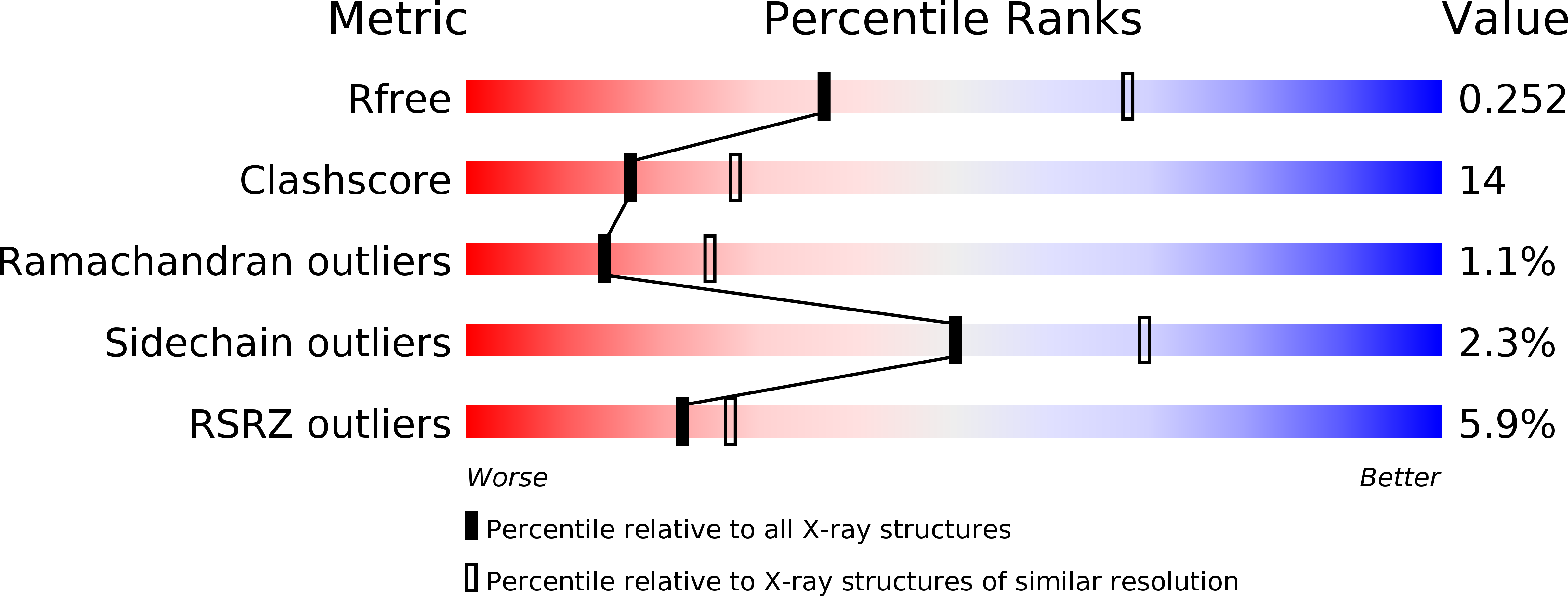
Resolution:
2.75 Å
R-Value Free:
0.23
R-Value Work:
0.19
R-Value Observed:
0.19
Space Group:
P 65
Macromolecular Entities
Structures with similar UniProt ID
Protein Blast
Polymer Type:polypeptide(L)
Molecule:Insulin-like growth factor 2 mRNA-binding protein 1
Gene (Uniprot):IGF2BP1
Chain IDs:A, B, C
Chain Length:163
Number of Molecules:3
Biological Source:Homo sapiens
Ligand Molecules
Primary Citation
ZBP1 recognition of beta-actin zipcode induces RNA looping.
Genes Dev. 24 148 158 (2010)
PMID: 20080952 DOI: 10.1101/gad.1862910

Abstact

ZBP1 (zipcode-binding protein 1) was originally discovered as a trans-acting factor for the "zipcode" in the 3' untranslated region (UTR) of the beta-actin mRNA that is important for its localization and translational regulation. Subsequently, ZBP1 has been found to be a multifunctional regulator of RNA metabolism that controls aspects of localization, stability, and translation for many mRNAs. To reveal how ZBP1 recognizes its RNA targets, we biochemically characterized the interaction between ZBP1 and the beta-actin zipcode. The third and fourth KH (hnRNP K homology) domains of ZBP1 specifically recognize a bipartite RNA element located within the first 28 nucleotides of the zipcode. The spacing between the RNA sequences is consistent with the structure of IMP1 KH34, the human ortholog of ZBP1, that we solved by X-ray crystallography. The tandem KH domains are arranged in an intramolecular anti-parallel pseudodimer conformation with the canonical RNA-binding surfaces at opposite ends of the molecule. This orientation of the KH domains requires that the RNA backbone must undergo an approximately 180 degrees change in direction in order for both KH domains to contact the RNA simultaneously. The RNA looping induced by ZBP1 binding provides a mechanism for specific recognition and may facilitate the assembly of post-transcriptional regulatory complexes by remodeling the bound transcript.

Legend

Protein

Chemical

Disease

Primary Citation of related structures
Feedback Form
Name
Email
Institute
Feedback