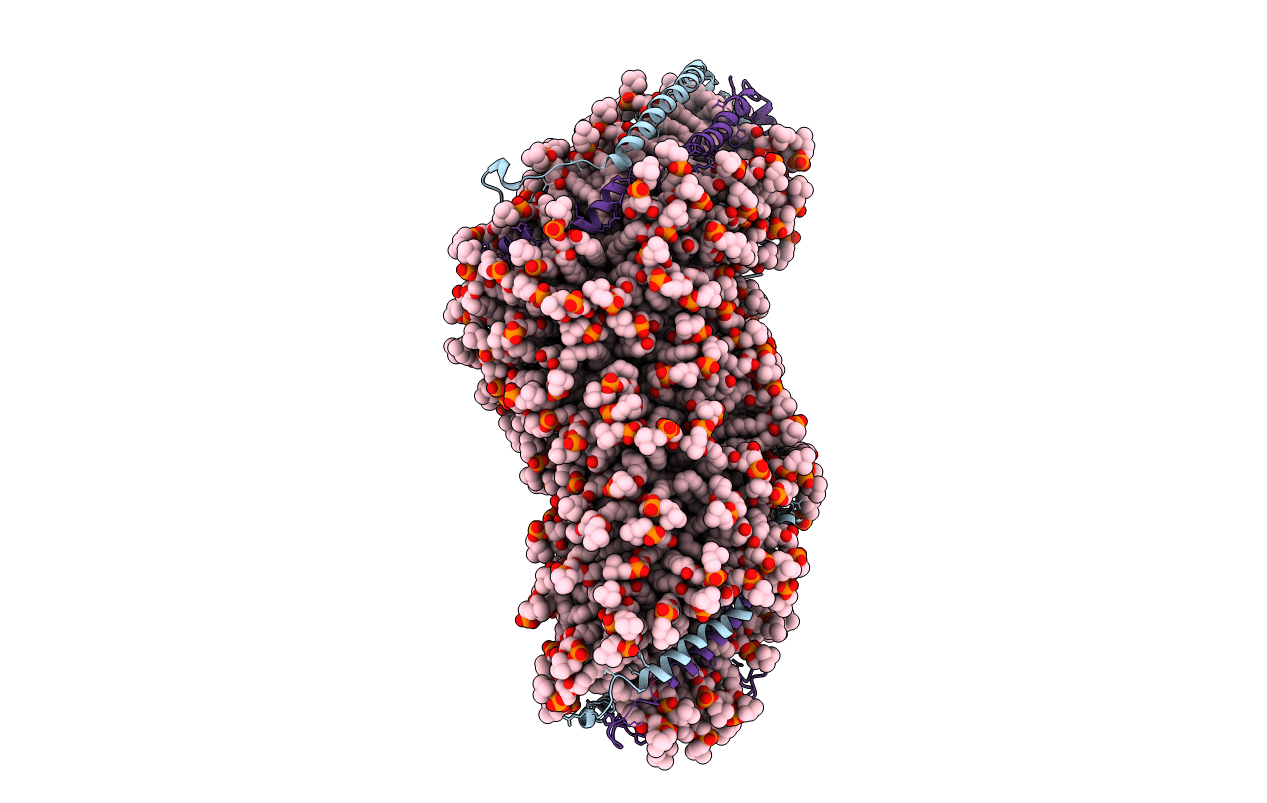
3K2S image
Deposition Date 2009-09-30
Release Date 2010-04-07
Last Version Date 2024-02-21
Entry Detail
PDB ID:
3K2S
Title:
Solution structure of double super helix model
Biological Source:
Source Organism:
Homo sapiens (Taxon ID: 9606)
Host Organism:
Method Details:
Experimental Method:
Macromolecular Entities
Structures with similar UniProt ID
Protein Blast
Polymer Type:polypeptide(L)
Molecule:Apolipoprotein A-I
Gene (Uniprot):APOA1
Chain IDs:A, B
Chain Length:243
Number of Molecules:2
Biological Source:Homo sapiens
Primary Citation
Double superhelix model of high density lipoprotein.
J.Biol.Chem. 284 36605 36619 (2009)
PMID: 19812036 DOI: 10.1074/jbc.M109.039537

Abstact

High density lipoprotein (HDL), the carrier of so-called "good" cholesterol, serves as the major athero-protective lipoprotein and has emerged as a key therapeutic target for cardiovascular disease. We applied small angle neutron scattering (SANS) with contrast variation and selective isotopic deuteration to the study of nascent HDL to obtain the low resolution structure in solution of the overall time-averaged conformation of apolipoprotein AI (apoA-I) versus the lipid (acyl chain) core of the particle. Remarkably, apoA-I is observed to possess an open helical shape that wraps around a central ellipsoidal lipid phase. Using the low resolution SANS shapes of the protein and lipid core as scaffolding, an all-atom computational model for the protein and lipid components of nascent HDL was developed by integrating complementary structural data from hydrogen/deuterium exchange mass spectrometry and previously published constraints from multiple biophysical techniques. Both SANS data and the new computational model, the double superhelix model, suggest an unexpected structural arrangement of protein and lipids of nascent HDL, an anti-parallel double superhelix wrapped around an ellipsoidal lipid phase. The protein and lipid organization in nascent HDL envisages a potential generalized mechanism for lipoprotein biogenesis and remodeling, biological processes critical to sterol and lipid transport, organismal energy metabolism, and innate immunity.

Legend

Protein

Chemical

Disease

Primary Citation of related structures
Feedback Form
Name
Email
Institute
Feedback