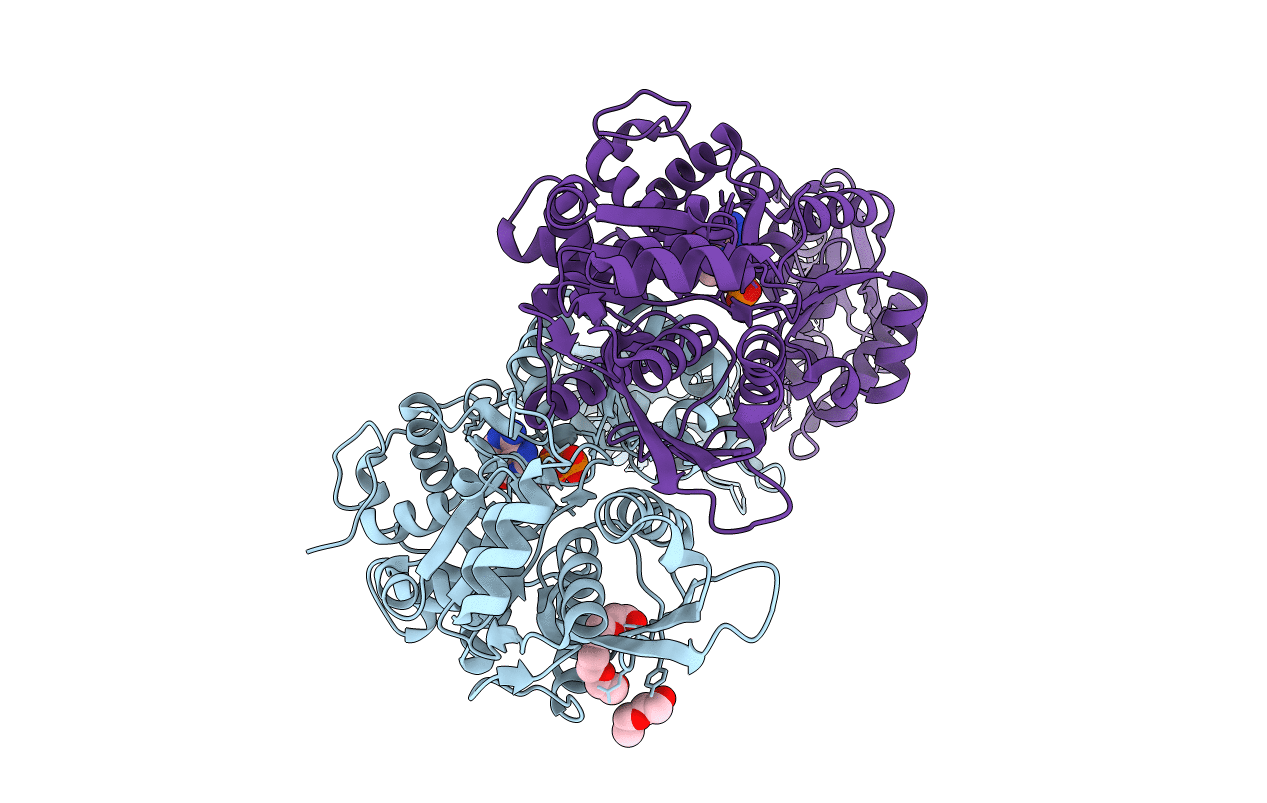
3K1J image
Deposition Date 2009-09-28
Release Date 2010-09-22
Last Version Date 2024-10-30
Entry Detail
PDB ID:
3K1J
Keywords:
Title:
Crystal structure of Lon protease from Thermococcus onnurineus NA1
Biological Source:
Source Organism(s):
Expression System(s):
Method Details:
Experimental Method:
Resolution:
2.00 Å
R-Value Free:
0.23
R-Value Work:
0.20
R-Value Observed:
0.20
Space Group:
P 63
Macromolecular Entities
Structures with similar UniProt ID
Protein Blast
Polymer Type:polypeptide(L)
Molecule:ATP-dependent protease Lon
Gene (Uniprot):TON_0529
Mutagens:S523A, K566A
Chain IDs:A, B
Chain Length:604
Number of Molecules:2
Biological Source:Thermococcus onnurineus
Primary Citation
Crystal structure of Lon protease: molecular architecture of gated entry to a sequestered degradation chamber
Embo J. 29 3520 3530 (2010)
PMID: 20834233 DOI: 10.1038/emboj.2010.226

Abstact

Lon proteases are distributed in all kingdoms of life and are required for survival of cells under stress. Lon is a tandem fusion of an AAA+ molecular chaperone and a protease with a serine-lysine catalytic dyad. We report the 2.0-Å resolution crystal structure of Thermococcus onnurineus NA1 Lon (TonLon). The structure is a three-tiered hexagonal cylinder with a large sequestered chamber accessible through an axial channel. Conserved loops extending from the AAA+ domain combine with an insertion domain containing the membrane anchor to form an apical domain that serves as a gate governing substrate access to an internal unfolding and degradation chamber. Alternating AAA+ domains are in tight- and weak-binding nucleotide states with different domain orientations and intersubunit contacts, reflecting intramolecular dynamics during ATP-driven protein unfolding and translocation. The bowl-shaped proteolytic chamber is contiguous with the chaperone chamber allowing internalized proteins direct access to the proteolytic sites without further gating restrictions.

Legend

Protein

Chemical

Disease

Primary Citation of related structures
Feedback Form
Name
Email
Institute
Feedback