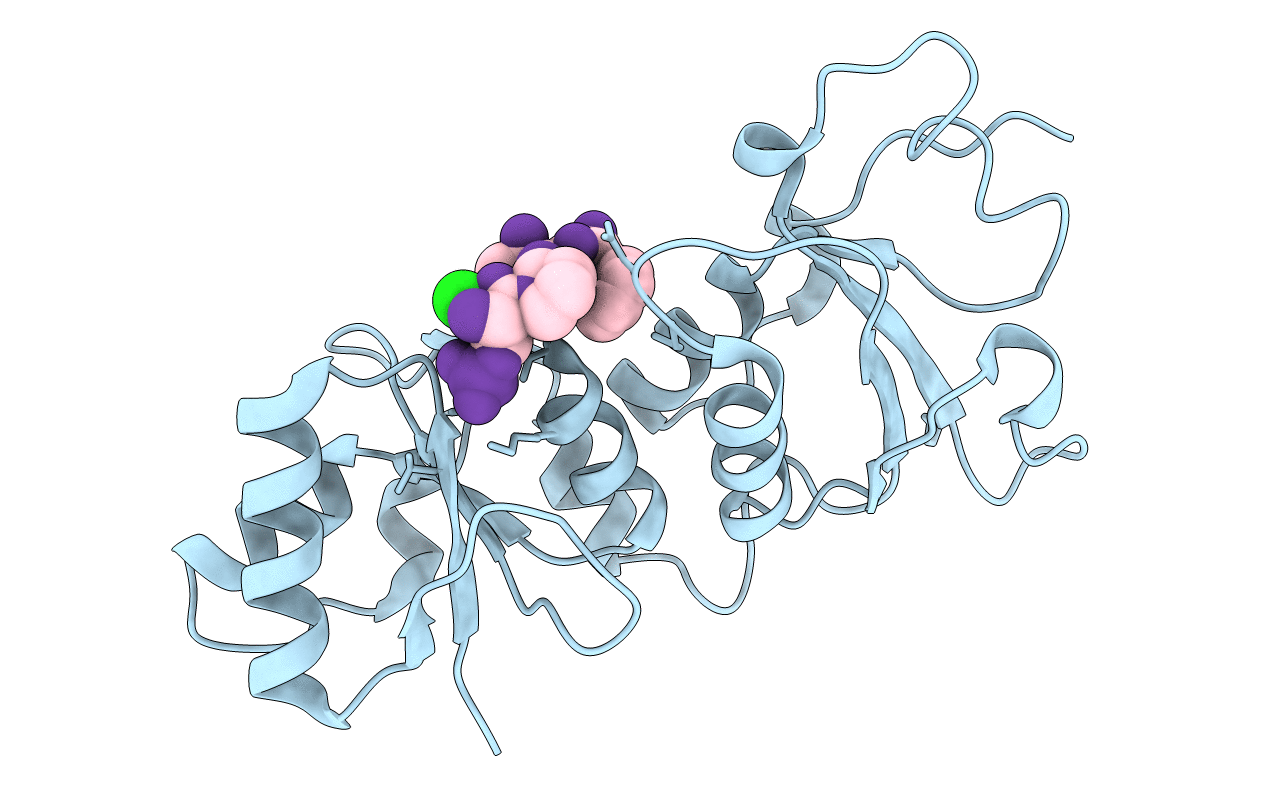
3K0K image
Deposition Date 2009-09-24
Release Date 2010-03-02
Last Version Date 2024-11-20
Entry Detail
PDB ID:
3K0K
Keywords:
Title:
Crystal Structure of BRCA1 BRCT in complex with a minimal recognition tetrapeptide with a free carboxy C-terminus.
Biological Source:
Source Organism:
Homo sapiens (Taxon ID: 9606)
Host Organism:
Method Details:
Experimental Method:
Resolution:
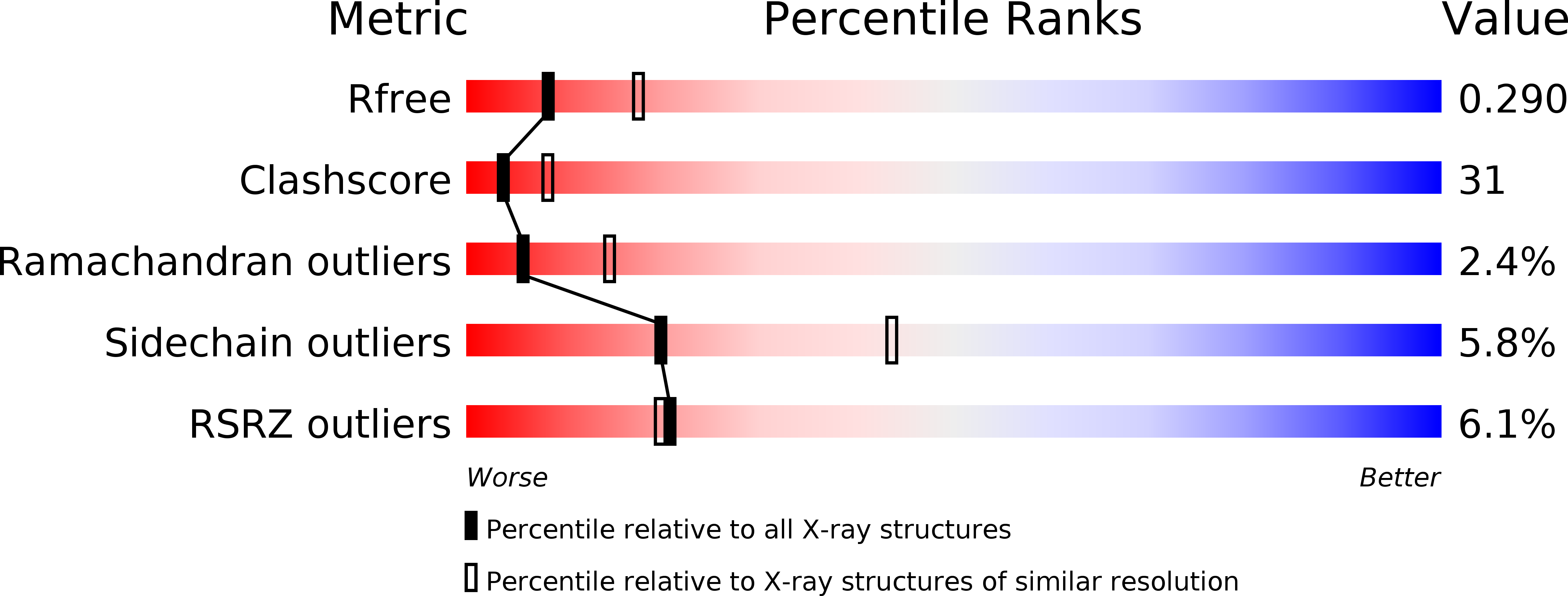
2.70 Å
R-Value Free:
0.29
R-Value Work:
0.25
R-Value Observed:
0.26
Space Group:
P 61 2 2
Macromolecular Entities
Structures with similar UniProt ID
Protein Blast
Polymer Type:polypeptide(L)
Molecule:Breast cancer type 1 susceptibility protein
Gene (Uniprot):BRCA1
Chain IDs:A
Chain Length:215
Number of Molecules:1
Biological Source:Homo sapiens
Polymer Type:polypeptide(L)
Molecule:phospho peptide pSPTF-COOH
Chain IDs:B
Chain Length:4
Number of Molecules:1
Biological Source:
Modified Residue
Compound ID Chain ID Parent Comp ID Details 2D Image
SEP B SER PHOSPHOSERINE
Primary Citation
Comparison of the Structures and Peptide Binding Specificities of the BRCT Domains of MDC1 and BRCA1
Structure 18 167 176 (2010)
PMID: 20159462 DOI: 10.1016/j.str.2009.12.008

Abstact

The tandem BRCT domains of BRCA1 and MDC1 facilitate protein signaling at DNA damage foci through specific interactions with serine-phosphorylated protein partners. The MDC1 BRCT binds pSer-Gln-Glu-Tyr-COO(-) at the C terminus of the histone variant gammaH2AX via direct recognition of the C-terminal carboxylate, while BRCA1 recognizes pSer-X-X-Phe motifs either at C-terminal or internal sites within target proteins. Using fluorescence polarization binding assays, we show that while both BRCTs prefer a free main chain carboxylate at the +3 position, this preference is much more pronounced in MDC1. Crystal structures of BRCA1 and MDC1 bound to tetrapeptide substrates reveal differences in the environment of conserved arginines (Arg1699 in BRCA1 and Arg1933 in MDC1) that determine the relative affinity for peptides with -COO(-) versus -CO-NH(2) termini. A mutation in MDC1 that induces a more BRCA1-like conformation relaxes the binding specificity, allowing the mutant to bind phosphopeptides lacking a -COO(-) terminus.

Legend

Protein

Chemical

Disease

Primary Citation of related structures
Feedback Form
Name
Email
Institute
Feedback