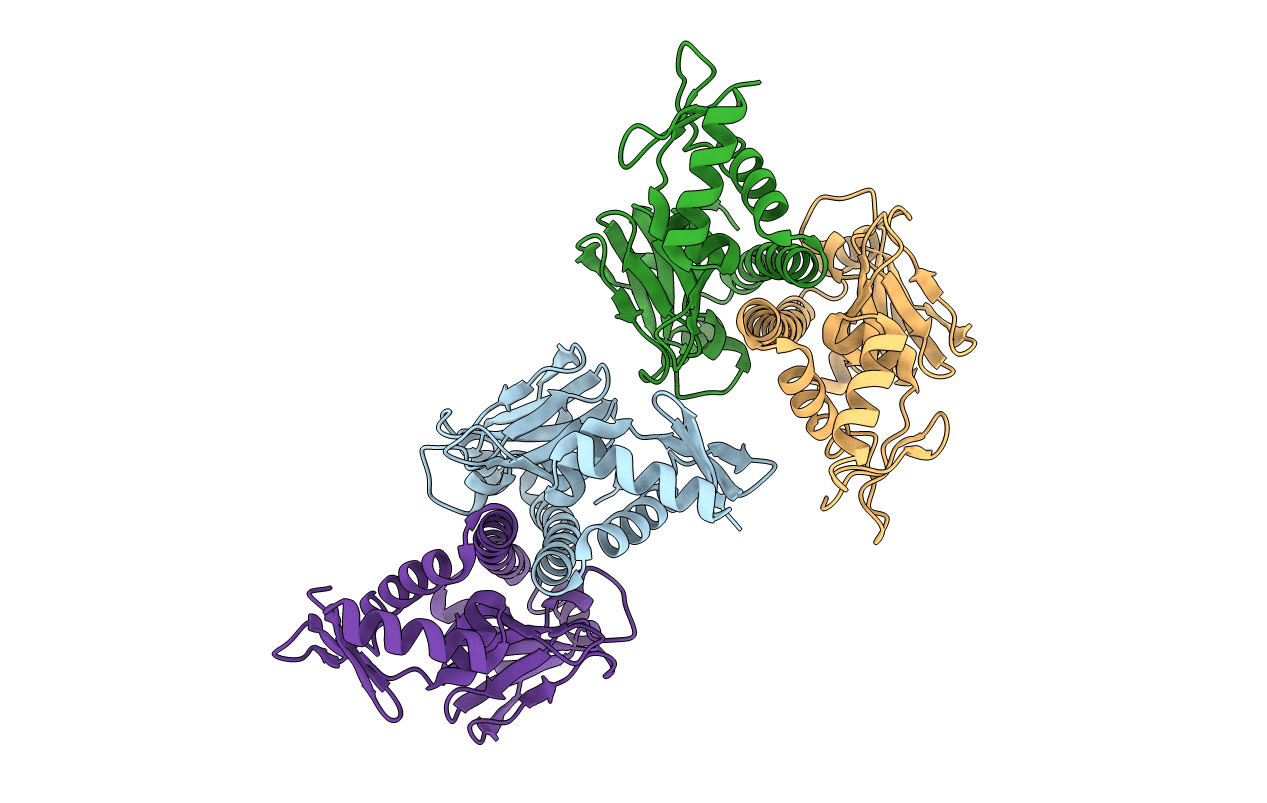
3IWZ image
Deposition Date 2009-09-03
Release Date 2009-12-15
Last Version Date 2024-03-20
Entry Detail
PDB ID:
3IWZ
Keywords:
Title:
The c-di-GMP Responsive Global Regulator CLP Links Cell-Cell Signaling to Virulence Gene Expression in Xanthomonas campestris
Biological Source:
Source Organism(s):
Expression System(s):
Method Details:
Experimental Method:
Resolution:
2.30 Å
R-Value Free:
0.30
R-Value Work:
0.24
R-Value Observed:
0.24
Space Group:
P 1 21 1
Macromolecular Entities
Structures with similar UniProt ID
Protein Blast
Polymer Type:polypeptide(L)
Molecule:Catabolite activation-like protein
Gene (Uniprot):clp
Chain IDs:A, B, C, D
Chain Length:230
Number of Molecules:4
Biological Source:Xanthomonas campestris pv. campestris
Primary Citation
The cAMP receptor-like protein CLP is a novel c-di-GMP receptor linking cell-cell signaling to virulence gene expression in Xanthomonas campestris.
J.Mol.Biol. 396 646 662 (2010)
PMID: 20004667 DOI: 10.1016/j.jmb.2009.11.076

Abstact

Cyclic-di-GMP [bis-(3'-5')-cyclic diguanosine monophosphate] controls a wide range of functions in eubacteria, yet little is known about the underlying regulatory mechanisms. In the plant pathogen Xanthomonas campestris, expression of a subset of virulence genes is regulated by c-di-GMP and also by the CAP (catabolite activation protein)-like protein XcCLP, a global regulator in the CRP/FNR superfamily. Here, we report structural and functional insights into the interplay between XcCLP and c-di-GMP in regulation of gene expression. XcCLP bound target promoter DNA with submicromolar affinity in the absence of any ligand. This DNA-binding capability was abrogated by c-di-GMP, which bound to XcCLP with micromolar affinity. The crystal structure of XcCLP showed that the protein adopted an intrinsically active conformation for DNA binding. Alteration of residues of XcCLP implicated in c-di-GMP binding through modeling studies caused a substantial reduction in binding affinity for the nucleotide and rendered DNA binding by these variant proteins insensitive to inhibition by c-di-GMP. Together, these findings reveal the structural mechanism behind a novel class of c-di-GMP effector proteins in the CRP/FNR superfamily and indicate that XcCLP regulates bacterial virulence gene expression in a manner negatively controlled by the c-di-GMP concentrations.

Legend

Protein

Chemical

Disease

Primary Citation of related structures
Feedback Form
Name
Email
Institute
Feedback