3IKV image
Deposition Date 2009-08-06
Release Date 2010-06-09
Last Version Date 2023-09-06
Entry Detail
PDB ID:
3IKV
Title:
Crystal structure of a Rex-family repressor R90D mutant from Thermus aquaticus
Biological Source:
Source Organism:
Host Organism:
Method Details:
Experimental Method:
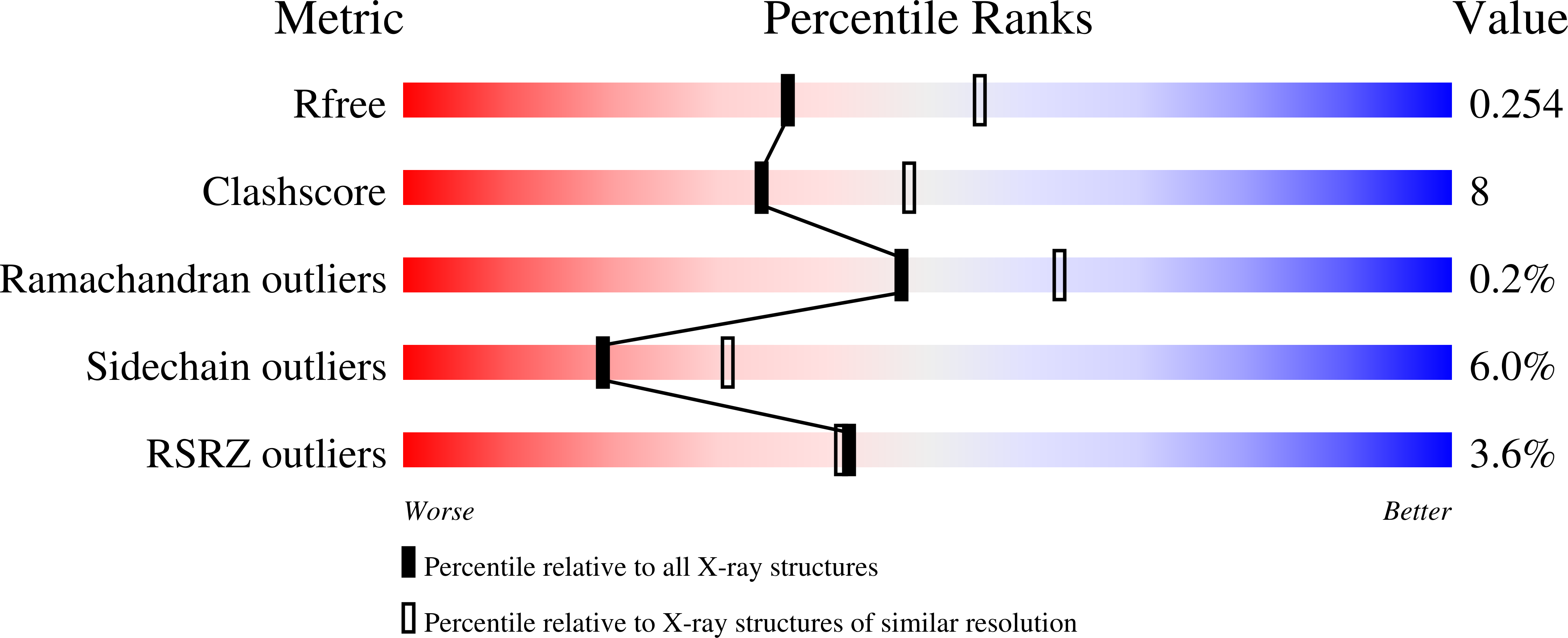
Resolution:
2.40 Å
R-Value Free:
0.25
R-Value Work:
0.21
R-Value Observed:
0.21
Space Group:
P 21 21 21
Macromolecular Entities
Structures with similar UniProt ID
Protein Blast
Polymer Type:polypeptide(L)
Molecule:Redox-sensing transcriptional repressor rex
Gene (Uniprot):rex
Mutagens:R90D
Chain IDs:A, B
Chain Length:207
Number of Molecules:2
Biological Source:Thermus thermophilus HB27
Ligand Molecules
Primary Citation
Structural basis for NADH/NAD+ redox sensing by a Rex family repressor.
Mol.Cell 38 563 575 (2010)
PMID: 20513431 DOI: 10.1016/j.molcel.2010.05.006

Abstact

Nicotinamide adenine dinucleotides have emerged as key signals of the cellular redox state. Yet the structural basis for allosteric gene regulation by the ratio of reduced NADH to oxidized NAD(+) is poorly understood. A key sensor among Gram-positive bacteria, Rex represses alternative respiratory gene expression until a limited oxygen supply elevates the intracellular NADH:NAD(+) ratio. Here we investigate the molecular mechanism for NADH/NAD(+) sensing among Rex family members by determining structures of Thermus aquaticus Rex bound to (1) NAD(+), (2) DNA operator, and (3) without ligand. Comparison with the Rex/NADH complex reveals that NADH releases Rex from the DNA site following a 40 degrees closure between the dimeric subunits. Complementary site-directed mutagenesis experiments implicate highly conserved residues in NAD-responsive DNA-binding activity. These rare views of a redox sensor in action establish a means for slight differences in the nicotinamide charge, pucker, and orientation to signal the redox state of the cell.

Legend

Protein

Chemical

Disease

Primary Citation of related structures
Feedback Form
Name
Email
Institute
Feedback