3HVA image
Deposition Date 2009-06-15
Release Date 2009-08-18
Last Version Date 2023-09-06
Entry Detail
PDB ID:
3HVA
Keywords:
Title:
Crystal structure of FimX GGDEF domain from Pseudomonas aeruginosa
Biological Source:
Source Organism:
Host Organism:
Method Details:
Experimental Method:
Resolution:
2.04 Å
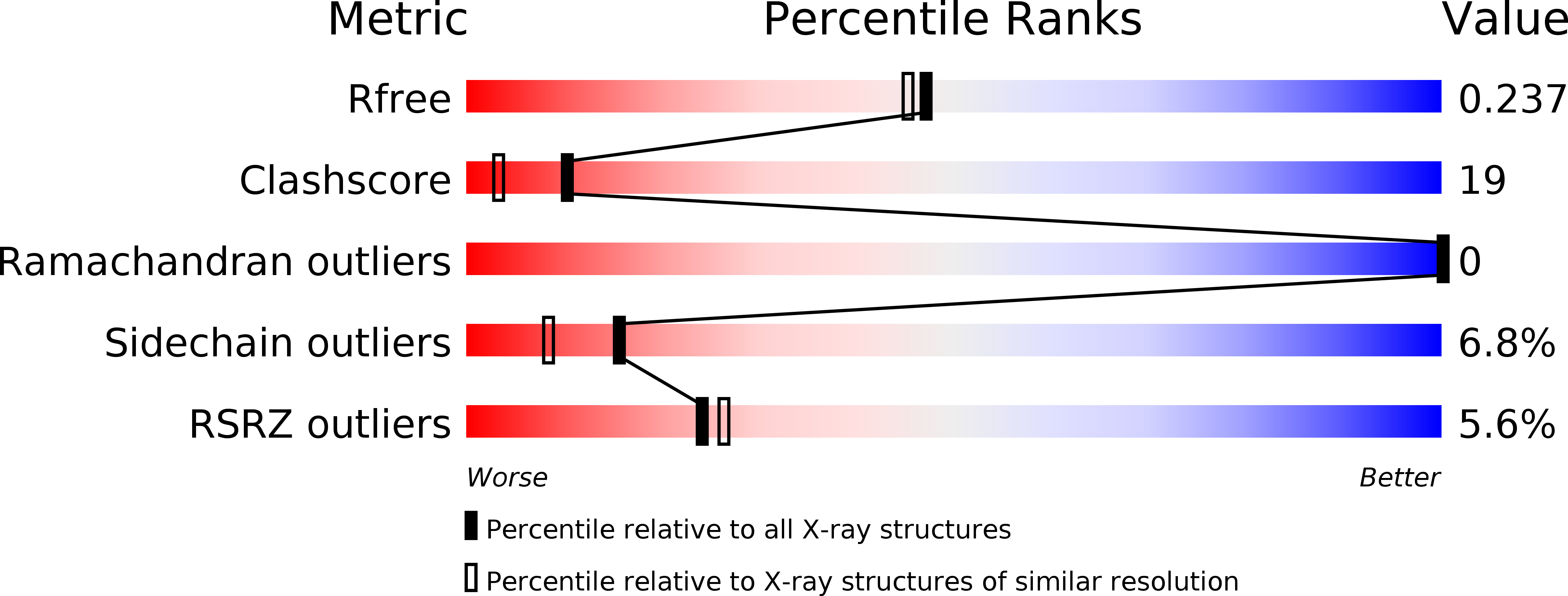
R-Value Free:
0.24
R-Value Work:
0.21
R-Value Observed:
0.21
Space Group:
P 1 21 1
Macromolecular Entities
Structures with similar UniProt ID
Protein Blast
Polymer Type:polypeptide(L)
Molecule:Protein FimX
Gene (Uniprot):fimX
Chain IDs:A, B
Chain Length:177
Number of Molecules:2
Biological Source:Pseudomonas aeruginosa PAO1
Primary Citation
Structural analysis of the GGDEF-EAL domain-containing c-di-GMP receptor FimX.
Structure 17 1104 1116 (2009)
PMID: 19679088 DOI: 10.1016/j.str.2009.06.010

Abstact

Bacterial pathogenesis involves social behavior including biofilm formation and swarming, processes that are regulated by the bacterially unique second messenger cyclic di-GMP (c-di-GMP). Diguanylate cyclases containing GGDEF and phosphodiesterases containing EAL domains have been identified as the enzymes controlling cellular c-di-GMP levels, yet less is known regarding signal transmission and the targets of c-di-GMP. FimX, a protein from Pseudomonas aeruginosa that governs twitching motility, belongs to a large subfamily containing both GGDEF and EAL domains. Biochemical and structural analyses reveals its function as a high-affinity receptor for c-di-GMP. A model for full-length FimX was generated combining solution scattering data and crystal structures of the degenerate GGDEF and EAL domains. Although FimX forms a dimer in solution via the N-terminal domains, a crystallographic EAL domain dimer suggests modes for the regulation of FimX by c-di-GMP binding. The results provide the structural basis for c-di-GMP sensing via degenerate phosphodiesterases.

Legend

Protein

Chemical

Disease

Primary Citation of related structures
Feedback Form
Name
Email
Institute
Feedback