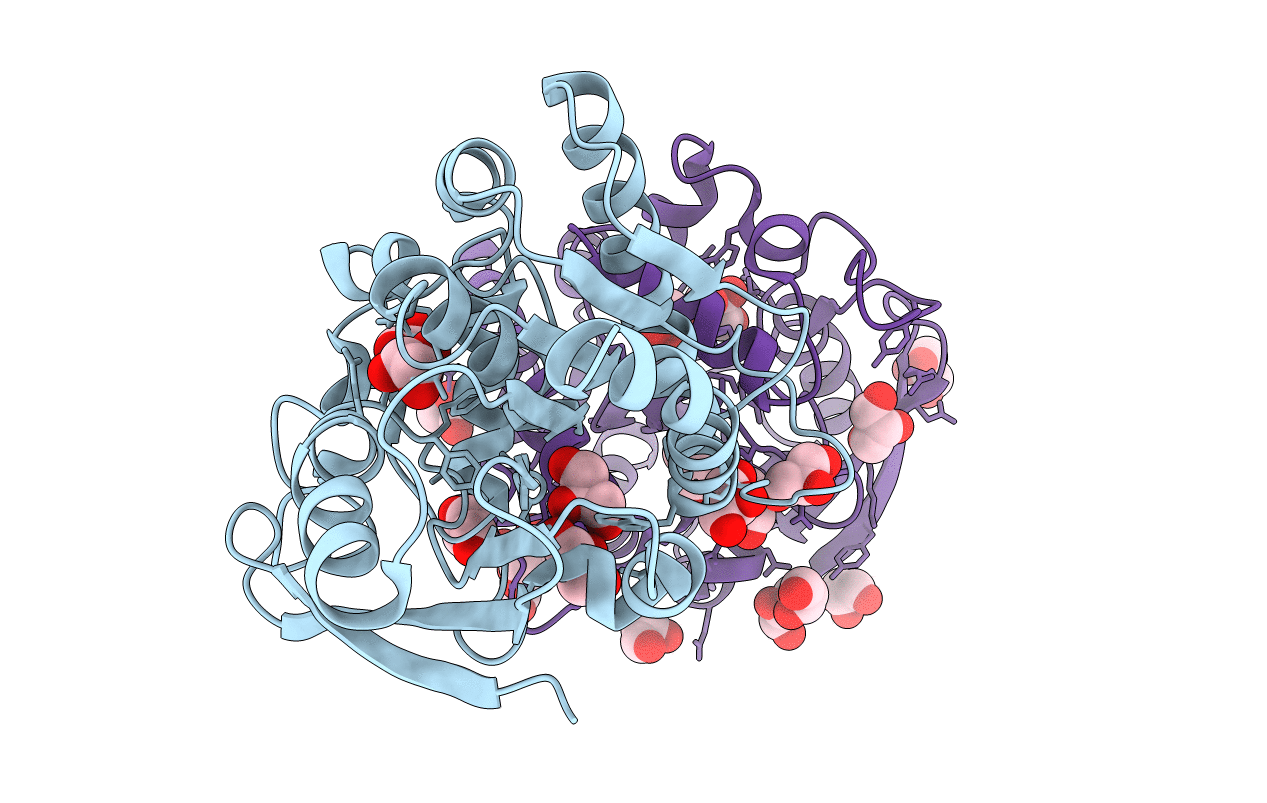
3HRH image
Deposition Date 2009-06-09
Release Date 2009-09-29
Last Version Date 2023-09-06
Entry Detail
PDB ID:
3HRH
Keywords:
Title:
Crystal Structure of Antigen 85C and Glycerol
Biological Source:
Source Organism:
Host Organism:
Method Details:
Experimental Method:
Resolution:
2.30 Å
R-Value Free:
0.22
R-Value Work:
0.19
R-Value Observed:
0.19
Space Group:
P 21 21 21
Macromolecular Entities
Structures with similar UniProt ID
Protein Blast
Polymer Type:polypeptide(L)
Molecule:Antigen 85-C
Chain IDs:A, B
Chain Length:303
Number of Molecules:2
Biological Source:Mycobacterium tuberculosis
Ligand Molecules
Primary Citation
Design, synthesis and biological evaluation of sugar-derived esters, alpha-ketoesters and alpha-ketoamides as inhibitors for Mycobacterium tuberculosis antigen 85C.
Mol Biosyst 5 945 956 (2009)
PMID: 19668859 DOI: 10.1039/b902284h

Abstact

Peptide-based 1,2-dicarbonyl compounds have emerged as potent inhibitors for serine proteases. Herein, we have designed and synthesized d-arabinose and d-trehalose-based esters, alpha-ketoesters and alpha-ketoamides, and evaluated their inhibitory activity against Mycobacterium tuberculosis (Mtb) antigen 85C (ag85C), an acyltransferase in the serine hydrolase superfamily. In addition the compounds were evaluated for the ability to inhibit the growth of Mycobacterium smegmatis ATCC 14 468, a non-pathogenic surrogate for Mtb. Among the synthetic analogs evaluated only the methyl ester derived from d-arabinose was found to inhibit the acyltransferase activity of ag85C (IC(50) = 25 mM). Based on this weak inhibitory activity it was not surprising that none of the compounds inhibits the growth of M. smegmatis. In spite of the weak inhibitory activity of , X-ray crystallography on crystals of ag85C soaked with suggested the formation of a covalent ester adduct between and the Ser124 side chain hydroxyl moiety found within the catalytic site of ag85C; however, some of the active site electron density appears to result from bound glycerol. The lack of activity associated with the alpha-ketoester and alpha-ketoamide derivatives of d-trehalose may be the result of intramolecular cyclization of the alpha-keto moiety with the nearby C-4/4' hydroxyls leading to the formation of stable bicyclo-ester and amide derivatives.

Legend

Protein

Chemical

Disease

Primary Citation of related structures
Feedback Form
Name
Email
Institute
Feedback