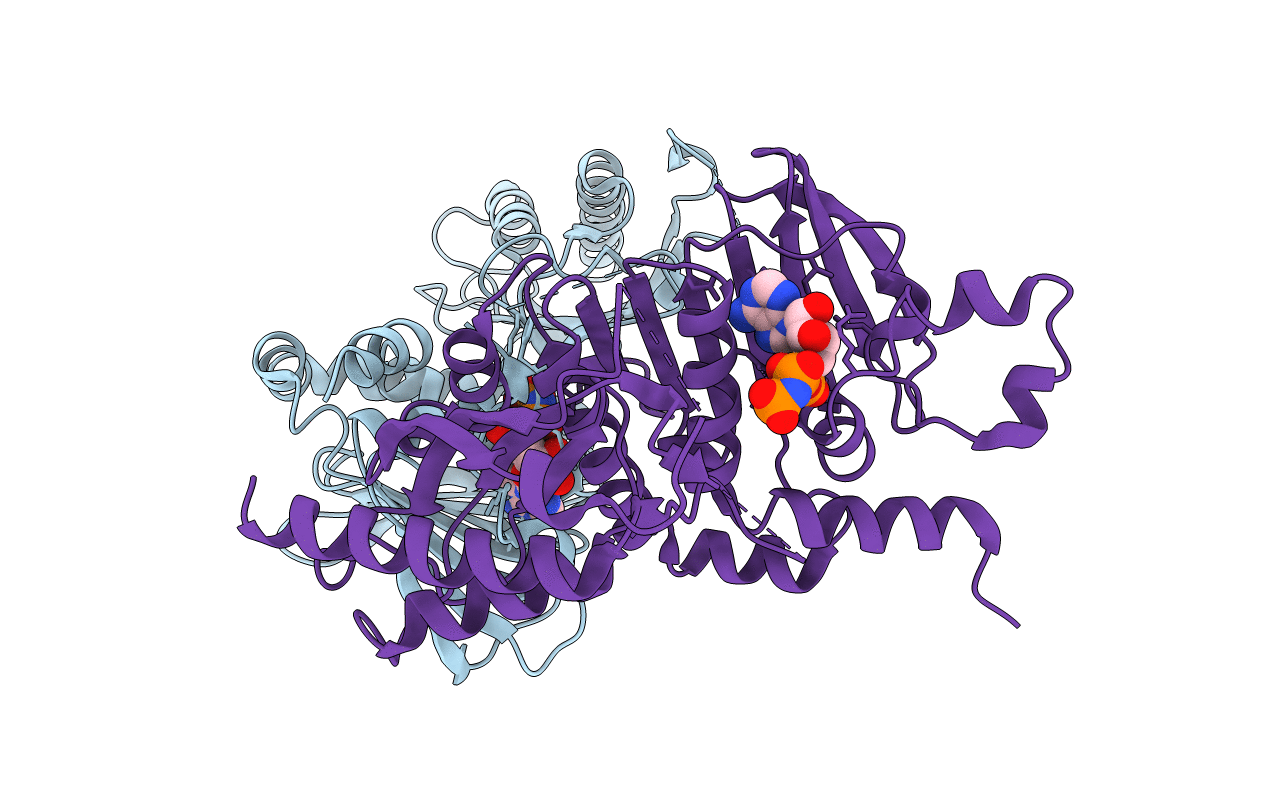
3H4L image
Deposition Date 2009-04-20
Release Date 2010-03-02
Last Version Date 2023-09-06
Entry Detail
PDB ID:
3H4L
Title:
Crystal Structure of N terminal domain of a DNA repair protein
Biological Source:
Source Organism:
Host Organism:
Method Details:
Experimental Method:
Resolution:
2.50 Å
R-Value Free:
0.28
R-Value Work:
0.23
R-Value Observed:
0.23
Space Group:
P 21 21 21

Macromolecular Entities
Structures with similar UniProt ID
Protein Blast
Polymer Type:polypeptide(L)
Molecule:DNA mismatch repair protein PMS1
Gene (Uniprot):PMS1
Chain IDs:A, B
Chain Length:367
Number of Molecules:2
Biological Source:Saccharomyces cerevisiae
Primary Citation
Functional residues on the surface of the N-terminal domain of yeast Pms1.
Dna Repair 9 448 457 (2010)
PMID: 20138591 DOI: 10.1016/j.dnarep.2010.01.010

Abstact

Saccharomyces cerevisiae MutLalpha is a heterodimer of Mlh1 and Pms1 that participates in DNA mismatch repair (MMR). Both proteins have weakly conserved C-terminal regions (CTDs), with the CTD of Pms1 harboring an essential endonuclease activity. These proteins also have conserved N-terminal domains (NTDs) that bind and hydrolyze ATP and bind to DNA. To better understand Pms1 functions and potential interactions with DNA and/or other proteins, we solved the 2.5A crystal structure of yeast Pms1 (yPms1) NTD. The structure is similar to the homologous NTDs of Escherichia coli MutL and human PMS2, including the site involved in ATP binding and hydrolysis. The structure reveals a number of conserved, positively charged surface residues that do not interact with other residues in the NTD and are therefore candidates for interactions with DNA, with the CTD and/or with other proteins. When these were replaced with glutamate, several replacements resulted in yeast strains with elevated mutation rates. Two replacements also resulted in NTDs with decreased DNA binding affinity in vitro, suggesting that these residues contribute to DNA binding that is important for mismatch repair. Elevated mutation rates also resulted from surface residue replacements that did not affect DNA binding, suggesting that these conserved residues serve other functions, possibly involving interactions with other MMR proteins.

Legend

Protein

Chemical

Disease

Primary Citation of related structures
Feedback Form
Name
Email
Institute
Feedback