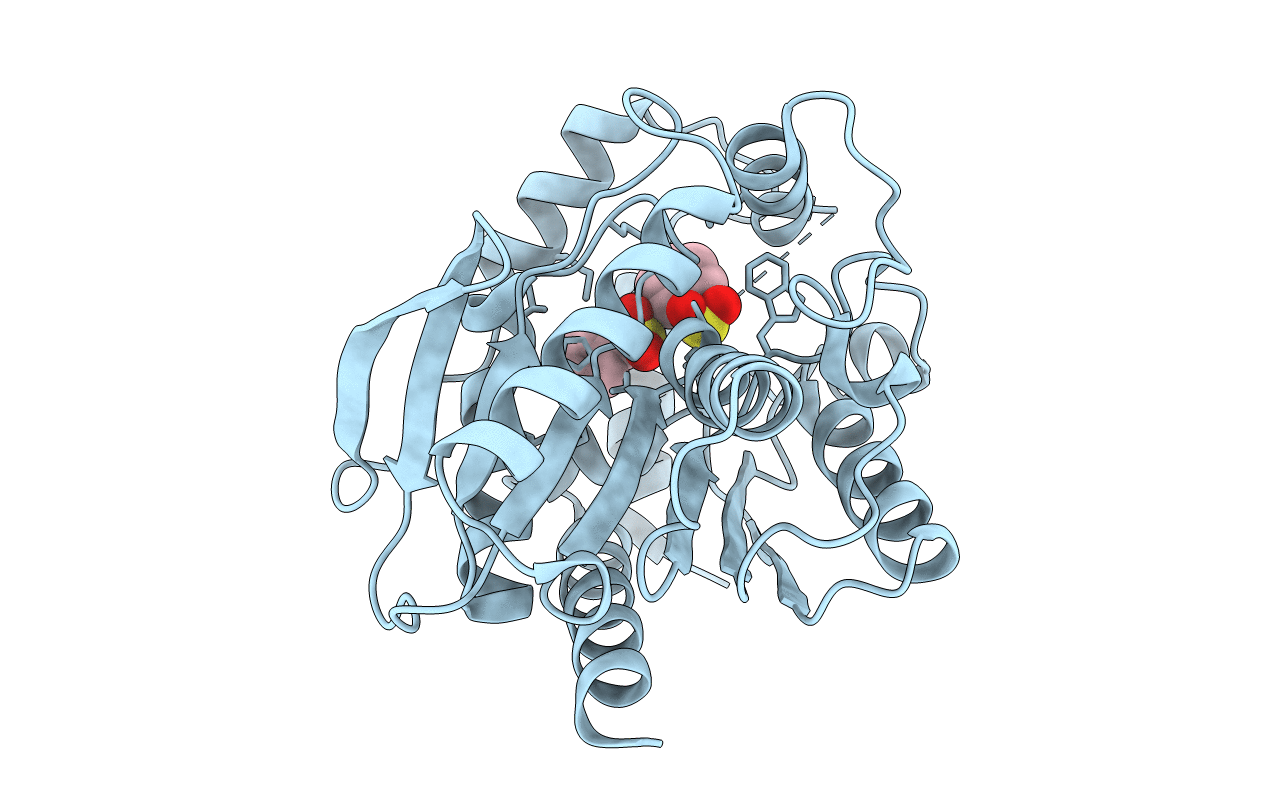
3H18 image
Deposition Date 2009-04-11
Release Date 2009-04-28
Last Version Date 2024-11-13
Entry Detail
PDB ID:
3H18
Keywords:
Title:
Crystal structure of EstE5-PMSF (II)
Biological Source:
Source Organism:
Host Organism:
Method Details:
Experimental Method:
Resolution:
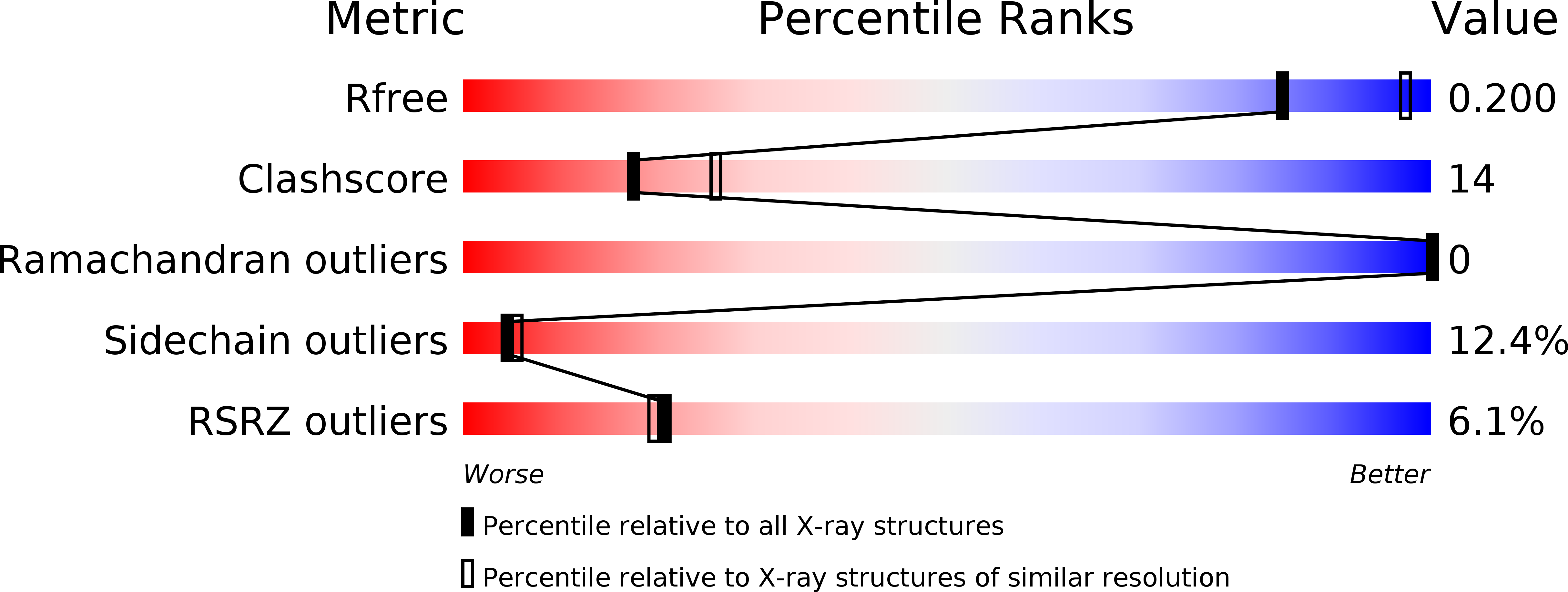
2.40 Å
R-Value Free:
0.25
R-Value Work:
0.18
R-Value Observed:
0.18
Space Group:
P 41 21 2
Macromolecular Entities
Structures with similar UniProt ID
Protein Blast
Polymer Type:polypeptide(L)
Molecule:Esterase/lipase
Gene (Uniprot):estE5
Chain IDs:A
Chain Length:322
Number of Molecules:1
Biological Source:Uncultured bacterium
Ligand Molecules
Primary Citation
The crystal structure of an HSL-homolog EstE5 complex with PMSF reveals a unique configuration that inhibits the nucleophile Ser144 in catalytic triads.
Biochem.Biophys.Res.Commun. 389 247 250 (2009)
PMID: 19715665 DOI: 10.1016/j.bbrc.2009.08.123

Abstact

The esterase/lipase family (EC 3.1.1.3/EC 3.1.1.1) represents a diverse group of hydrolases that catalyze the cleavage of ester bonds and are widely distributed in animals, plants and microorganisms. Among these enzymes, hormone-sensitive lipases, play a critical role in the regulation of rodent fat cell lipolysis and are regarded as adipose tissue-specific enzymes. Recently, we reported the structural and biological characterization of EstE5 from the metagenome library [K.H. Nam, M.Y. Kim, S.J. Kim, A. Priyadarshi, W.H. Lee, K.Y. Hwang, Structural and functional analysis of a novel EstE5 belonging to the subfamily of hormone-sensitive lipase, Biochem. Biophys. Res. Commun. 379 (2009) 553-556]. The structure of this protein revealed that it belongs to the HSL-family. Here, we report the inhibition of the activity of the HSL-homolog EstE5 protein as determined by the use of esterase/lipase inhibitors. Our results revealed that the EstE5 protein is significantly inhibited by PMSF. In addition, this is the first study to identify the crystal structures of EstE5-PMSF at 2.4 and 2.5A among the HSL-homolog structures. This structural configuration is similar to that adopted when serine proteases are inhibited by PMSF. The results presented here provide valuable information regarding the properties of the HSL-family.

Legend

Protein

Chemical

Disease

Primary Citation of related structures
Feedback Form
Name
Email
Institute
Feedback