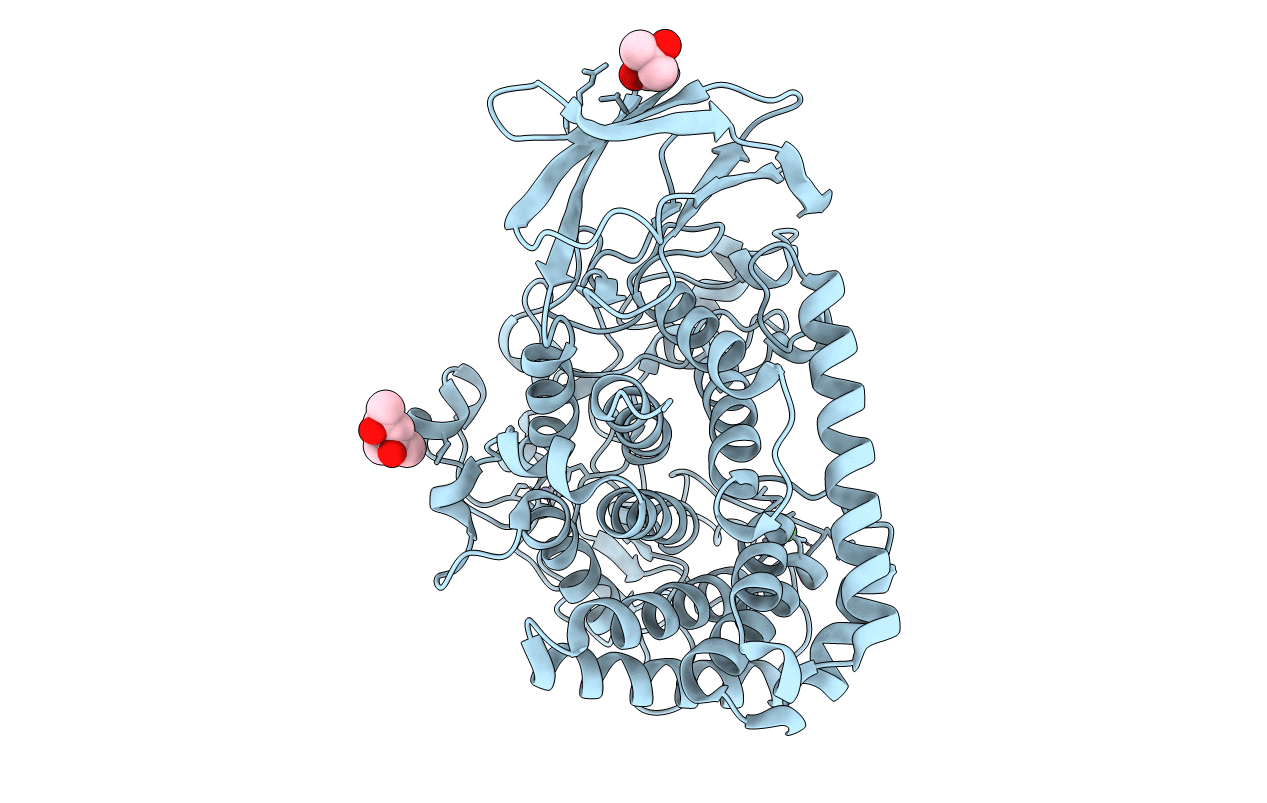
3GZK image
Deposition Date 2009-04-07
Release Date 2009-10-13
Last Version Date 2023-11-01
Entry Detail
PDB ID:
3GZK
Keywords:
Title:
Structure of A. Acidocaldarius Cellulase CelA
Biological Source:
Method Details:
Experimental Method:
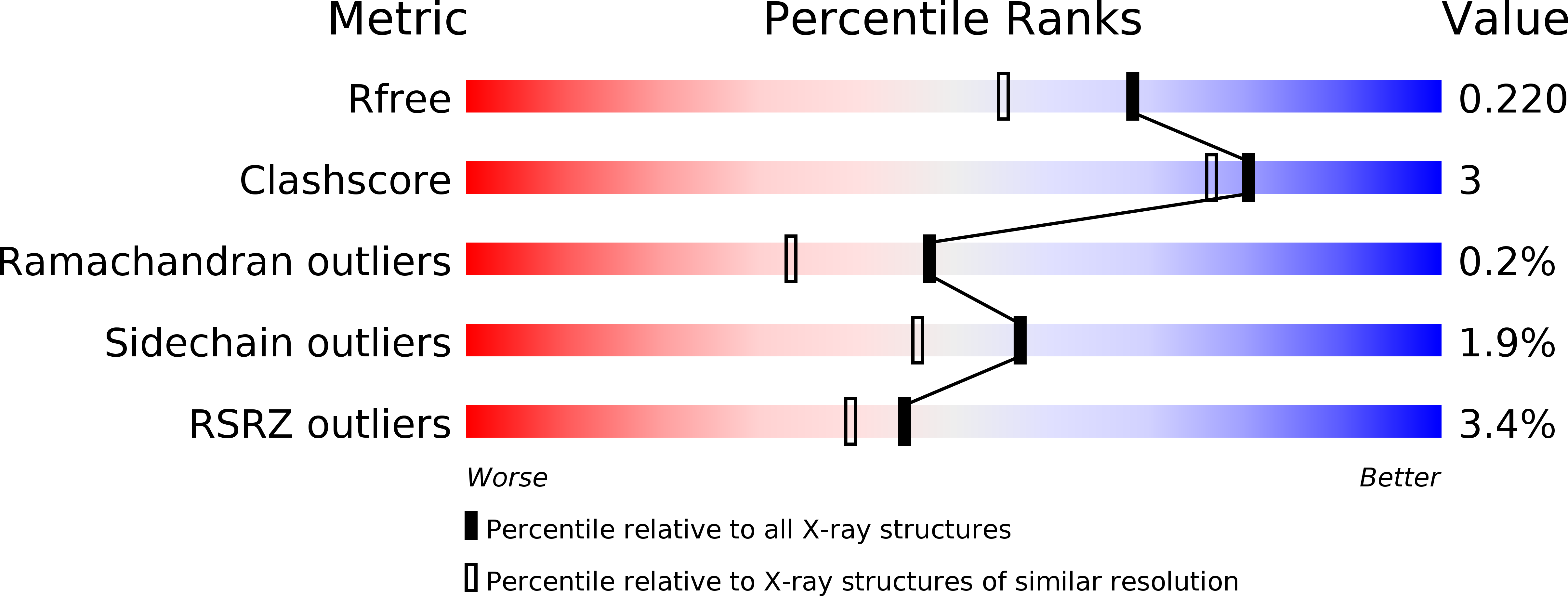
Resolution:
1.80 Å
R-Value Free:
0.21
R-Value Work:
0.18
R-Value Observed:
0.18
Space Group:
P 21 21 2
Macromolecular Entities
Structures with similar UniProt ID
Protein Blast
Polymer Type:polypeptide(L)
Molecule:Cellulase
Gene (Uniprot):celA
Chain IDs:A
Chain Length:537
Number of Molecules:1
Biological Source:Alicyclobacillus acidocaldarius subsp. acidocaldarius
Primary Citation
Crystal structures of A. acidocaldarius endoglucanase Cel9A in complex with cello-oligosaccharides: strong -1 and -2 subsites mimic cellobiohydrolase activity
J.Mol.Biol. 394 61 70 (2009)
PMID: 19729024 DOI: 10.1016/j.jmb.2009.08.060

Abstact

Alicyclobacillus acidocaldarius endoglucanase Cel9A (AaCel9A) is an inverting glycoside hydrolase with beta-1,4-glucanase activity on soluble polymeric substrates. Here, we report three X-ray structures of AaCel9A: a ligand-free structure at 1.8 A resolution and two complexes at 2.66 and 2.1 A resolution, respectively, with cellobiose obtained by co-crystallization and with cellotetraose obtained by the soaking method. AaCel9A forms an (alpha/alpha)(6)-barrel like other glycoside hydrolase family 9 enzymes. When cellobiose is used as a ligand, three glucosyl binding subsites are occupied, including two on the glycone side, while with cellotetraose as a ligand, five subsites, including four on the glycone side, are occupied. A structural comparison showed no conformational rearrangement of AaCel9A upon ligand binding. The structural analysis demonstrates that of the four minus subsites identified, subsites -1 and -2 show the strongest interaction with bound glucose. In conjunction with the open active-site cleft of AaCel9A, this is able to reconcile the previously observed cleavage of short-chain oligosaccharides with cellobiose as main product with the endo mode of action on larger polysaccharides.

Legend

Protein

Chemical

Disease

Primary Citation of related structures
Feedback Form
Name
Email
Institute
Feedback