Planned Maintenance: Some services may turn out to be unavailable from 15th January, 2026 to 16th January, 2026. We apologize for the inconvenience!

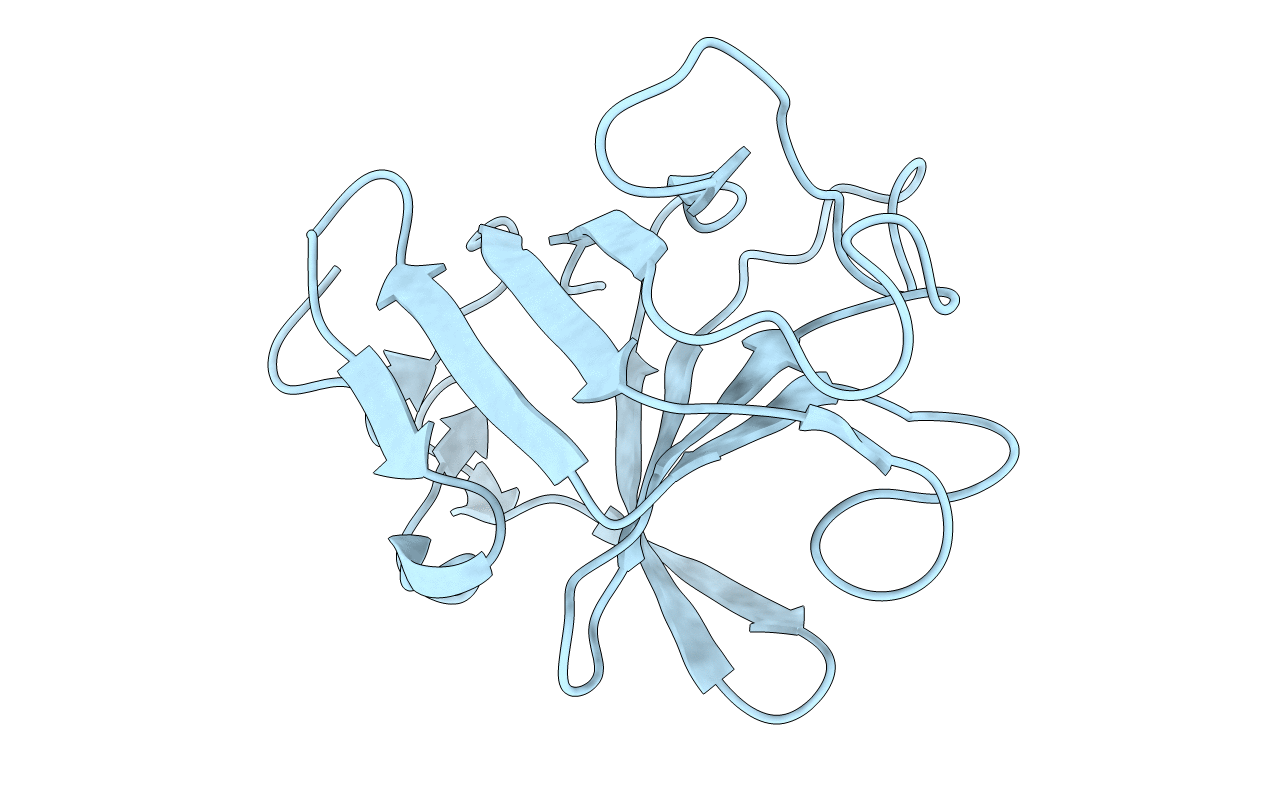
3GGQ image
Deposition Date 2009-03-02
Release Date 2009-08-25
Last Version Date 2024-03-20
Entry Detail
PDB ID:
3GGQ
Keywords:
Title:
Dimerization of Hepatitis E Virus Capsid Protein E2s Domain is Essential for Virus-Host Interaction
Biological Source:
Source Organism(s):
Expression System(s):
Method Details:
Experimental Method:
Resolution:
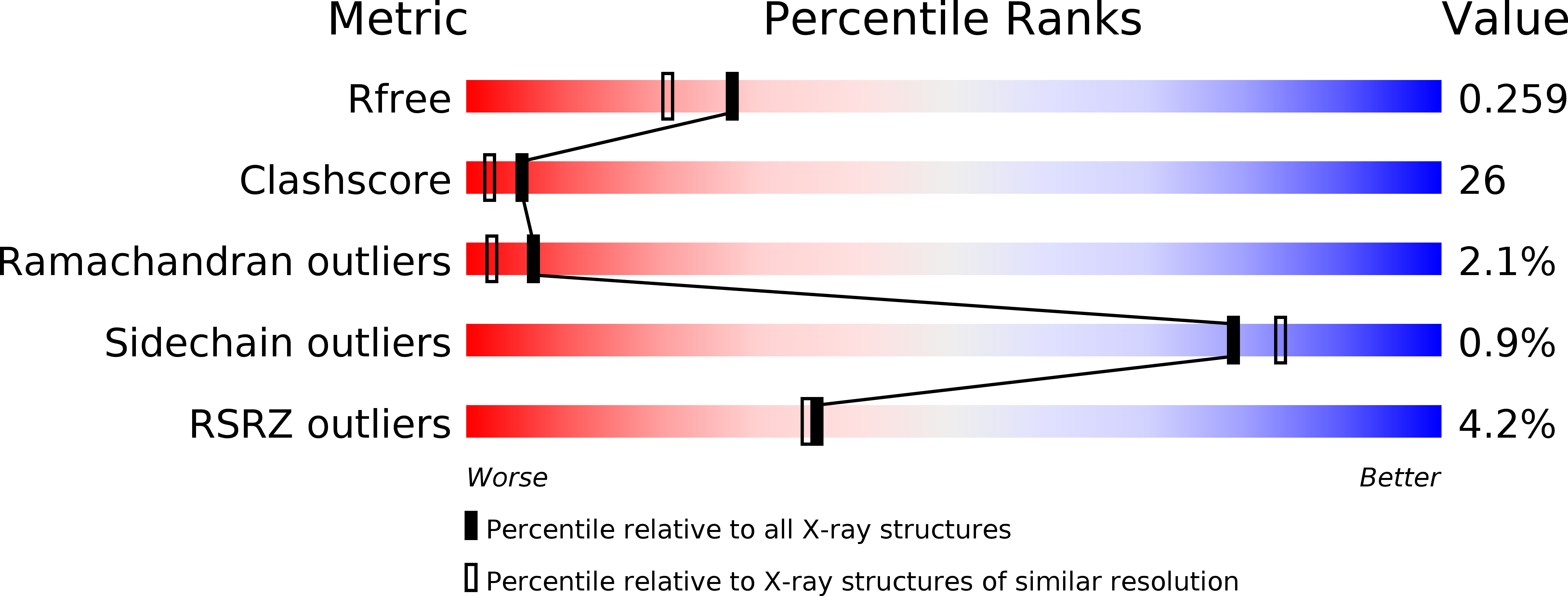
2.00 Å
R-Value Free:
0.24
R-Value Work:
0.19
R-Value Observed:
0.21
Space Group:
H 3 2
Macromolecular Entities
Structures with similar UniProt ID
Protein Blast
Polymer Type:polypeptide(L)
Molecule:Capsid protein
Gene (Uniprot):ORF2
Mutagens:Y532H
Chain IDs:A
Chain Length:149
Number of Molecules:1
Biological Source:Hepatitis E virus genotype 1
Ligand Molecules
Primary Citation
Dimerization of hepatitis E virus capsid protein E2s domain is essential for virus-host interaction
Plos Pathog. 5 e1000537 e1000537 (2009)
PMID: 19662165 DOI: 10.1371/journal.ppat.1000537

Abstact

Hepatitis E virus (HEV), a non-enveloped, positive-stranded RNA virus, is transmitted in a faecal-oral manner, and causes acute liver diseases in humans. The HEV capsid is made up of capsomeres consisting of homodimers of a single structural capsid protein forming the virus shell. These dimers are believed to protrude from the viral surface and to interact with host cells to initiate infection. To date, no structural information is available for any of the HEV proteins. Here, we report for the first time the crystal structure of the HEV capsid protein domain E2s, a protruding domain, together with functional studies to illustrate that this domain forms a tight homodimer and that this dimerization is essential for HEV-host interactions. In addition, we also show that the neutralizing antibody recognition site of HEV is located on the E2s domain. Our study will aid in the development of vaccines and, subsequently, specific inhibitors for HEV.

Legend

Protein

Chemical

Disease

Primary Citation of related structures
Feedback Form
Name
Email
Institute
Feedback