3G02 image
Deposition Date 2009-01-27
Release Date 2009-06-09
Last Version Date 2023-11-01
Entry Detail
PDB ID:
3G02
Keywords:
Title:
Structure of enantioselective mutant of epoxide hydrolase from Aspergillus niger generated by directed evolution
Biological Source:
Source Organism:
Host Organism:
Method Details:
Experimental Method:
Resolution:
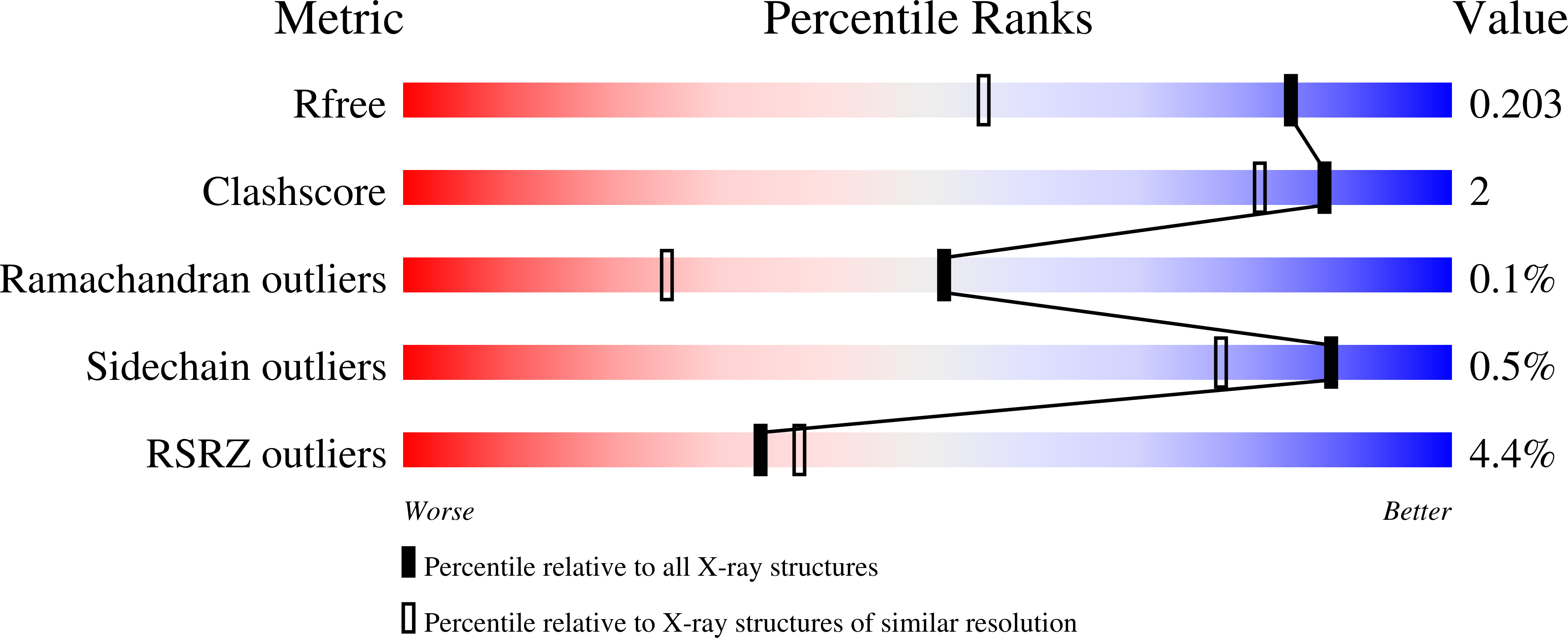
1.50 Å
R-Value Free:
0.20
R-Value Work:
0.18
R-Value Observed:
0.18
Space Group:
P 1 21 1
Macromolecular Entities
Structures with similar UniProt ID
Protein Blast
Polymer Type:polypeptide(L)
Molecule:Epoxide hydrolase
Gene (Uniprot):hyl1
Mutagens:L215F, A217N, R219S, L249Y, T317W, T318V, M329P, L330Y, C350V
Chain IDs:A, B
Chain Length:408
Number of Molecules:2
Biological Source:Aspergillus niger
Ligand Molecules
Primary Citation
Directed evolution of an enantioselective epoxide hydrolase: uncovering the source of enantioselectivity at each evolutionary stage
J.Am.Chem.Soc. 131 7334 7343 (2009)
PMID: 19469578 DOI: 10.1021/ja809673d

Abstact

Directed evolution of enzymes as enantioselective catalysts in organic chemistry is an alternative to traditional asymmetric catalysis using chiral transition-metal complexes or organocatalysts, the different approaches often being complementary. Moreover, directed evolution studies allow us to learn more about how enzymes perform mechanistically. The present study concerns a previously evolved highly enantioselective mutant of the epoxide hydrolase from Aspergillus niger in the hydrolytic kinetic resolution of racemic glycidyl phenyl ether. Kinetic data, molecular dynamics calculations, molecular modeling, inhibition experiments, and X-ray structural work for the wild-type (WT) enzyme and the best mutant reveal the basis of the large increase in enantioselectivity (E = 4.6 versus E = 115). The overall structures of the WT and the mutant are essentially identical, but dramatic differences are observed in the active site as revealed by the X-ray structures. All of the experimental and computational results support a model in which productive positioning of the preferred (S)-glycidyl phenyl ether, but not the (R)-enantiomer, forms the basis of enhanced enantioselectivity. Predictions regarding substrate scope and enantioselectivity of the best mutant are shown to be possible.

Legend

Protein

Chemical

Disease

Primary Citation of related structures
Feedback Form
Name
Email
Institute
Feedback