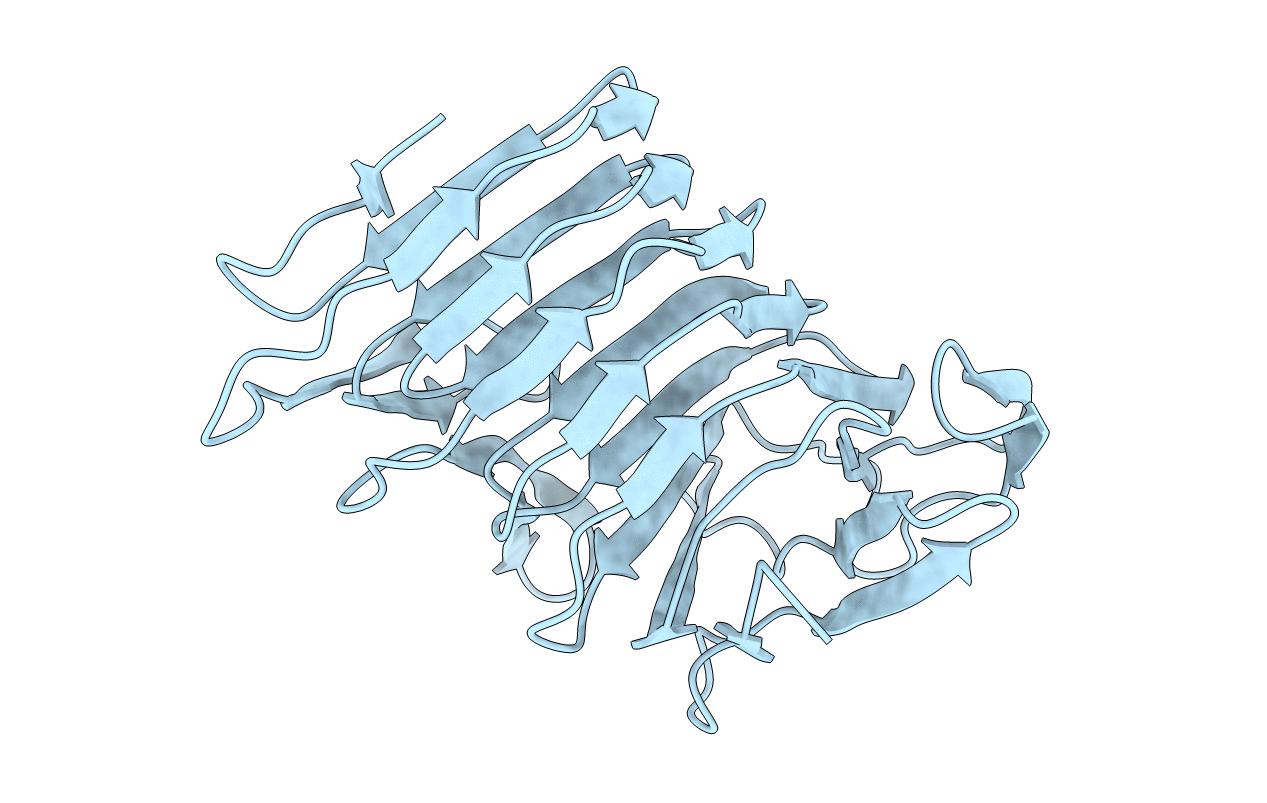
3FY3 image
Deposition Date 2009-01-21
Release Date 2009-06-02
Last Version Date 2024-11-20
Entry Detail
PDB ID:
3FY3
Keywords:
Title:
Crystal structure of truncated hemolysin A from P. mirabilis
Biological Source:
Source Organism(s):
Expression System(s):
Method Details:
Experimental Method:
Resolution:
1.80 Å
R-Value Free:
0.20
R-Value Work:
0.14
R-Value Observed:
0.15
Space Group:
P 21 21 2

Macromolecular Entities
Structures with similar UniProt ID
Protein Blast
Polymer Type:polypeptide(L)
Molecule:Hemolysin
Gene (Uniprot):hpmA
Chain IDs:A
Chain Length:236
Number of Molecules:1
Biological Source:Proteus mirabilis
Ligand Molecules
Primary Citation
Structural and functional studies of truncated hemolysin A from Proteus mirabilis.
J.Biol.Chem. 284 22297 22309 (2009)
PMID: 19494116 DOI: 10.1074/jbc.M109.014431

Abstact

In this study we analyzed the structure and function of a truncated form of hemolysin A (HpmA265) from Proteus mirabilis using a series of functional and structural studies. Hemolysin A belongs to the two-partner secretion pathway. The two-partner secretion pathway has been identified as the most common protein secretion pathway among Gram-negative bacteria. Currently, the mechanism of action for the two-partner hemolysin members is not fully understood. In this study, hemolysis experiments revealed a unidirectional, cooperative, biphasic activity profile after full-length, inactive hemolysin A was seeded with truncated hemolysin A. We also solved the first x-ray structure of a TpsA hemolysin. The truncated hemolysin A formed a right-handed parallel beta-helix with three adjoining segments of anti-parallel beta-sheet. A CXXC disulfide bond, four buried solvent molecules, and a carboxyamide ladder were all located at the third complete beta-helix coil. Replacement of the CXXC motif led to decreased activity and stability according to hemolysis and CD studies. Furthermore, the crystal structure revealed a sterically compatible, dry dimeric interface formed via anti-parallel beta-sheet interactions between neighboring beta-helix monomers. Laser scanning confocal microscopy further supported the unidirectional interconversion of full-length hemolysin A. From these results, a model has been proposed, where cooperative, beta-strand interactions between HpmA265 and neighboring full-length hemolysin A molecules, facilitated in part by the highly conserved CXXC pattern, account for the template-assisted hemolysis.

Legend

Protein

Chemical

Disease

Primary Citation of related structures
Feedback Form
Name
Email
Institute
Feedback