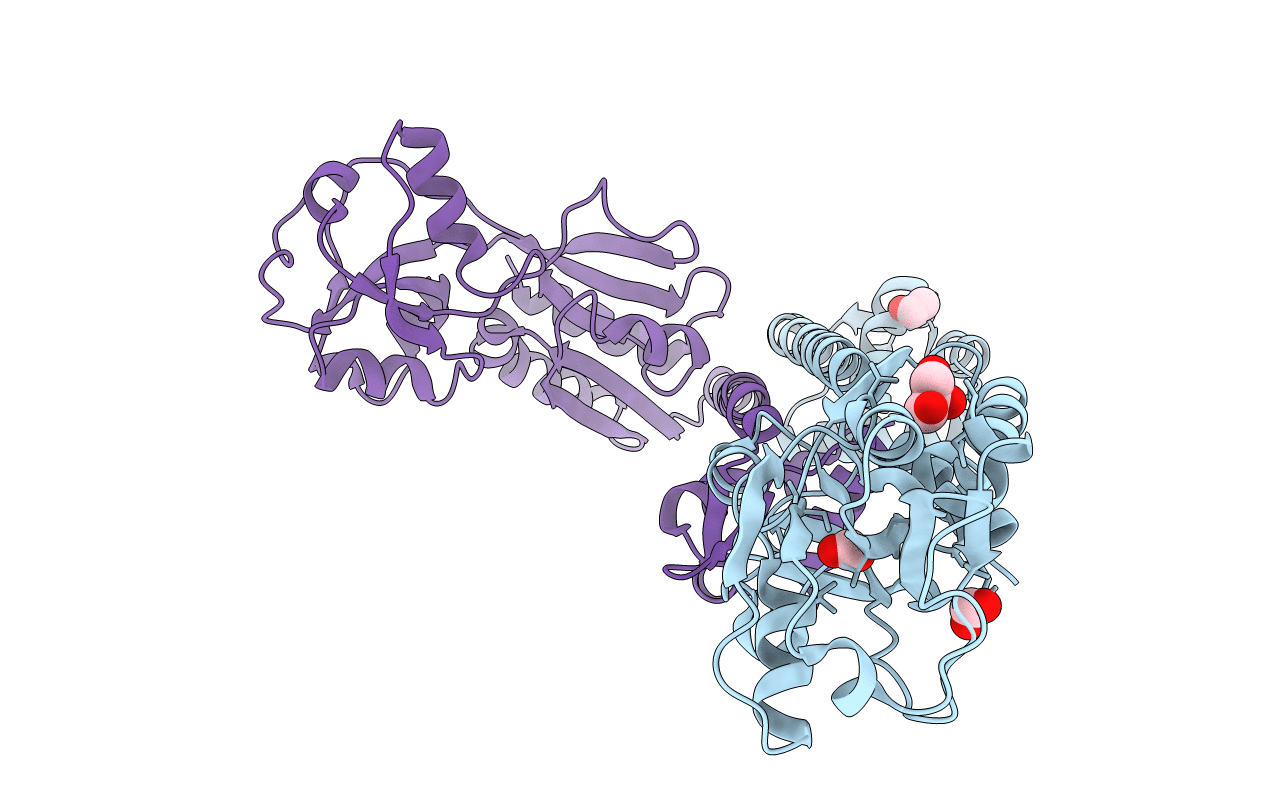
3FXQ image
Deposition Date 2009-01-21
Release Date 2010-01-26
Last Version Date 2024-03-20
Entry Detail
PDB ID:
3FXQ
Title:
Crystal structure of the LysR-type transcriptional regulator TsaR
Biological Source:
Source Organism(s):
Expression System(s):
Method Details:
Experimental Method:
Resolution:
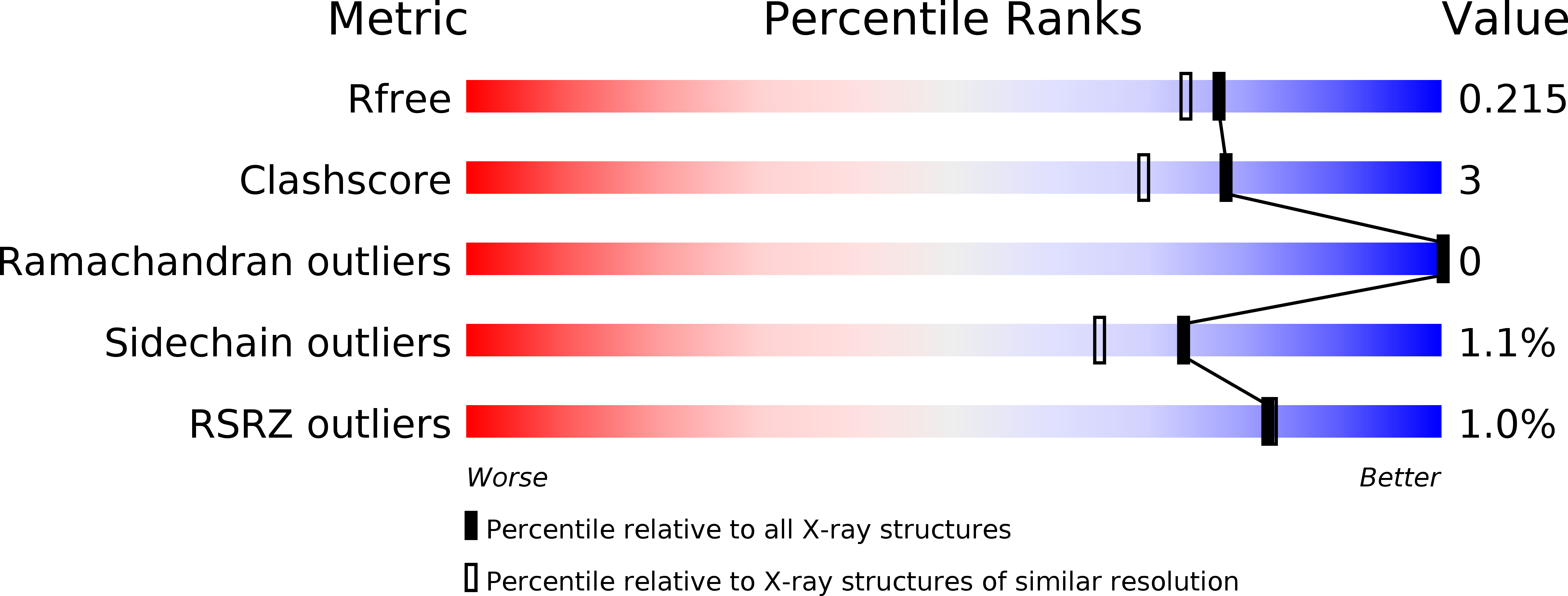
1.85 Å
R-Value Free:
0.21
R-Value Work:
0.18
R-Value Observed:
0.18
Space Group:
C 1 2 1
Macromolecular Entities
Structures with similar UniProt ID
Protein Blast
Polymer Type:polypeptide(L)
Molecule:LysR type regulator of tsaMBCD
Gene (Uniprot):tsaR
Chain IDs:A, B
Chain Length:305
Number of Molecules:2
Biological Source:Comamonas testosteroni
Primary Citation
Structural studies on the full-length LysR-type regulator TsaR from Comamonas testosteroni T-2 reveal a novel open conformation of the tetrameric LTTR fold
Mol.Microbiol. 75 1199 1214 (2010)
PMID: 20059681 DOI: 10.1111/j.1365-2958.2010.07043.x

Abstact

LysR-type transcriptional regulators (LTTRs) constitute the largest family of regulators in prokaryotes. The full-length structures of the LTTR TsaR from Comamonas testosteroni T-2 and its complex with the natural inducer para-toluensulfonate have been characterized by X-ray diffraction. Both ligand-free and complexed forms reveal a dramatically different quaternary structure from that of CbnR from Ralstonia eutropha, or a putative LysR-type regulator from Pseudomonas aeruginosa, the only other determined full-length structures of tetrameric LTTRs. Although all three show a head-to-head tetrameric ring, TsaR displays an open conformation, whereas CbnR and PA01-PR present additional contacts in opposing C-terminal domains that close the ring. Such large differences may be due to a broader structural versatility than previously assumed or either, reflect the intrinsic flexibility of tetrameric LTTRs. On the grounds of the sliding dimer hypothesis of LTTR activation, we propose a structural model in which the closed structures could reflect the conformation of a ligand-free LTTR, whereas inducer binding would bring about local changes to disrupt the interface linking the two compact C-terminal domains. This could lead to a TsaR-like, open structure, where the pairs of recognition helices are closer to each other by more than 10 A.

Legend

Protein

Chemical

Disease

Primary Citation of related structures
Feedback Form
Name
Email
Institute
Feedback