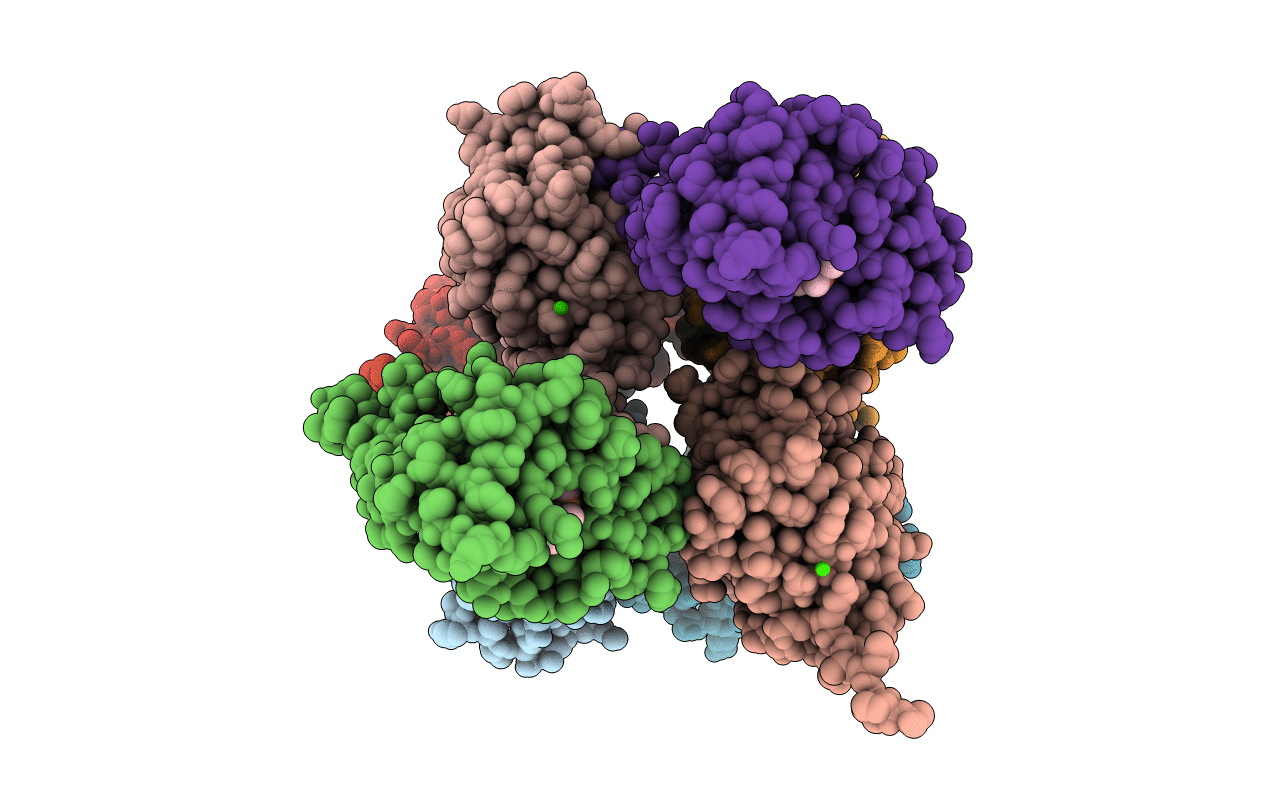
3FL9 image
Deposition Date 2008-12-18
Release Date 2009-04-28
Last Version Date 2023-09-06
Entry Detail
PDB ID:
3FL9
Keywords:
Title:
Crystal structure of B. anthracis dihydrofolate reductase (DHFR) with trimethoprim
Biological Source:
Source Organism:
Host Organism:
Method Details:
Experimental Method:
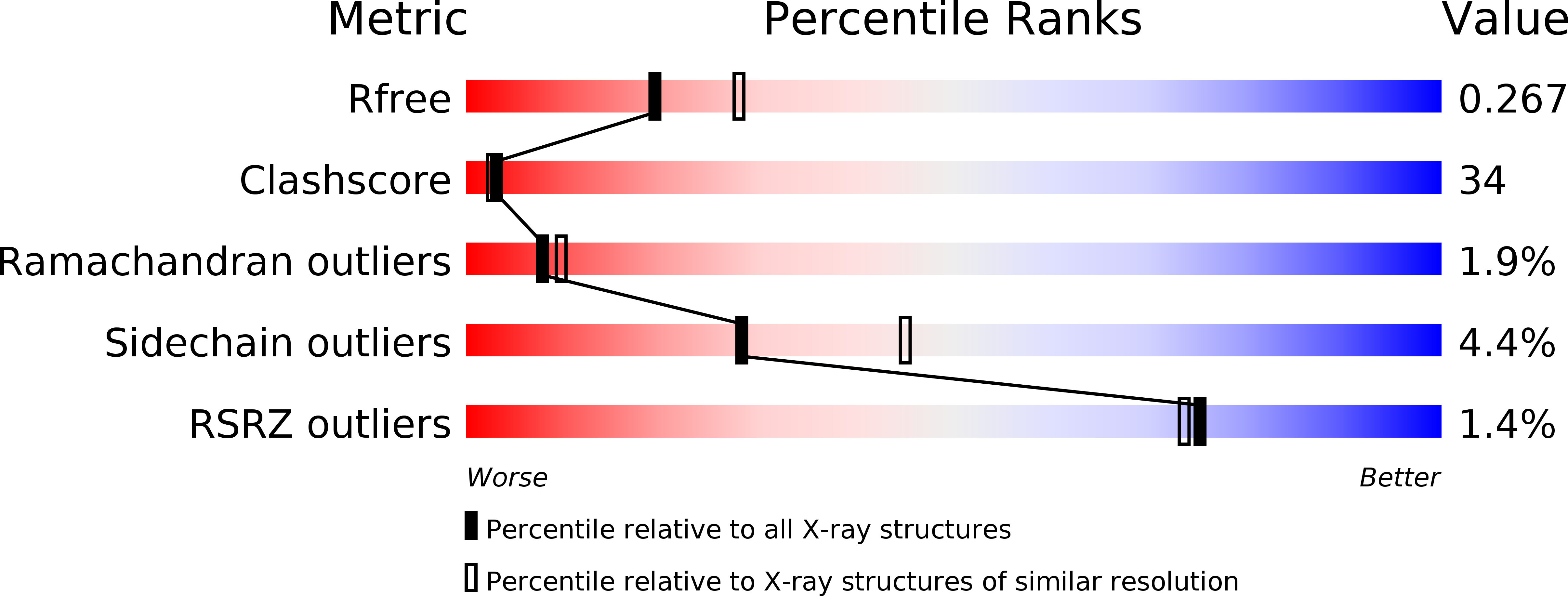
Resolution:
2.40 Å
R-Value Free:
0.30
R-Value Work:
0.23
R-Value Observed:
0.24
Space Group:
P 1 2 1
Macromolecular Entities
Structures with similar UniProt ID
Protein Blast
Polymer Type:polypeptide(L)
Molecule:dihydrofolate reductase (DHFR)
Gene (Uniprot):dfrA
Chain IDs:A, B, C, D, E, F, G, H
Chain Length:166
Number of Molecules:8
Biological Source:Bacillus anthracis
Primary Citation
Crystal structure of Bacillus anthracis dihydrofolate reductase with the dihydrophthalazine-based trimethoprim derivative RAB1 provides a structural explanation of potency and selectivity.
Antimicrob.Agents Chemother. 53 3065 3073 (2009)
PMID: 19364848 DOI: 10.1128/AAC.01666-08

Abstact

Bacillus anthracis possesses an innate resistance to the antibiotic trimethoprim due to poor binding to dihydrofolate reductase (DHFR); currently, there are no commercial antibacterials that target this enzyme in B. anthracis. We have previously reported a series of dihydrophthalazine-based trimethoprim derivatives that are inhibitors for this target. In the present work, we have synthesized one compound (RAB1) displaying favorable 50% inhibitory concentration (54 nM) and MIC (< or =12.8 microg/ml) values. RAB1 was cocrystallized with the B. anthracis DHFR in the space group P2(1)2(1)2(1), and X-ray diffraction data were collected to a 2.3-A resolution. Binding of RAB1 causes a conformational change of the side chain of Arg58 and Met37 to accommodate the dihydrophthalazine moiety. Unlike the natural substrate or trimethoprim, the dihydrophthalazine group provides a large hydrophobic anchor that embeds within the DHFR active site and accounts for its selective inhibitory activity against B. anthracis.

Legend

Protein

Chemical

Disease

Primary Citation of related structures
Feedback Form
Name
Email
Institute
Feedback