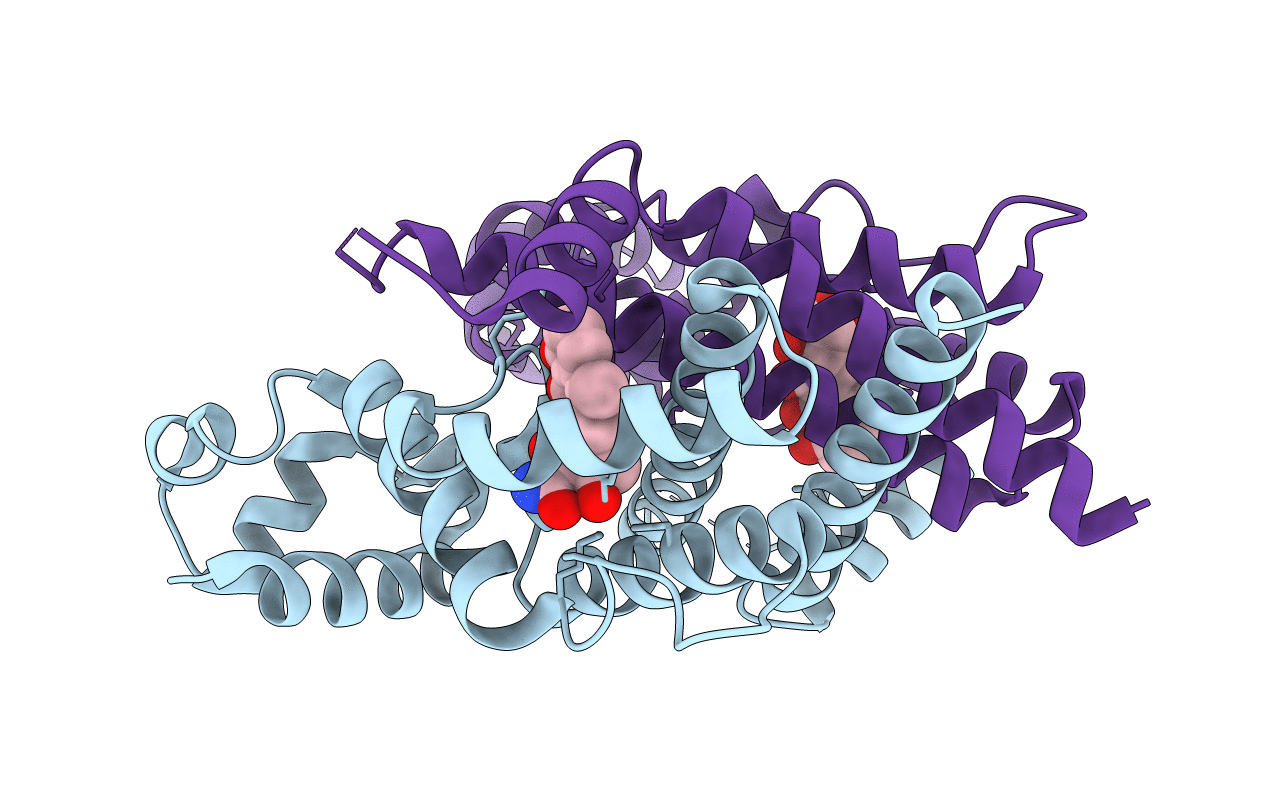
3FK7 image
Deposition Date 2008-12-16
Release Date 2009-11-03
Last Version Date 2023-11-01
Entry Detail
PDB ID:
3FK7
Keywords:
Title:
Crystal structure of TetR triple mutant (H64K, S135L, S138I) in complex with 4-ddma-atc
Biological Source:
Source Organism(s):
Escherichia coli (Taxon ID: 562)
Expression System(s):
Method Details:
Experimental Method:
Resolution:
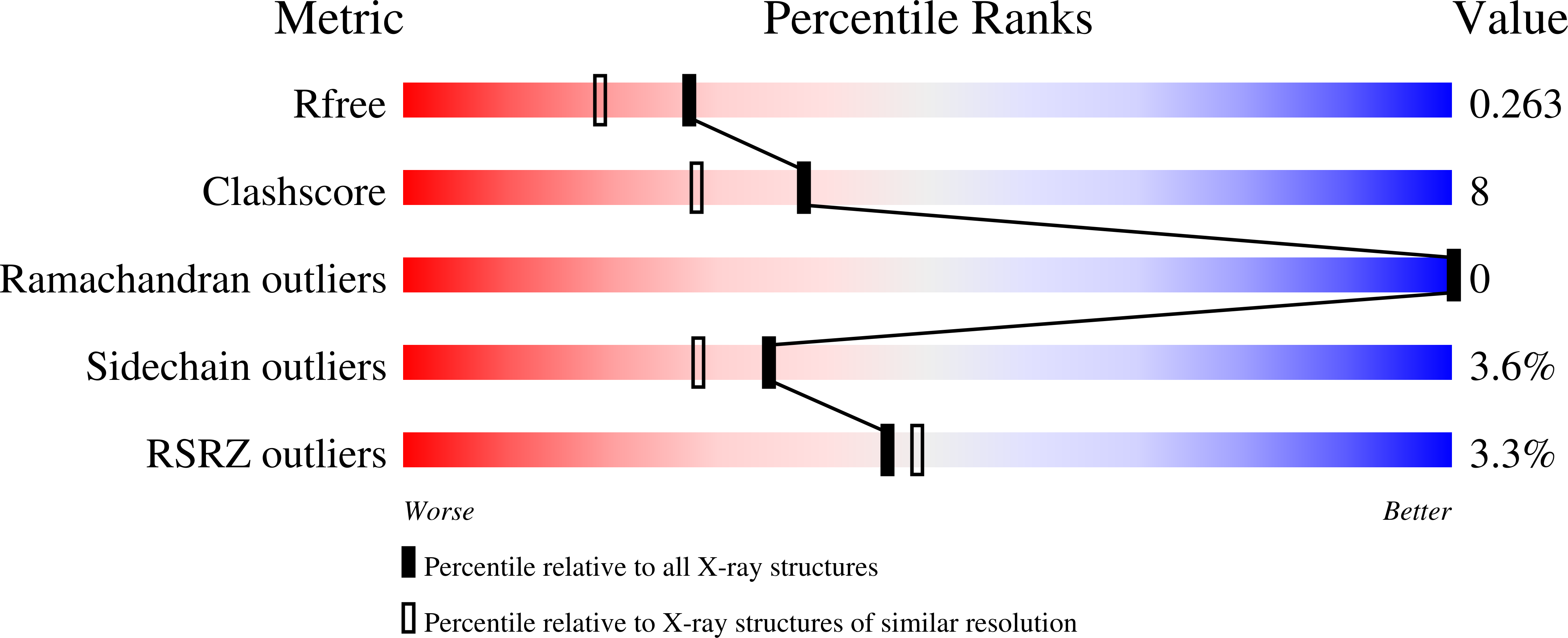
2.06 Å
R-Value Free:
0.26
R-Value Work:
0.20
R-Value Observed:
0.20
Space Group:
C 1 2 1
Macromolecular Entities
Protein Blast
Polymer Type:polypeptide(L)
Molecule:Tetracycline repressor protein class B from transposon Tn10, Tetracycline repressor protein class D
Gene (Uniprot):tetR, tetR
Mutagens:H64K, S135L, S138I
Chain IDs:A, B
Chain Length:208
Number of Molecules:2
Biological Source:Escherichia coli
Primary Citation
Structural origins for selectivity and specificity in an engineered bacterial repressor-inducer pair.
Febs J. 276 5610 5621 (2009)
PMID: 19712110 DOI: 10.1111/j.1742-4658.2009.07254.x

Abstact

The bacterial tetracycline transcription regulation system mediated by the tetracycline repressor (TetR) is widely used to study gene expression in prokaryotes and eukaryotes. To study multiple genes in parallel, a triple mutant TetR(K(64)L(135)I(138)) has been engineered that is selectively induced by the synthetic tetracycline derivative 4-de-dimethylamino-anhydrotetracycline (4-ddma-atc) and no longer by tetracycline, the inducer of wild-type TetR. In the present study, we report the crystal structure of TetR(K(64)L(135)I(138)) in the absence and in complex with 4-ddma-atc at resolutions of 2.1 A. Analysis of the structures in light of the available binding data and previously reported TetR complexes allows for a dissection of the origins of selectivity and specificity. In all crystal structures solved to date, the ligand-binding position, as well as the positioning of the residues lining the binding site, is extremely well conserved, irrespective of the chemical nature of the ligand. Selective recognition of 4-ddma-atc is achieved through fine-tuned hydrogen-bonding constraints introduced by the His64-->Lys substitution, as well as a combination of hydrophobic effect and the removal of unfavorable electrostatic interactions through the introduction of Leu135 and Ile138.

Legend

Protein

Chemical

Disease

Primary Citation of related structures
Feedback Form
Name
Email
Institute
Feedback