3FJT image
Deposition Date 2008-12-15
Release Date 2009-03-24
Last Version Date 2024-10-30
Entry Detail
PDB ID:
3FJT
Keywords:
Title:
Crystal structure of a human Fc fragment engineered for extended serum half-life
Biological Source:
Source Organism:
Homo sapiens (Taxon ID: 9606)
Host Organism:
Method Details:
Experimental Method:
Resolution:
2.50 Å
R-Value Free:
0.29
R-Value Work:
0.22
R-Value Observed:
0.23
Space Group:
P 21 21 21
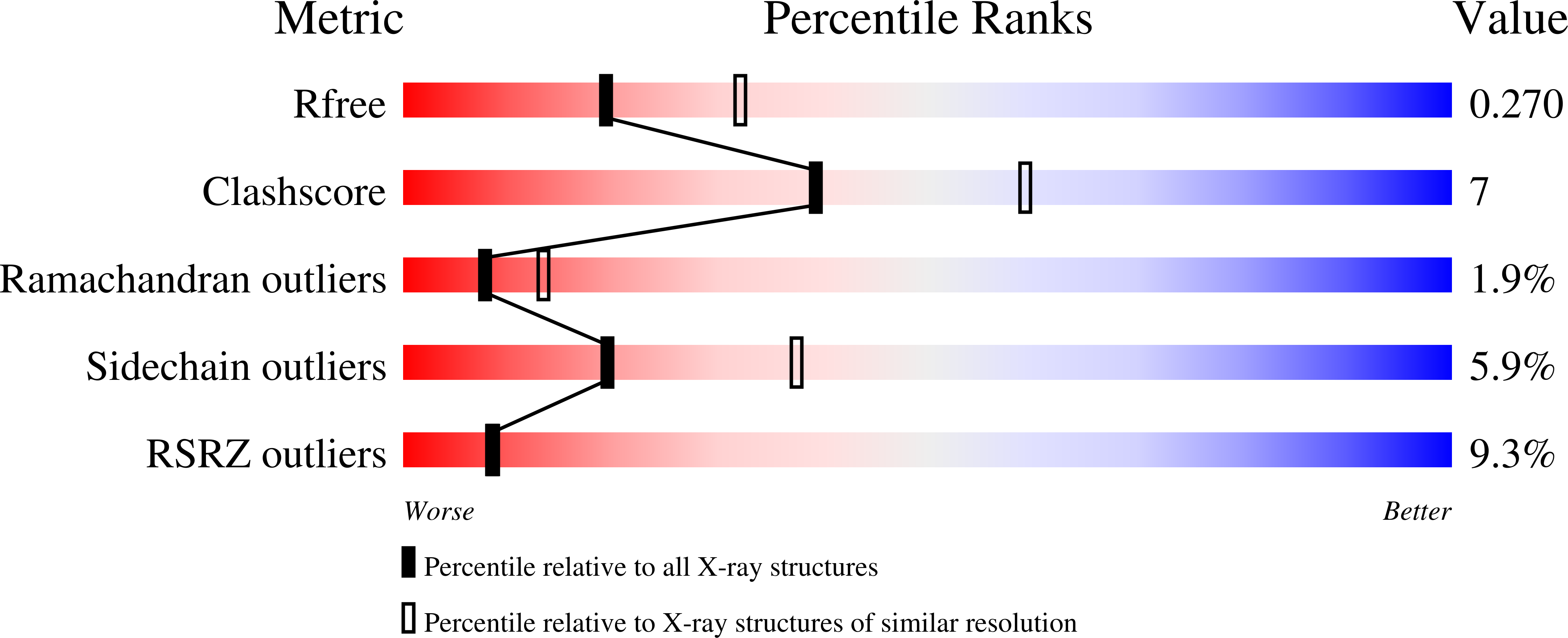
Macromolecular Entities
Structures with similar UniProt ID
Protein Blast
Polymer Type:polypeptide(L)
Molecule:Ig gamma-1 chain C region
Gene (Uniprot):IGHG1
Mutagens:M252Y, S254T, T256E
Chain IDs:A, B
Chain Length:209
Number of Molecules:2
Biological Source:Homo sapiens
Modified Residue
Compound ID Chain ID Parent Comp ID Details 2D Image
ASN A ASN GLYCOSYLATION SITE
Primary Citation
Structural characterization of a human Fc fragment engineered for extended serum half-life.
Mol.Immunol. 46 1750 1755 (2009)
PMID: 19250681 DOI: 10.1016/j.molimm.2009.01.026

Abstact

The first three-dimensional structure of a human Fc fragment genetically engineered for improved pharmacokinetics properties is reported. When introduced into the C(H)2 domain of human immunoglobulin G (IgG) molecules, the triple mutation M252Y/S254T/T256E ('YTE') causes an about 10-fold increase in their binding to the human neonatal Fc receptor (FcRn). This translates into an almost 4-fold increase in the serum half-life of YTE-containing human IgGs in cynomolgus monkeys. A recombinantly produced human Fc/YTE fragment was crystallized and its structure solved at a resolution of 2.5A using molecular replacement. This revealed that Fc/YTE three-dimensional structure is very similar to that of other human Fc fragments in the experimentally visible region spanning residues 236-444. We propose that the enhanced interaction between Fc/YTE and human FcRn is likely mediated by local effects at the substitutions sites. Molecular modeling suggested that potential favorable hydrogen bonds along with an increase in the surface of contact between the two partners may account in part for the corresponding increase in affinity.

Legend

Protein

Chemical

Disease

Primary Citation of related structures
Feedback Form
Name
Email
Institute
Feedback