3FIP image
Deposition Date 2008-12-12
Release Date 2009-09-08
Last Version Date 2024-02-21
Entry Detail
PDB ID:
3FIP
Title:
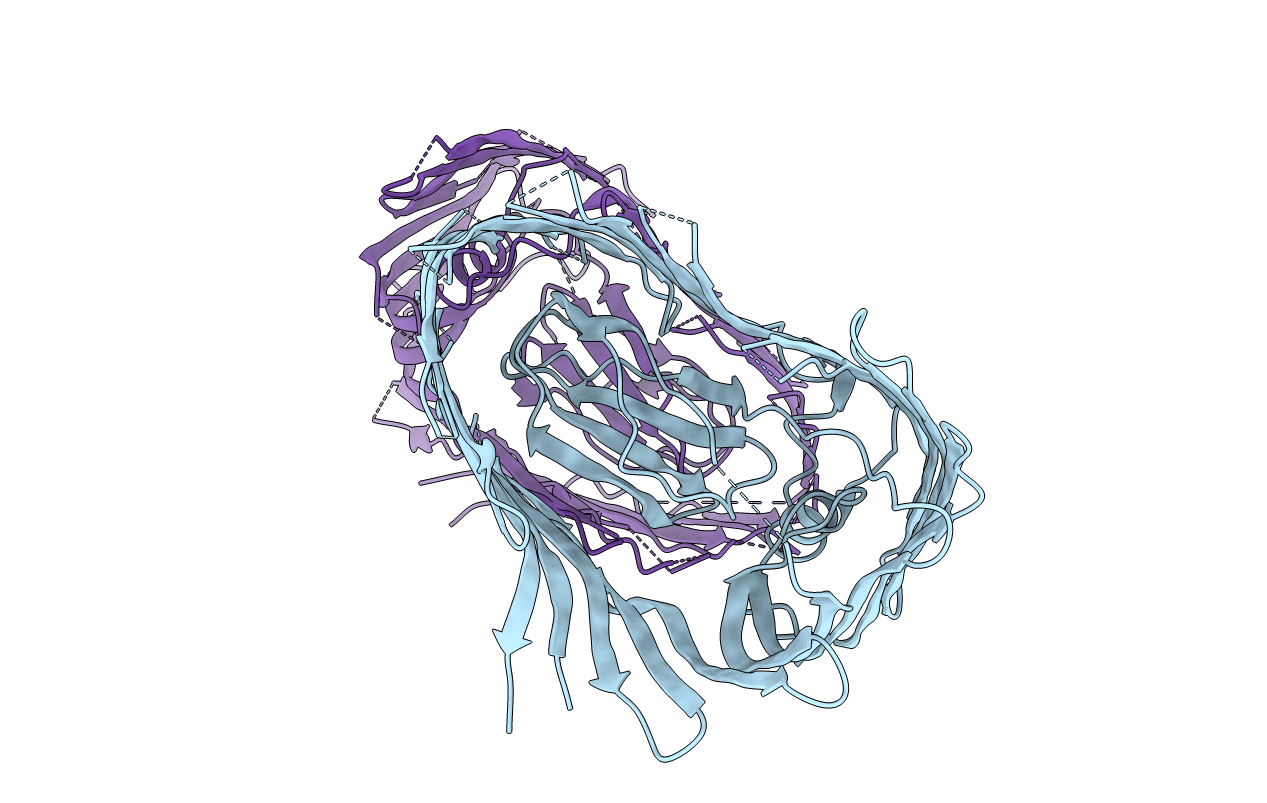
Crystal structure of Usher PapC translocation pore
Biological Source:
Source Organism:
Escherichia coli (Taxon ID: 562)
Host Organism:
Method Details:
Experimental Method:
Resolution:
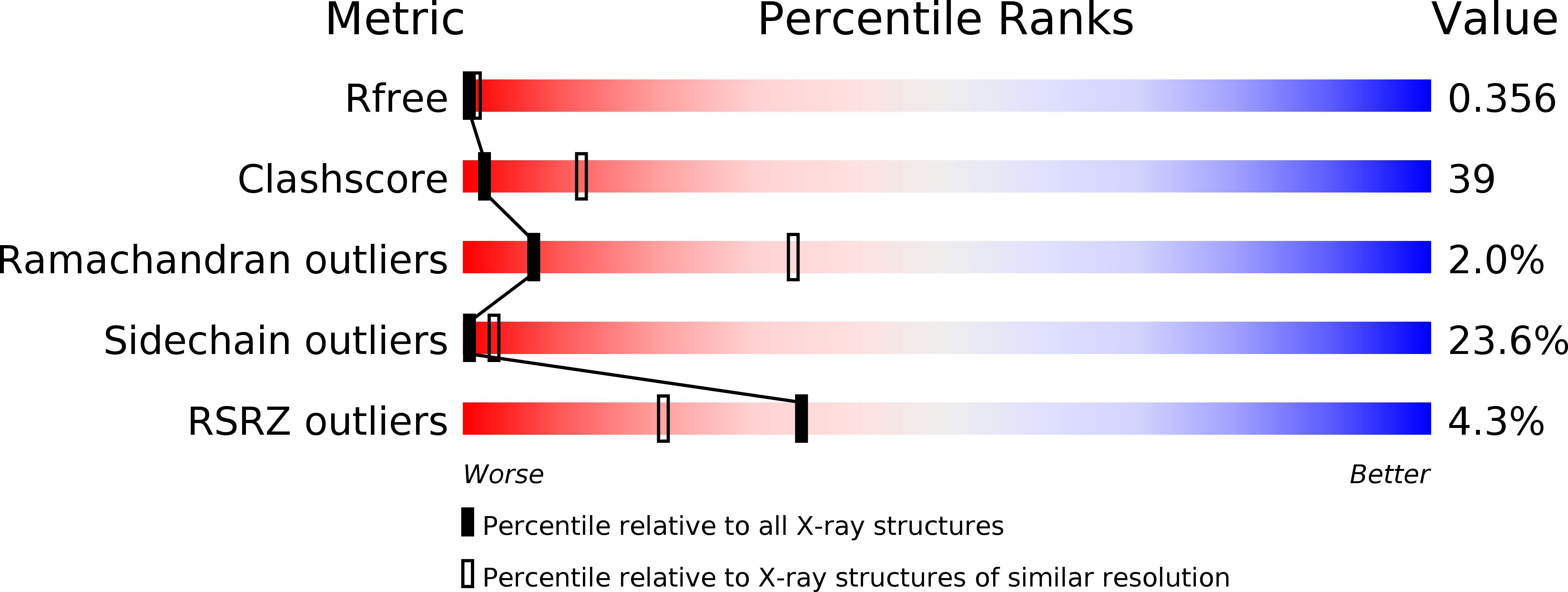
3.15 Å
R-Value Free:
0.35
R-Value Work:
0.28
R-Value Observed:
0.28
Space Group:
I 4 2 2
Macromolecular Entities
Structures with similar UniProt ID
Protein Blast
Polymer Type:polypeptide(L)
Molecule:Outer membrane usher protein papC
Gene (Uniprot):papC
Chain IDs:A, B
Chain Length:493
Number of Molecules:2
Biological Source:Escherichia coli
Ligand Molecules
Primary Citation
Insights into pilus assembly and secretion from the structure and functional characterization of usher PapC.
Proc.Natl.Acad.Sci.USA 106 7403 7407 (2009)
PMID: 19380723 DOI: 10.1073/pnas.0902789106

Abstact

Ushers constitute a family of bacterial outer membrane proteins responsible for the assembly and secretion of surface organelles such as the pilus. The structure at 3.15-A resolution of the usher pyelonephritis-associated pili C (PapC) translocation domain reveals a 24-stranded kidney-shaped beta-barrel, occluded by an internal plug domain. The dimension of the pore allows tandem passage of individual folded pilus subunits in an upright pilus growth orientation, but is insufficient for accommodating donor strand exchange. The molecular packing revealed by the crystal structure shows that 2 PapC molecules in head-to-head orientation interact via exposed beta-strand edges, which could be the preferred dimer interaction in solution. In vitro reconstitution of fiber assemblies suggest that PapC monomers may be sufficient for fiber assembly and secretion; both the plug domain and the C-terminal domain of PapC are required for filament assembly, whereas the N-terminal domain is mainly responsible for recruiting the chaperone-subunit complexes to the usher. The plug domain has a dual function: gating the beta-pore and participating in pilus assembly.

Legend

Protein

Chemical

Disease

Primary Citation of related structures
Feedback Form
Name
Email
Institute
Feedback