3FC0 image
Deposition Date 2008-11-20
Release Date 2008-12-30
Last Version Date 2024-10-16
Entry Detail
PDB ID:
3FC0
Keywords:
Title:
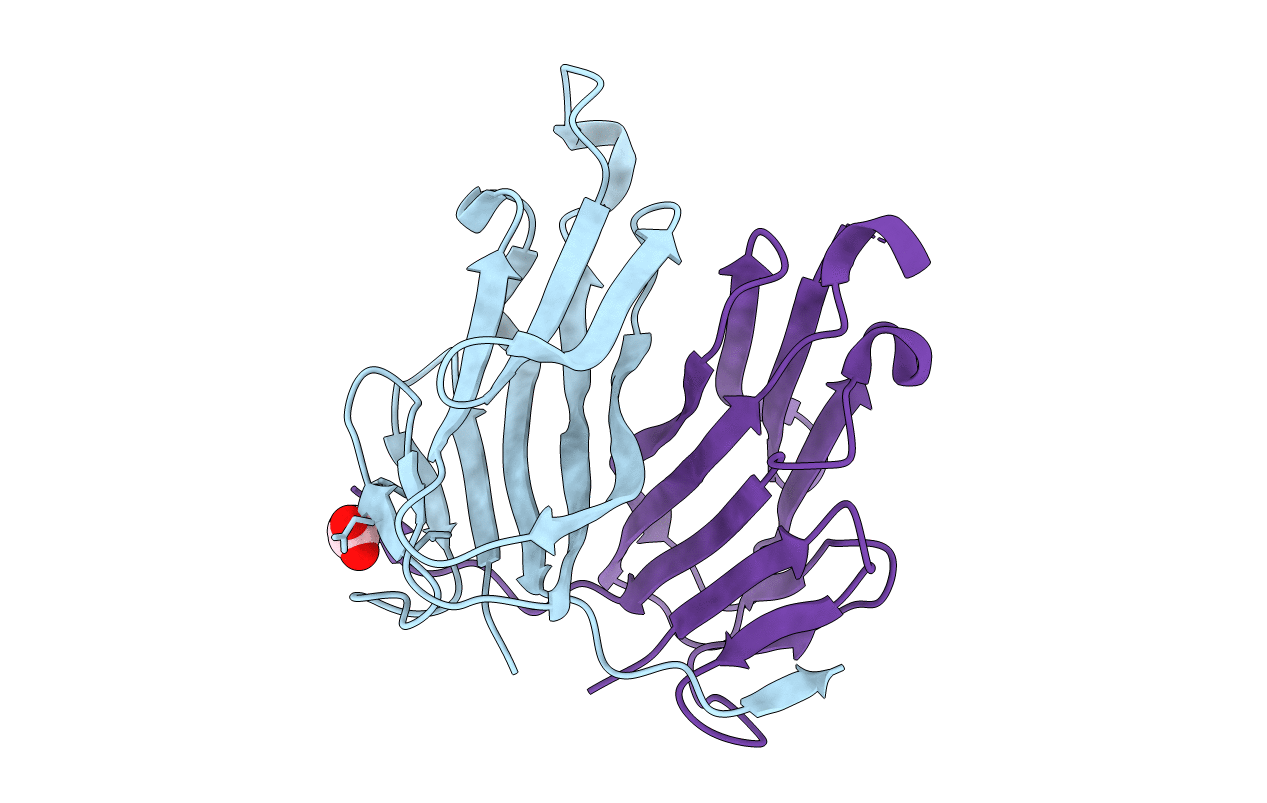
1.8 A crystal structure of murine GITR ligand dimer expressed in Drosophila melanogaster S2 cells
Biological Source:
Source Organism:
Mus musculus (Taxon ID: 10090)
Method Details:
Experimental Method:
Resolution:
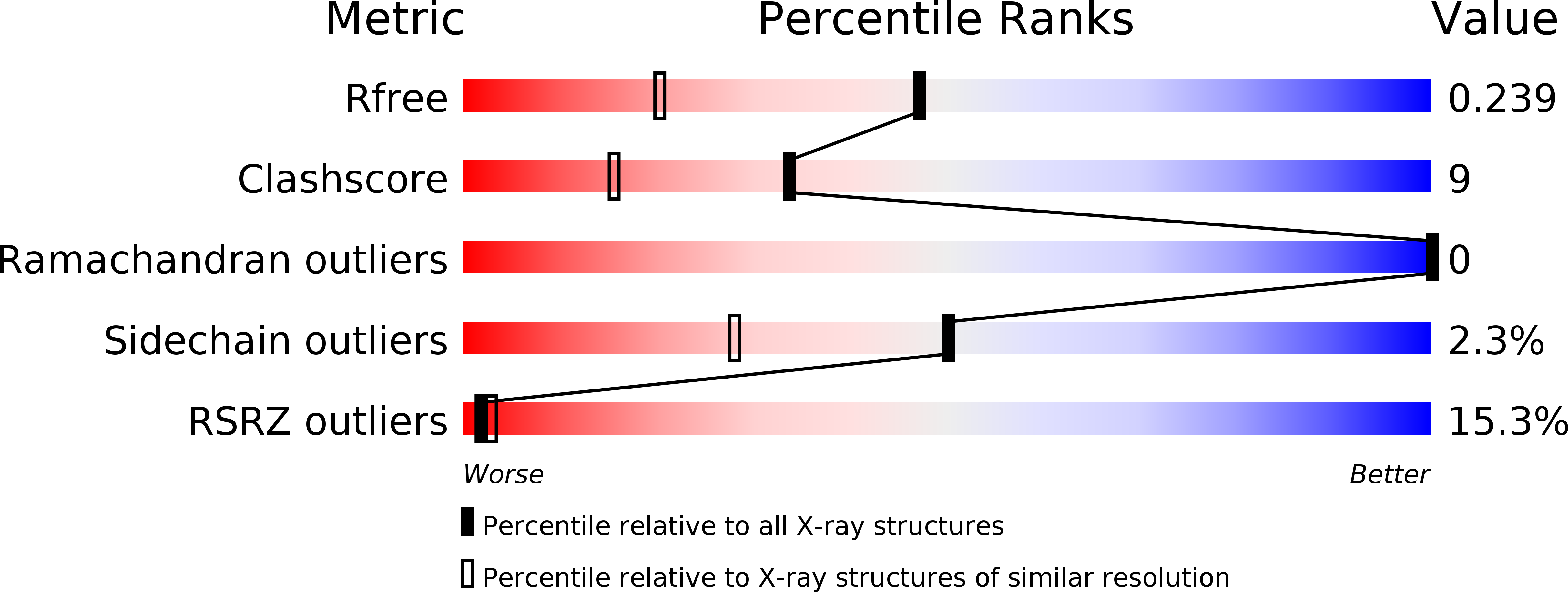
1.76 Å
R-Value Free:
0.26
R-Value Work:
0.22
R-Value Observed:
0.22
Space Group:
P 21 21 21
Macromolecular Entities
Structures with similar UniProt ID
Protein Blast
Polymer Type:polypeptide(L)
Molecule:GITR ligand
Gene (Uniprot):Tnfsf18
Chain IDs:A, B
Chain Length:139
Number of Molecules:2
Biological Source:Mus musculus
Ligand Molecules
Primary Citation
1.8 A structure of murine GITR ligand dimer expressed in Drosophila melanogaster S2 cells.
Acta Crystallogr.,Sect.D 65 434 439 (2009)
PMID: 19390148 DOI: 10.1107/S0907444909005721

Abstact

Glucocorticoid-induced TNF receptor ligand (GITRL), a prominent member of the TNF superfamily, activates its receptor on both effector and regulatory T cells to generate critical costimulatory signals that have been implicated in a wide range of T-cell immune functions. The crystal structures of murine and human orthologs of GITRL recombinantly expressed in Escherichia coli have previously been determined. In contrast to all classical TNF structures, including the human GITRL structure, murine GITRL demonstrated a unique ;strand-exchanged' dimeric organization. Such a novel assembly behavior indicated a dramatic impact on receptor activation as well as on the signaling mechanism associated with the murine GITRL costimulatory system. In this present work, the 1.8 A resolution crystal structure of murine GITRL expressed in Drosophila melanogaster S2 cells is reported. The eukaryotic protein-expression system allows transport of the recombinant protein into the extracellular culture medium, thus maximizing the possibility of obtaining correctly folded material devoid of any folding/assembly artifacts that are often suspected with E. coli-expressed proteins. The S2 cell-expressed murine GITRL adopts an identical ;strand-exchanged' dimeric structure to that observed for the E. coli-expressed protein, thus conclusively demonstrating the novel quaternary structure assembly behavior of murine GITRL.

Legend

Protein

Chemical

Disease

Primary Citation of related structures
Feedback Form
Name
Email
Institute
Feedback