3F9P image
Deposition Date 2008-11-14
Release Date 2009-07-14
Last Version Date 2024-12-25
Entry Detail
PDB ID:
3F9P
Keywords:
Title:
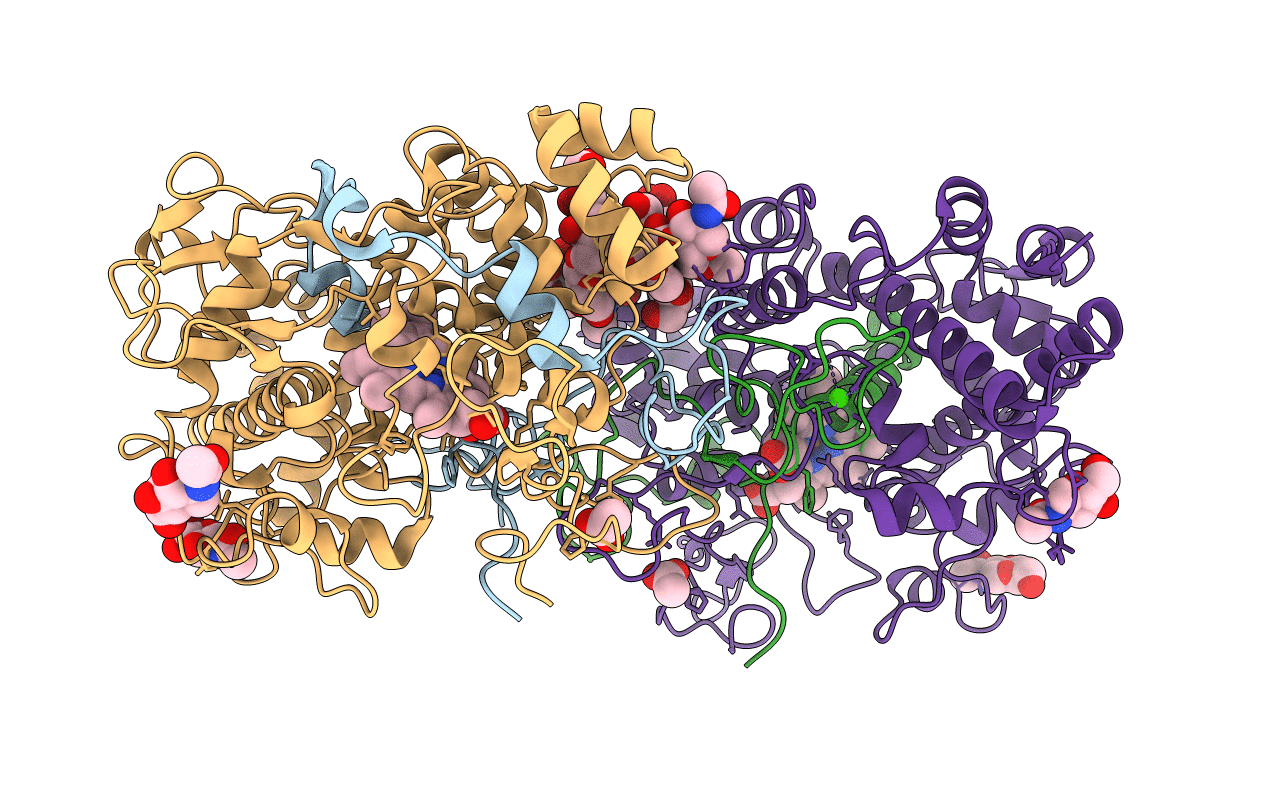
Crystal structure of myeloperoxidase from human leukocytes
Biological Source:
Source Organism:
Homo sapiens (Taxon ID: 9606)
Method Details:
Experimental Method:
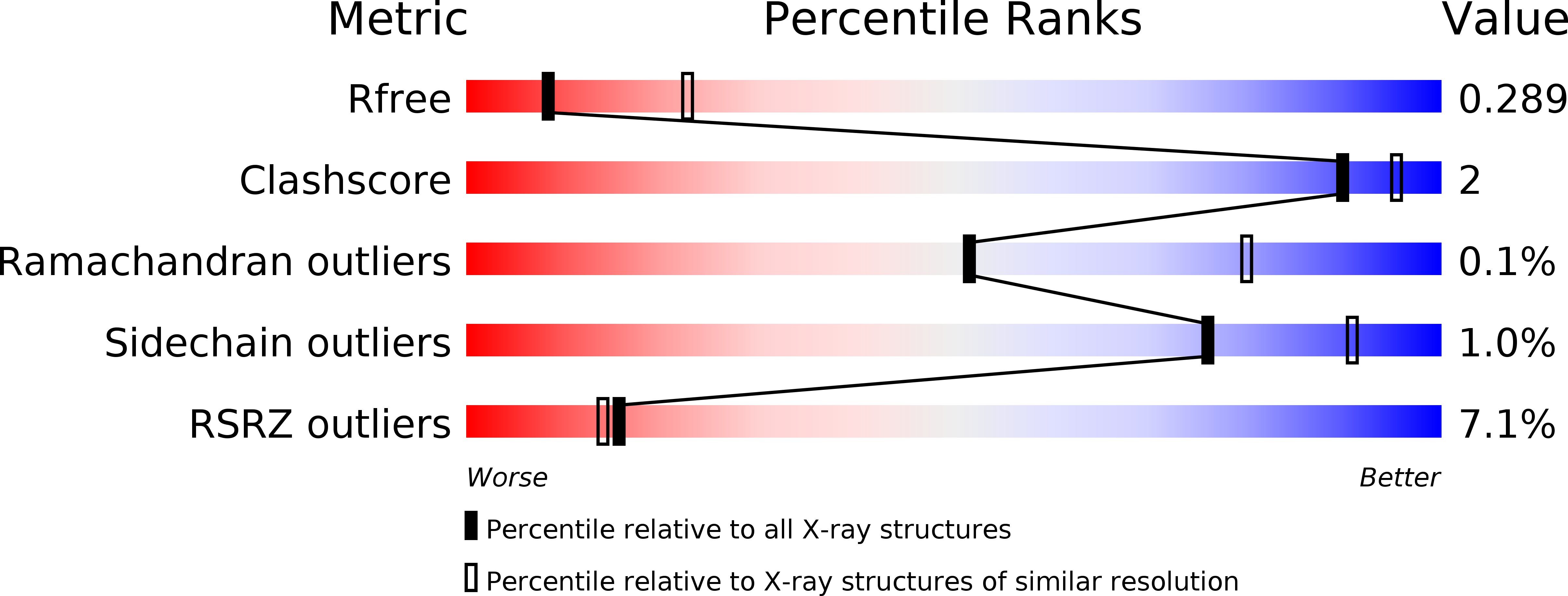
Resolution:
2.93 Å
R-Value Free:
0.25
R-Value Work:
0.23
R-Value Observed:
0.23
Space Group:
P 43 21 2
Macromolecular Entities
Structures with similar UniProt ID
Protein Blast
Polymer Type:polypeptide(L)
Molecule:Myeloperoxidase
Gene (Uniprot):MPO
Chain IDs:A, C (auth: B)
Chain Length:114
Number of Molecules:2
Biological Source:Homo sapiens
Structures with similar UniProt ID
Protein Blast
Polymer Type:polypeptide(L)
Molecule:Myeloperoxidase
Gene (Uniprot):MPO
Chain IDs:B (auth: C), D
Chain Length:467
Number of Molecules:2
Biological Source:Homo sapiens
Modified Residue
Compound ID Chain ID Parent Comp ID Details 2D Image
ASN B ASN GLYCOSYLATION SITE
CSO B CYS S-HYDROXYCYSTEINE
Primary Citation
Essential role of proximal histidine-asparagine interaction in Mammalian peroxidases.
J.Biol.Chem. 284 25929 25937 (2009)
PMID: 19608745 DOI: 10.1074/jbc.M109.002154

Abstact

In heme enzymes belonging to the peroxidase-cyclooxygenase superfamily the proximal histidine is in close interaction with a fully conserved asparagine. The crystal structure of a mixture of glycoforms of myeloperoxidase (MPO) purified from granules of human leukocytes prompted us to revise the orientation of this asparagine and the protonation status of the proximal histidine. The data we present contrast with previous MPO structures, but are strongly supported by molecular dynamics simulations. Moreover, comprehensive analysis of published lactoperoxidase structures suggest that the described proximal heme architecture is a general structural feature of animal heme peroxidases. Its importance is underlined by the fact that the MPO variant N421D, recombinantly expressed in mammalian cell lines, exhibited modified spectral properties and diminished catalytic activity compared with wild-type recombinant MPO. It completely lost its ability to oxidize chloride to hypochlorous acid, which is a characteristic feature of MPO and essential for its role in host defense. The presented crystal structure of MPO revealed further important differences compared with the published structures including the extent of glycosylation, interaction between light and heavy polypeptides, as well as heme to protein covalent bonds. These data are discussed with respect to biosynthesis and post-translational maturation of MPO as well as to its peculiar biochemical and biophysical properties.

Legend

Protein

Chemical

Disease

Primary Citation of related structures
Feedback Form
Name
Email
Institute
Feedback