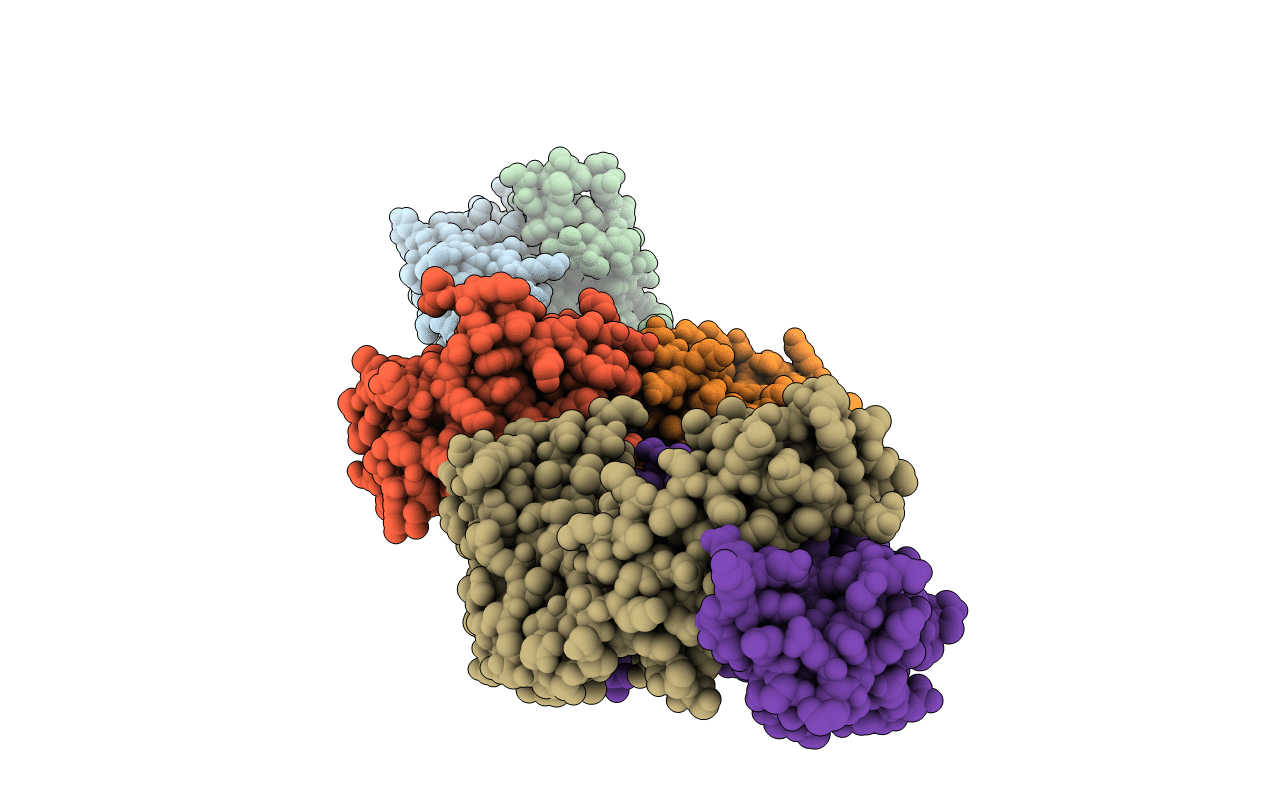
3EOB image
Deposition Date 2008-09-26
Release Date 2009-04-14
Last Version Date 2024-11-20
Entry Detail
PDB ID:
3EOB
Title:
Crystal structure the Fab fragment of Efalizumab in complex with LFA-1 I domain, Form II
Biological Source:
Source Organism:
Homo sapiens (Taxon ID: 9606)
Method Details:
Experimental Method:
Resolution:
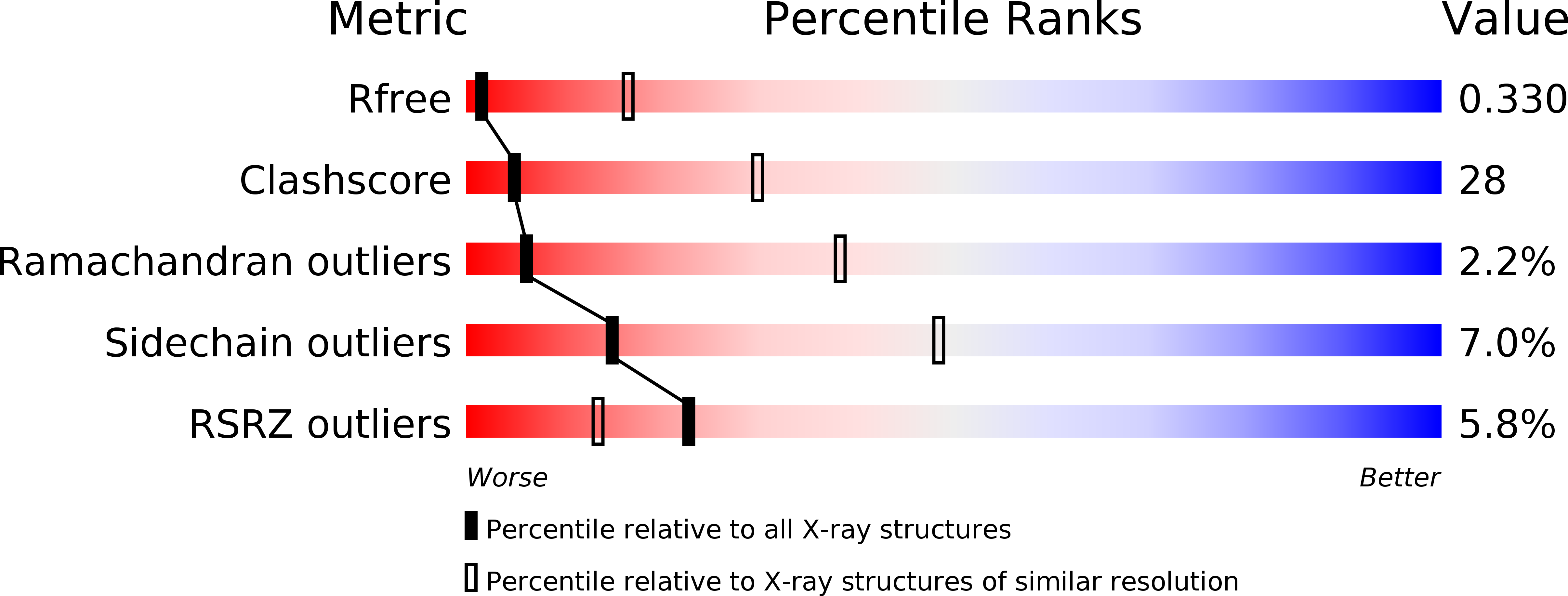
3.60 Å
R-Value Free:
0.33
R-Value Work:
0.26
R-Value Observed:
0.26
Space Group:
P 61 2 2
Macromolecular Entities
Polymer Type:polypeptide(L)
Molecule:Efalizumab Fab fragment, heavy chain
Chain IDs:B (auth: H), E (auth: B)
Chain Length:220
Number of Molecules:2
Biological Source:Homo sapiens
Structures with similar UniProt ID
Protein Blast
Polymer Type:polypeptide(L)
Molecule:Integrin alpha-L
Gene (Uniprot):ITGAL
Chain IDs:C (auth: I), F (auth: J)
Chain Length:181
Number of Molecules:2
Biological Source:Homo sapiens
Polymer Type:polypeptide(L)
Molecule:Efalizumab Fab fragment, light chain
Chain IDs:A (auth: L), D (auth: A)
Chain Length:214
Number of Molecules:2
Biological Source:Homo sapiens
Ligand Molecules
Primary Citation
Efalizumab binding to the LFA-1 alphaL I domain blocks ICAM-1 binding via steric hindrance.
Proc.Natl.Acad.Sci.USA 106 4349 4354 (2009)
PMID: 19258452 DOI: 10.1073/pnas.0810844106

Abstact

Lymphocyte function-associated antigen 1 (LFA-1) plays important roles in immune cell adhesion, trafficking, and activation and is a therapeutic target for the treatment of multiple autoimmune diseases. Efalizumab is one of the most efficacious antibody drugs for treating psoriasis, a very common skin disease, through inhibition of the binding of LFA-1 to the ligand intercellular adhesion molecule 1 (ICAM-1). We report here the crystal structures of the Efalizumab Fab alone and in complex with the LFA-1 alpha(L) I domain, which reveal the molecular mechanism of inhibition of LFA-1 by Efalizumab. The Fab binds with an epitope on the inserted (I) domain that is distinct from the ligand-binding site. Efalizumab binding blocks the binding of LFA-1 to ICAM-1 via steric hindrance between its light chain and ICAM-1 domain 2 and thus inhibits the activities of LFA-1. These results have important implications for the development of improved antibodies and new therapeutic strategies for the treatment of autoimmune diseases.

Legend

Protein

Chemical

Disease

Primary Citation of related structures
Feedback Form
Name
Email
Institute
Feedback