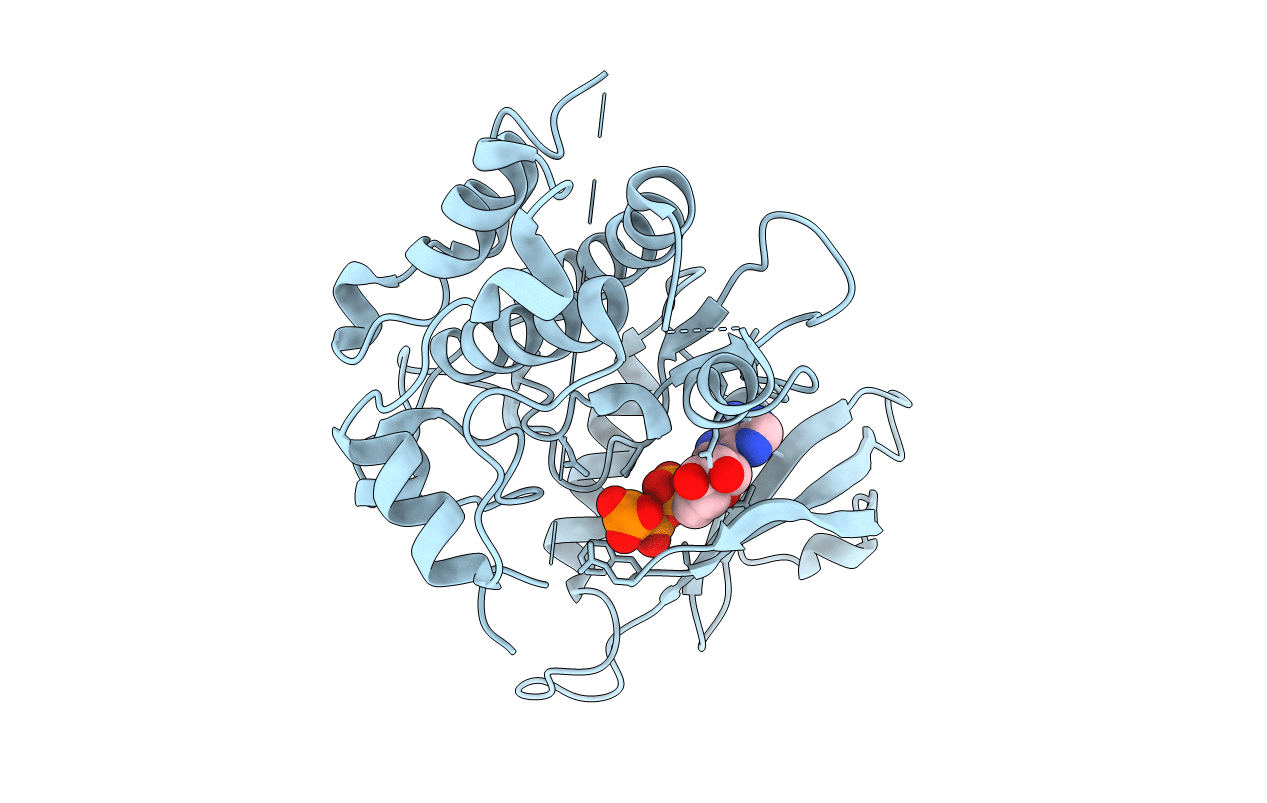
3EHA image
Deposition Date 2008-09-11
Release Date 2009-04-28
Last Version Date 2023-08-30
Entry Detail
PDB ID:
3EHA
Keywords:
Title:
Crystal structure of death associated protein kinase complexed with AMPPNP
Biological Source:
Source Organism:
Homo sapiens (Taxon ID: 9606)
Host Organism:
Method Details:
Experimental Method:
Resolution:
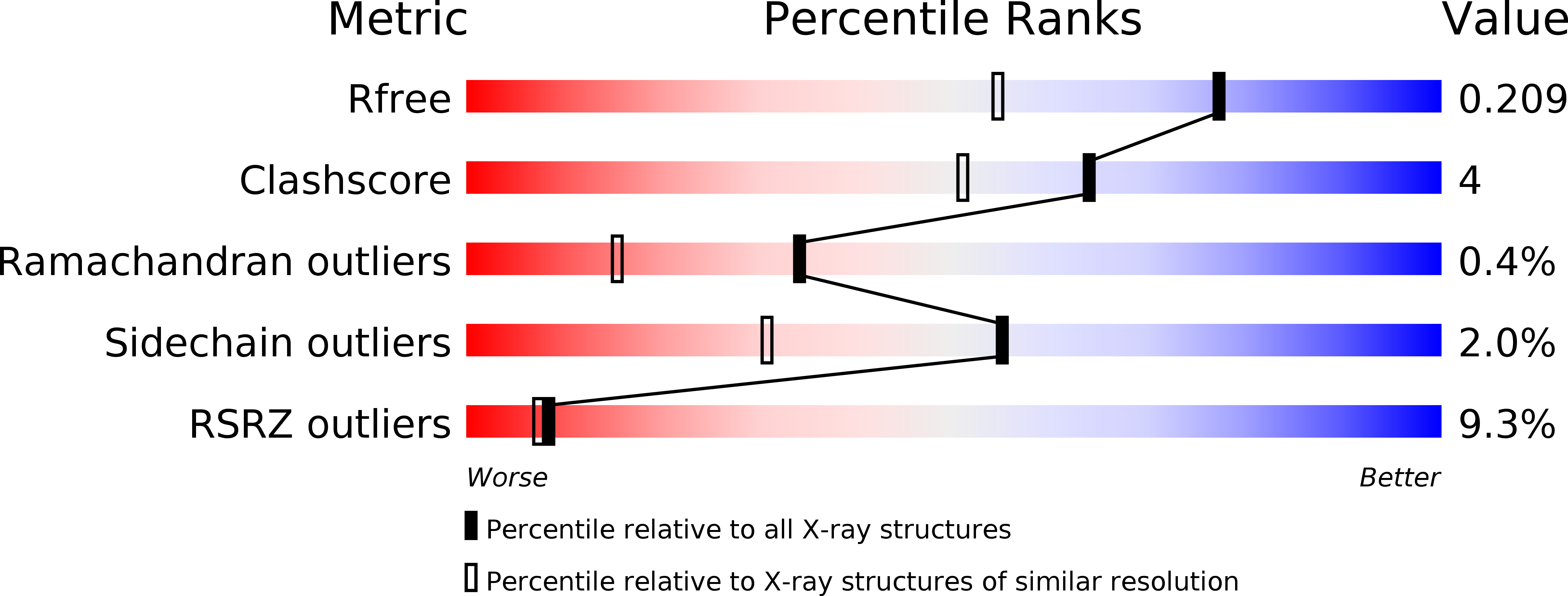
1.60 Å
R-Value Free:
0.21
R-Value Work:
0.17
R-Value Observed:
0.17
Space Group:
P 21 21 21
Macromolecular Entities
Structures with similar UniProt ID
Protein Blast
Polymer Type:polypeptide(L)
Molecule:Death-associated protein kinase 1
Gene (Uniprot):DAPK1
Chain IDs:A
Chain Length:294
Number of Molecules:1
Biological Source:Homo sapiens
Ligand Molecules
Primary Citation
Structural insight into nucleotide recognition by human death-associated protein kinase.
Acta Crystallogr.,Sect.D 65 241 248 (2009)
PMID: 19237746 DOI: 10.1107/S0907444908043679

Abstact

Death-associated protein kinase (DAPK) is a member of the Ca(2+)/calmodulin-regulated family of serine/threonine protein kinases. The role of the kinase activity of DAPK in eukaryotic cell apoptosis and the ability of bioavailable DAPK inhibitors to rescue neuronal death after brain injury have made it a drug-discovery target for neurodegenerative disorders. In order to understand the recognition of nucleotides by DAPK and to gain insight into DAPK catalysis, the crystal structure of human DAPK was solved in complex with ADP and Mg(2+) at 1.85 A resolution. ADP is a product of the kinase reaction and product release is considered to be the rate-limiting step of protein kinase catalytic cycles. The structure of DAPK-ADP-Mg(2+) was compared with a newly determined DAPK-AMP-PNP-Mg(2+) structure and the previously determined apo DAPK structure (PDB code 1jks). The comparison shows that nucleotide-induced changes are localized to the glycine-rich loop region of DAPK.

Legend

Protein

Chemical

Disease

Primary Citation of related structures
Feedback Form
Name
Email
Institute
Feedback