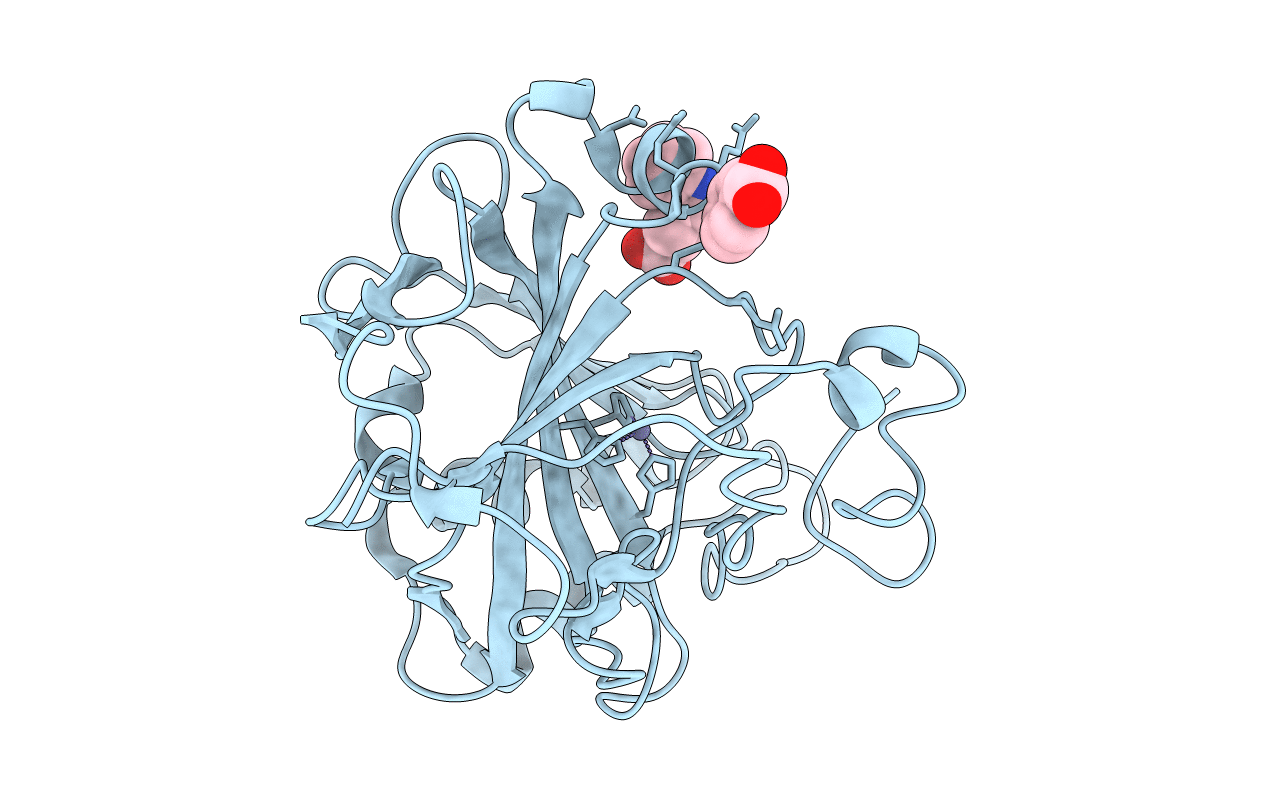
3EFI image
Deposition Date 2008-09-09
Release Date 2008-09-30
Last Version Date 2023-11-01
Entry Detail
PDB ID:
3EFI
Keywords:
Title:
Carbonic anhydrase activators: Kinetic and X-ray crystallographic study for the interaction of d- and l-tryptophan with the mammalian isoforms I-XIV
Biological Source:
Source Organism:
Method Details:
Experimental Method:
Resolution:
1.75 Å
R-Value Free:
0.22
R-Value Work:
0.18
R-Value Observed:
0.19
Space Group:
P 1 21 1

Macromolecular Entities
Structures with similar UniProt ID
Protein Blast
Polymer Type:polypeptide(L)
Molecule:Carbonic anhydrase 2
Gene (Uniprot):CA2
Chain IDs:A
Chain Length:260
Number of Molecules:1
Biological Source:
Primary Citation
Carbonic anhydrase activators: kinetic and X-ray crystallographic study for the interaction of D- and L-tryptophan with the mammalian isoforms I-XIV
Bioorg.Med.Chem. 16 8373 8378 (2008)
PMID: 18774300 DOI: 10.1016/j.bmc.2008.08.043

Abstact

An activation study of mammalian carbonic anhydrase (CA, EC 4.2.1.1) isoforms I-XIV with D- and L-tryptophan has been performed both by means of kinetic and X-ray crystallographic techniques. These compounds show a time dependent activity against isozyme CA II, with activation constants of 1.13 microM for L-Trp and 0.37 microM for D-Trp, respectively, after 24 h of incubation between enzyme and activator. The high resolution X-ray crystal structure of the hCA II-D-Trp adduct revealed the activator to bind in a totally unprecedented way to the enzyme active site as compared to histamine, L-/D-Phe, L-/D-His or L-adrenaline. D-Trp is anchored at the edge of the CA II active site entrance, strongly interacting with amino acid residues Asp130, Phe131 and Gly132 as well as with a loop of a second symmetry related protein molecule from the asymmetric unit, by means of hydrogen bonds and several weak van der Waals interactions involving Glu234, Gly235, Glu236 and Glu238. Thus, a second activator binding site (B) within the CA II cavity has been detected, where only D-Trp was shown so far to bind, in addition to the activator binding site A, in which histamine, L-/D-Phe, and L-/D-His are bound. These findings explain the strong affinity of D-Trp for CA II and may be useful for designing novel classes of CA activators by using this compound as lead molecule.

Legend

Protein

Chemical

Disease

Primary Citation of related structures
Feedback Form
Name
Email
Institute
Feedback