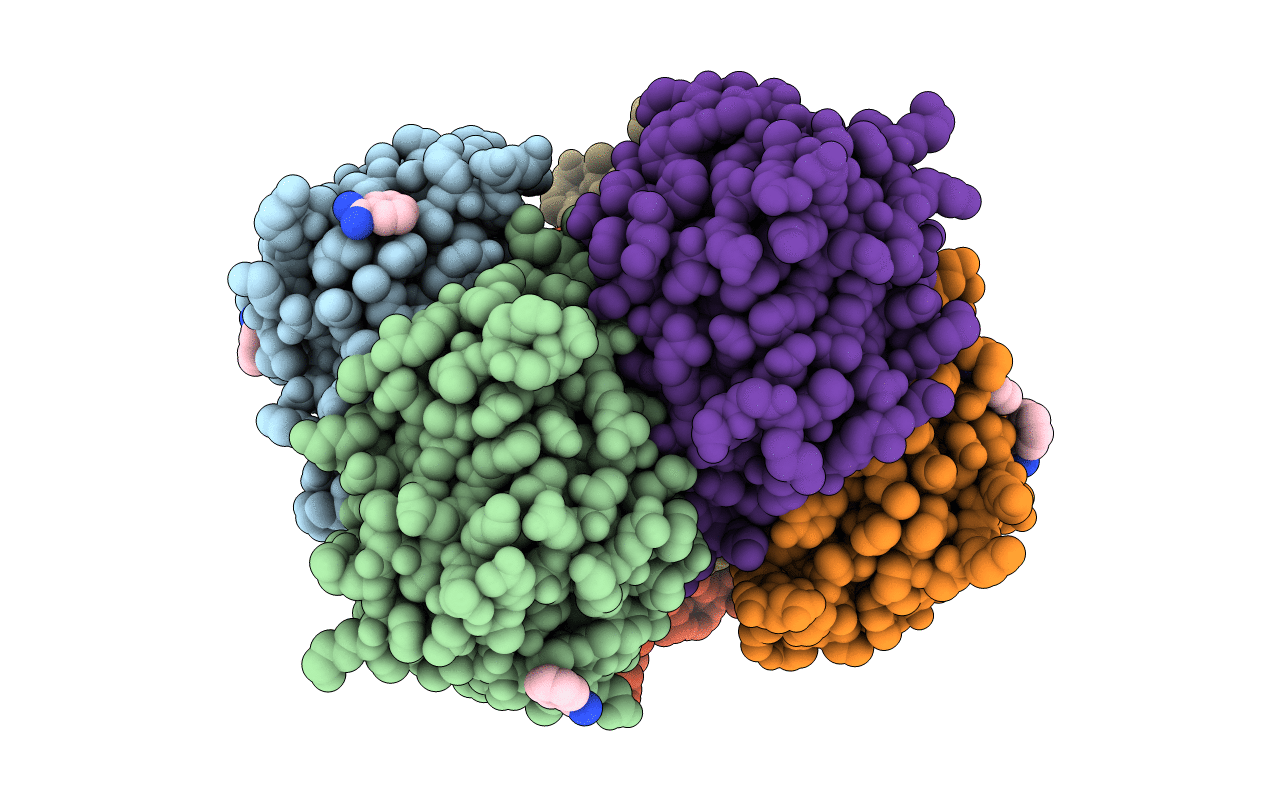
3ED0 image
Deposition Date 2008-09-02
Release Date 2009-07-21
Last Version Date 2023-11-01
Entry Detail
PDB ID:
3ED0
Keywords:
Title:
Crystal structure of (3R)-Hydroxyacyl-Acyl Carrier Protein Dehydratase (FabZ) from Helicobacter pylori in complex with emodin
Biological Source:
Source Organism:
Host Organism:
Method Details:
Experimental Method:
Resolution:
2.30 Å
R-Value Free:
0.26
R-Value Work:
0.23
Space Group:
P 21 21 21

Macromolecular Entities
Structures with similar UniProt ID
Protein Blast
Polymer Type:polypeptide(L)
Molecule:(3R)-hydroxymyristoyl-acyl carrier protein dehydratase
Gene (Uniprot):fabZ
Chain IDs:A, B, C, D, E, F
Chain Length:159
Number of Molecules:6
Biological Source:Helicobacter pylori
Primary Citation
Emodin targets the beta-hydroxyacyl-acyl carrier protein dehydratase from Helicobacter pylori: enzymatic inhibition assay with crystal structural and thermodynamic characterization
BMC MICROBIOL. 9 91 91 (2009)
PMID: 19433000 DOI: 10.1186/1471-2180-9-91

Abstact

BACKGROUND The natural product Emodin demonstrates a wide range of pharmacological properties including anticancer, anti-inflammatory, antiproliferation, vasorelaxant and anti-H. pylori activities. Although its H. pylori inhibition was discovered, no acting target information against Emodin has been revealed to date. RESULTS Here we reported that Emodin functioned as a competitive inhibitor against the recombinant beta-hydroxyacyl-ACP dehydratase from Helicobacter pylori (HpFabZ), and strongly inhibited the growth of H. pylori strains SS1 and ATCC 43504. Surface plasmon resonance (SPR) and isothermal titration calorimetry (ITC) based assays have suggested the kinetic and thermodynamic features of Emodin/HpFabZ interaction. Additionally, to inspect the binding characters of Emodin against HpFabZ at atomic level, the crystal structure of HpFabZ-Emodin complex was also examined. The results showed that Emodin inhibition against HpFabZ could be implemented either through its occupying the entrance of the tunnel or embedding into the tunnel to prevent the substrate from accessing the active site. CONCLUSION Our work is expected to provide useful information for illumination of Emodin inhibition mechanism against HpFabZ, while Emodin itself could be used as a potential lead compound for further anti-bacterial drug discovery.

Legend

Protein

Chemical

Disease

Primary Citation of related structures
Feedback Form
Name
Email
Institute
Feedback