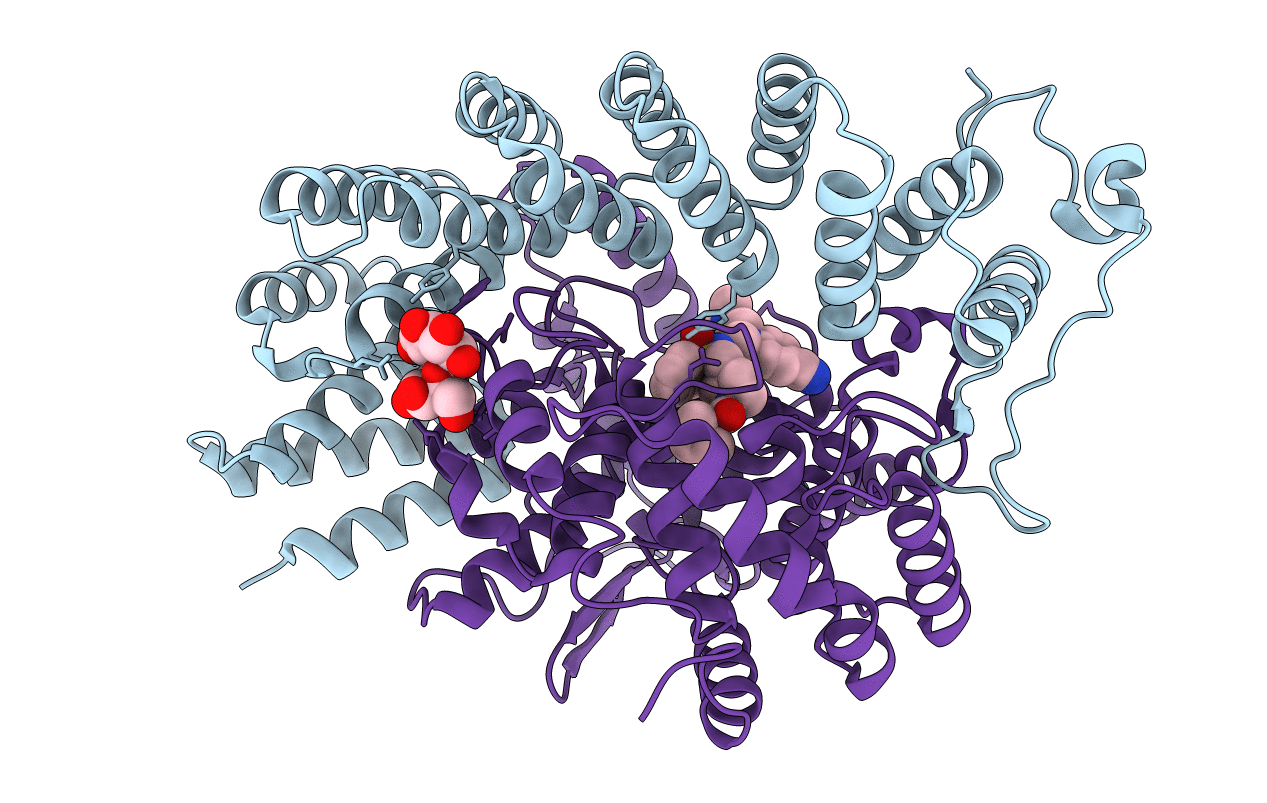
3E37 image
Deposition Date 2008-08-06
Release Date 2009-03-10
Last Version Date 2024-02-21
Entry Detail
PDB ID:
3E37
Keywords:
Title:
Protein farnesyltransferase complexed with bisubstrate ethylenediamine scaffold inhibitor 5
Biological Source:
Source Organism:
Homo sapiens (Taxon ID: 9606)
Host Organism:
Method Details:
Experimental Method:
Resolution:
1.80 Å
R-Value Free:
0.18
R-Value Work:
0.16
R-Value Observed:
0.16
Space Group:
P 61

Macromolecular Entities
Structures with similar UniProt ID
Protein Blast
Polymer Type:polypeptide(L)
Molecule:Protein farnesyltransferase/geranylgeranyltransferase type-1 subunit alpha
Gene (Uniprot):FNTA
Chain IDs:A
Chain Length:379
Number of Molecules:1
Biological Source:Homo sapiens
Structures with similar UniProt ID
Protein Blast
Polymer Type:polypeptide(L)
Molecule:Protein farnesyltransferase subunit beta
Gene (Uniprot):FNTB
Chain IDs:B
Chain Length:437
Number of Molecules:1
Biological Source:Homo sapiens
Peptide-like Molecules
PRD_900003
Primary Citation
Structural basis for binding and selectivity of antimalarial and anticancer ethylenediamine inhibitors to protein farnesyltransferase.
Chem.Biol. 16 181 192 (2009)
PMID: 19246009 DOI: 10.1016/j.chembiol.2009.01.014

Abstact

Protein farnesyltransferase (FTase) catalyzes an essential posttranslational lipid modification of more than 60 proteins involved in intracellular signal transduction networks. FTase inhibitors have emerged as a significant target for development of anticancer therapeutics and, more recently, for the treatment of parasitic diseases caused by protozoan pathogens, including malaria (Plasmodium falciparum). We present the X-ray crystallographic structures of complexes of mammalian FTase with five inhibitors based on an ethylenediamine scaffold, two of which exhibit over 1000-fold selective inhibition of P. falciparum FTase. These structures reveal the dominant determinants in both the inhibitor and enzyme that control binding and selectivity. Comparison to a homology model constructed for the P. falciparum FTase suggests opportunities for further improving selectivity of a new generation of antimalarial inhibitors.

Legend

Protein

Chemical

Disease

Primary Citation of related structures
Feedback Form
Name
Email
Institute
Feedback