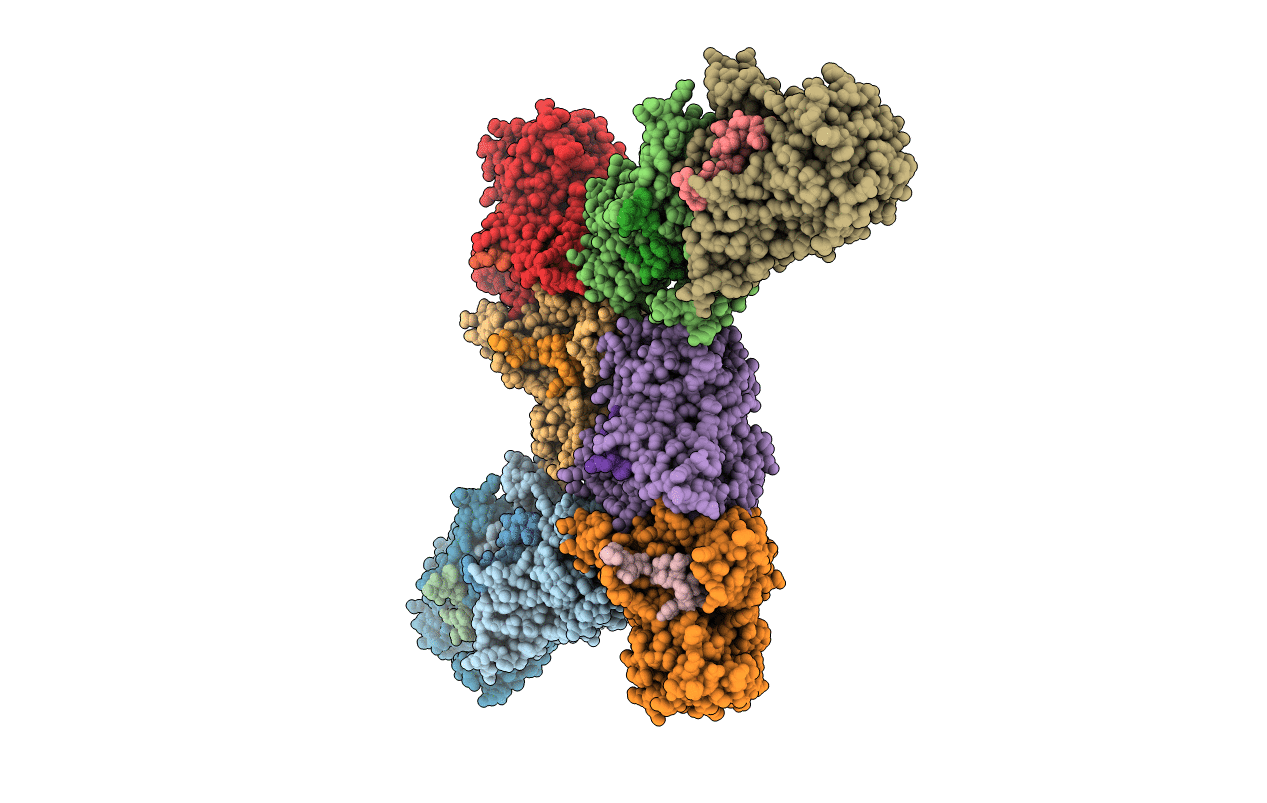
3E1K image
Deposition Date 2008-08-04
Release Date 2008-08-12
Last Version Date 2023-08-30
Entry Detail
PDB ID:
3E1K
Keywords:
Title:
Crystal structure of Kluyveromyces lactis Gal80p in complex with the acidic activation domain of Gal4p
Biological Source:
Source Organism:
Host Organism:
Method Details:
Experimental Method:
Resolution:
3.00 Å
R-Value Free:
0.28
R-Value Work:
0.22
R-Value Observed:
0.23
Space Group:
P 1 21 1
Macromolecular Entities
Structures with similar UniProt ID
Protein Blast
Polymer Type:polypeptide(L)
Molecule:Galactose/lactose metabolism regulatory protein GAL80
Gene (Uniprot):GAL80
Chain IDs:A, C, E, G, I, K, M, O
Chain Length:465
Number of Molecules:8
Biological Source:Kluyveromyces lactis
Structures with similar UniProt ID
Protein Blast
Polymer Type:polypeptide(L)
Molecule:Lactose regulatory protein LAC9
Gene (Uniprot):LAC9
Chain IDs:B, D, F, H, J, L, N, P
Chain Length:22
Number of Molecules:8
Biological Source:
Ligand Molecules
Primary Citation
The Interaction between an Acidic Transcriptional Activator and Its Inhibitor: THE MOLECULAR BASIS OF Gal4p RECOGNITION BY Gal80p.
J.Biol.Chem. 283 30266 30272 (2008)
PMID: 18701455 DOI: 10.1074/jbc.M805200200

Abstact

The GAL genes, which encode the enzymes required for normal galactose metabolism in yeast, are transcriptionally regulated by three proteins: Gal4p, an activator; Gal80p, an inhibitor; and Gal3p, a galactose sensor. These proteins control the switch between inert and active gene expression. The transcriptional activation function of Gal4p is rendered inactive in the presence of Gal80p. Here we present the three-dimensional structure of a complex between the acidic activation domain of Gal4p and Gal80p. The transactivation domain initiates with an extended region of polypeptide chain followed by two turns of an amphipathic alpha-helix. It fits into and across a deep cleft within the Gal80p dimer with the protein-protein interface defined primarily by hydrophobic interactions. A disordered loop in the apo-Gal80p structure (Asp-309 to Ser-316) becomes well-defined upon binding of the transactivation domain. This investigation provides a new molecular scaffold for understanding previous biochemical and genetic studies.

Legend

Protein

Chemical

Disease

Primary Citation of related structures
Feedback Form
Name
Email
Institute
Feedback