3DLK image
Deposition Date 2008-06-27
Release Date 2008-10-07
Last Version Date 2023-08-30
Entry Detail
PDB ID:
3DLK
Keywords:
Title:
Crystal Structure of an engineered form of the HIV-1 Reverse Transcriptase, RT69A
Biological Source:
Source Organism:
Host Organism:
Method Details:
Experimental Method:
Resolution:
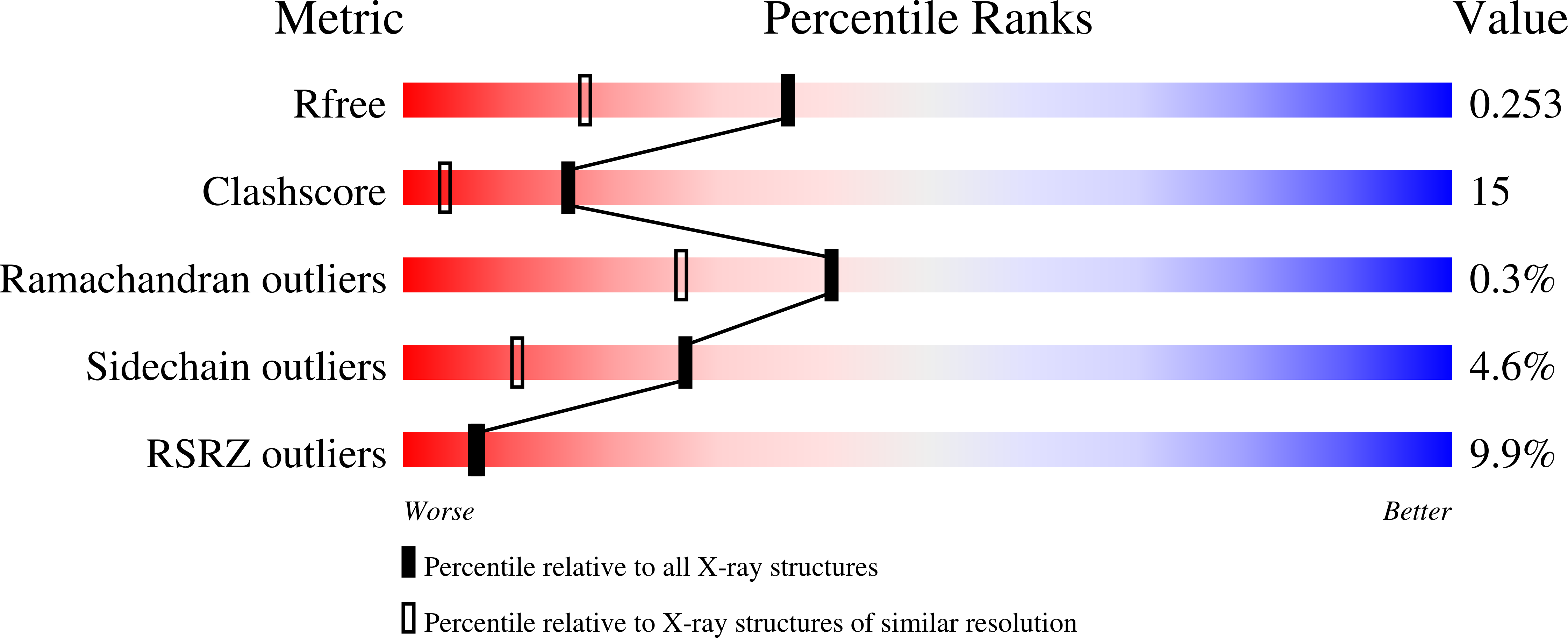
1.85 Å
R-Value Free:
0.25
R-Value Work:
0.23
Space Group:
C 1 2 1
Macromolecular Entities
Structures with similar UniProt ID
Protein Blast
Polymer Type:polypeptide(L)
Molecule:Reverse transcriptase/ribonuclease H
Gene (Uniprot):gag-pol
Mutagens:K172A, K173A, C258Q
Chain IDs:A
Chain Length:556
Number of Molecules:1
Biological Source:Human immunodeficiency virus type 1 BH10
Structures with similar UniProt ID
Protein Blast
Polymer Type:polypeptide(L)
Molecule:p51 RT
Gene (Uniprot):gag-pol
Chain IDs:B
Chain Length:423
Number of Molecules:1
Biological Source:Human immunodeficiency virus type 1
Ligand Molecules
Primary Citation
Crystal engineering of HIV-1 reverse transcriptase for structure-based drug design.
Nucleic Acids Res. 36 5083 5092 (2008)
PMID: 18676450 DOI: 10.1093/nar/gkn464

Abstact

HIV-1 reverse transcriptase (RT) is a primary target for anti-AIDS drugs. Structures of HIV-1 RT, usually determined at approximately 2.5-3.0 A resolution, are important for understanding enzyme function and mechanisms of drug resistance in addition to being helpful in the design of RT inhibitors. Despite hundreds of attempts, it was not possible to obtain the structure of a complex of HIV-1 RT with TMC278, a nonnucleoside RT inhibitor (NNRTI) in advanced clinical trials. A systematic and iterative protein crystal engineering approach was developed to optimize RT for obtaining crystals in complexes with TMC278 and other NNRTIs that diffract X-rays to 1.8 A resolution. Another form of engineered RT was optimized to produce a high-resolution apo-RT crystal form, reported here at 1.85 A resolution, with a distinct RT conformation. Engineered RTs were mutagenized using a new, flexible and cost effective method called methylated overlap-extension ligation independent cloning. Our analysis suggests that reducing the solvent content, increasing lattice contacts, and stabilizing the internal low-energy conformations of RT are critical for the growth of crystals that diffract to high resolution. The new RTs enable rapid crystallization and yield high-resolution structures that are useful in designing/developing new anti-AIDS drugs.

Legend

Protein

Chemical

Disease

Primary Citation of related structures
Feedback Form
Name
Email
Institute
Feedback