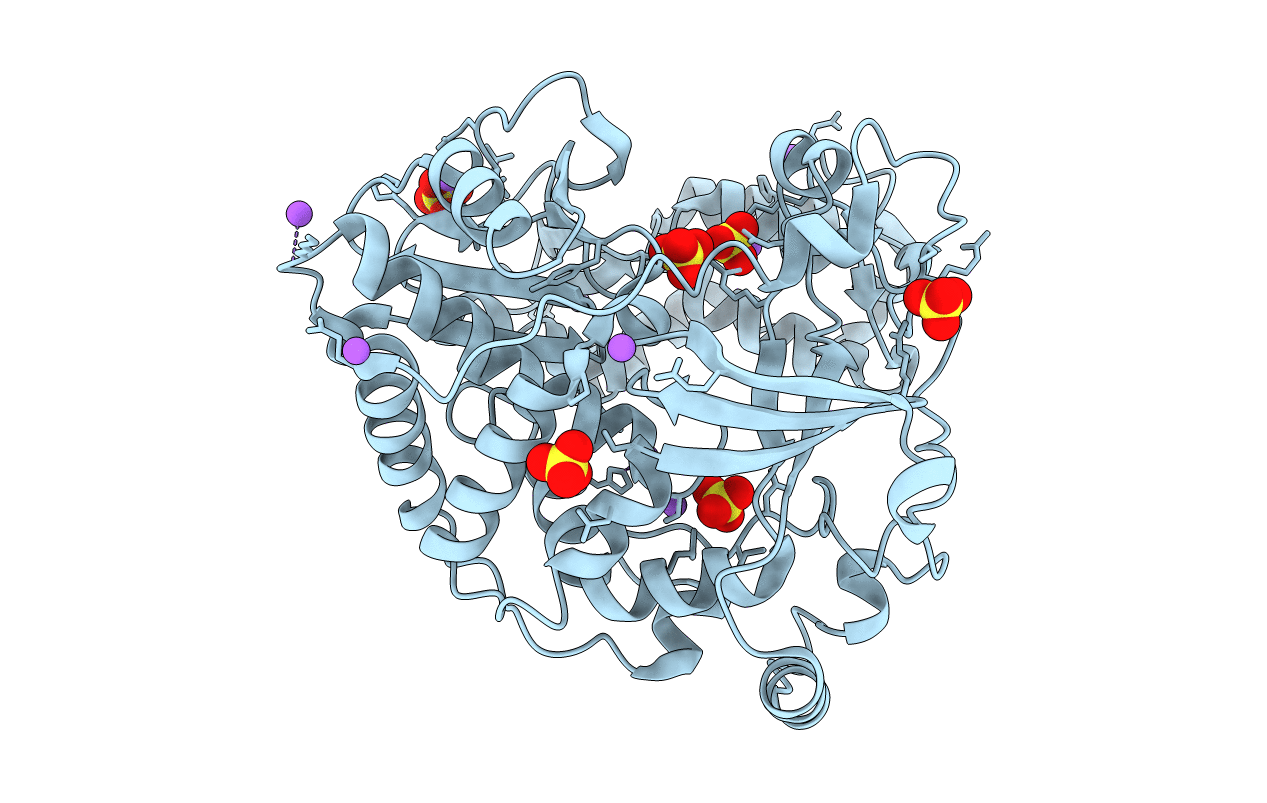
3DDK image
Deposition Date 2008-06-05
Release Date 2008-09-23
Last Version Date 2023-08-30
Entry Detail
PDB ID:
3DDK
Title:
Coxsackievirus B3 3Dpol RNA Dependent RNA Polymerase
Biological Source:
Source Organism:
Host Organism:
Method Details:
Experimental Method:
Resolution:
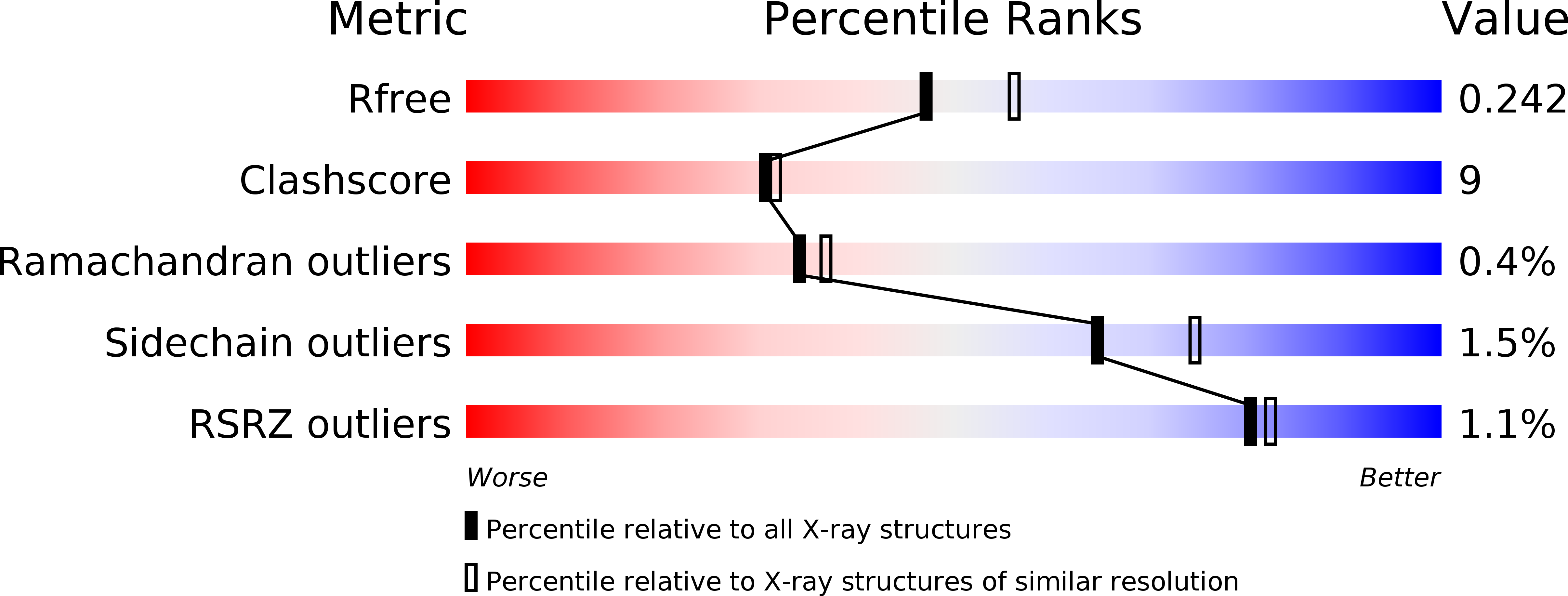
2.25 Å
R-Value Free:
0.23
R-Value Work:
0.20
R-Value Observed:
0.20
Space Group:
P 43 21 2
Macromolecular Entities
Structures with similar UniProt ID
Protein Blast
Polymer Type:polypeptide(L)
Molecule:RNA polymerase B3 3Dpol
Chain IDs:A
Chain Length:462
Number of Molecules:1
Biological Source:Human coxsackievirus
Primary Citation
Crystal Structure of Coxsackievirus B3 3Dpol Highlights Functional Importance of Residue 5 in Picornaviral Polymerases
J.Virol. 82 9458 9464 (2008)
PMID: 18632862 DOI: 10.1128/JVI.00647-08

Abstact

The crystal structure of the coxsackievirus B3 polymerase has been solved at 2.25-A resolution and is shown to be highly homologous to polymerases from poliovirus, rhinovirus, and foot-and-mouth disease viruses. Together, these structures highlight several conserved structural elements in picornaviral polymerases, including a proteolytic activation-dependent N-terminal structure that is essential for full activity. Interestingly, a comparison of all of the picornaviral polymerase structures shows an unusual conformation for residue 5, which is always located at a distortion in the beta-strand composed of residues 1 to 8. In our earlier structure of the poliovirus polymerase, we attributed this conformation to a crystal packing artifact, but the observation that this conformation is conserved among picornaviruses led us to examine the role of this residue in further detail. Here we use coxsackievirus polymerase to show that elongation activity correlates with the hydrophobicity of residue 5 and, surprisingly, more hydrophobic residues result in higher activity. Based on structural analysis, we propose that this residue becomes buried during the nucleotide repositioning step that occurs prior to phosphoryl transfer. We present a model in which the buried N terminus observed in all picornaviral polymerases is essential for stabilizing the structure during this conformational change.

Legend

Protein

Chemical

Disease

Primary Citation of related structures
Feedback Form
Name
Email
Institute
Feedback