3CUL image
Deposition Date 2008-04-16
Release Date 2008-06-24
Last Version Date 2024-11-13
Entry Detail
PDB ID:
3CUL
Keywords:
Title:
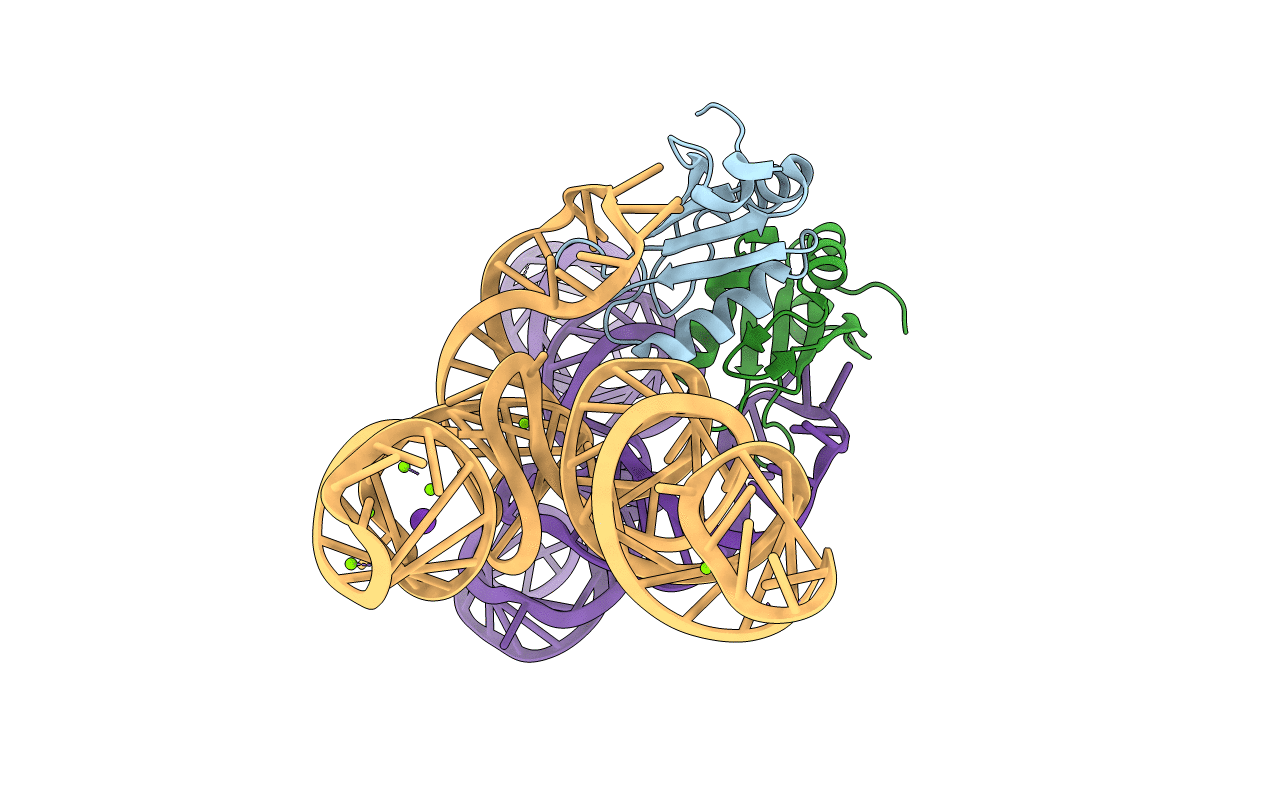
Aminoacyl-tRNA synthetase ribozyme
Biological Source:
Source Organism:
Homo sapiens (Taxon ID: 9606)
Host Organism:
Method Details:
Experimental Method:
Resolution:
2.80 Å
R-Value Free:
0.28
R-Value Work:
0.22
R-Value Observed:
0.22
Space Group:
C 1 2 1
Macromolecular Entities
Structures with similar UniProt ID
Protein Blast
Polymer Type:polypeptide(L)
Molecule:U1 small nuclear ribonucleoprotein A
Gene (Uniprot):SNRPA
Mutagens:Y31H, Q36R
Chain IDs:C (auth: A), D (auth: B)
Chain Length:98
Number of Molecules:2
Biological Source:Homo sapiens
Polymer Type:polyribonucleotide
Molecule:RNA (92-MER)
Chain IDs:A (auth: C)
Chain Length:92
Number of Molecules:1
Biological Source:
Polymer Type:polyribonucleotide
Molecule:RNA (92-MER)
Chain IDs:B (auth: D)
Chain Length:92
Number of Molecules:1
Biological Source:
Modified Residue
Compound ID Chain ID Parent Comp ID Details 2D Image
GTP A G GUANOSINE-5'-TRIPHOSPHATE
MSE C MET SELENOMETHIONINE
Primary Citation
Structural basis of specific tRNA aminoacylation by a small in vitro selected ribozyme.
Nature 454 358 361 (2008)
PMID: 18548004 DOI: 10.1038/nature07033

Abstact

In modern organisms, protein enzymes are solely responsible for the aminoacylation of transfer RNA. However, the evolution of protein synthesis in the RNA world required RNAs capable of catalysing this reaction. Ribozymes that aminoacylate RNA by using activated amino acids have been discovered through selection in vitro. Flexizyme is a 45-nucleotide ribozyme capable of charging tRNA in trans with various activated l-phenylalanine derivatives. In addition to a more than 10(5) rate enhancement and more than 10(4)-fold discrimination against some non-cognate amino acids, this ribozyme achieves good regioselectivity: of all the hydroxyl groups of a tRNA, it exclusively aminoacylates the terminal 3'-OH. Here we report the 2.8-A resolution structure of flexizyme fused to a substrate RNA. Together with randomization of ribozyme core residues and reselection, this structure shows that very few nucleotides are needed for the aminoacylation of specific tRNAs. Although it primarily recognizes tRNA through base-pairing with the CCA terminus of the tRNA molecule, flexizyme makes numerous local interactions to position the acceptor end of tRNA precisely. A comparison of two crystallographically independent flexizyme conformations, only one of which appears capable of binding activated phenylalanine, suggests that this ribozyme may achieve enhanced specificity by coupling active-site folding to tRNA docking. Such a mechanism would be reminiscent of the mutually induced fit of tRNA and protein employed by some aminoacyl-tRNA synthetases to increase specificity.

Legend

Protein

Chemical

Disease

Primary Citation of related structures
Feedback Form
Name
Email
Institute
Feedback