3CBG image
Deposition Date 2008-02-22
Release Date 2008-06-10
Last Version Date 2023-11-01
Entry Detail
PDB ID:
3CBG
Keywords:
Title:
Functional and Structural Characterization of a Cationdependent O-Methyltransferase from the Cyanobacterium Synechocystis Sp. Strain PCC 6803
Biological Source:
Source Organism:
Host Organism:
Method Details:
Experimental Method:
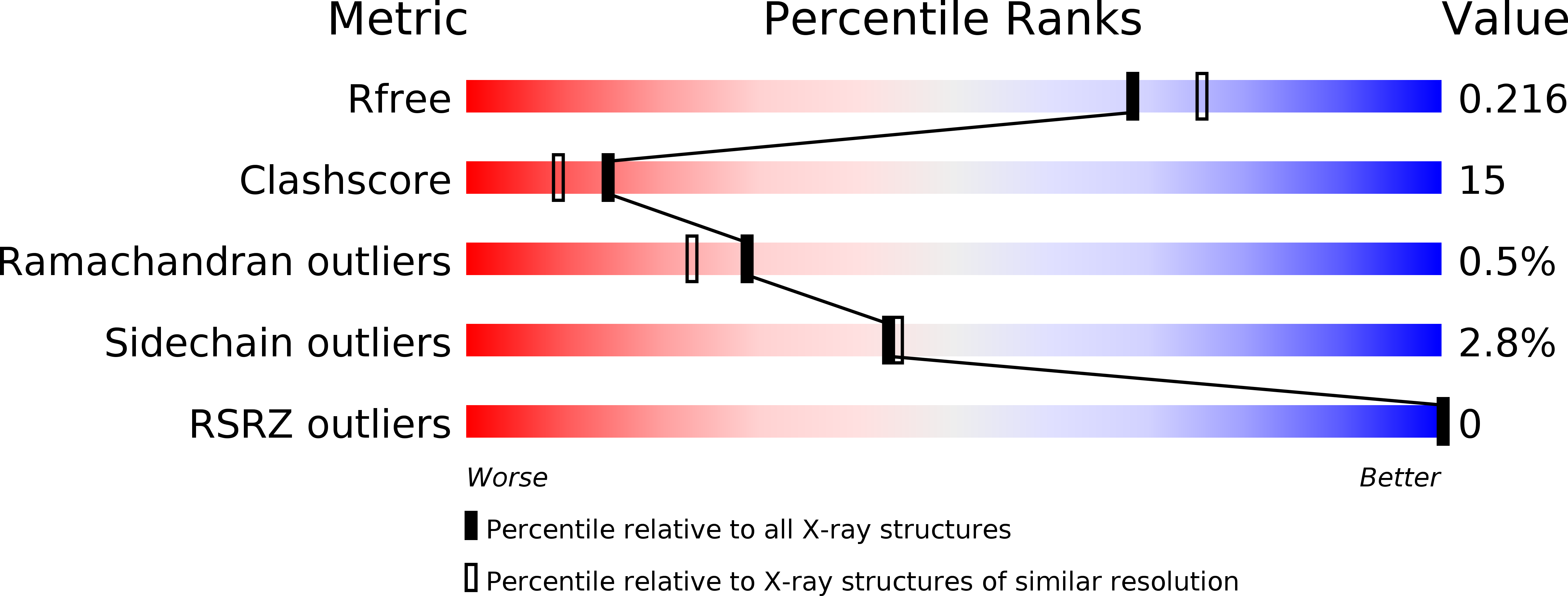
Resolution:
2.00 Å
R-Value Free:
0.21
R-Value Work:
0.15
R-Value Observed:
0.15
Space Group:
P 31 2 1
Macromolecular Entities
Structures with similar UniProt ID
Protein Blast
Polymer Type:polypeptide(L)
Molecule:O-methyltransferase
Gene (Uniprot):slr0095
Chain IDs:A
Chain Length:232
Number of Molecules:1
Biological Source:Synechocystis sp.
Primary Citation
Functional and Structural Characterization of a Cation-dependent O-Methyltransferase from the Cyanobacterium Synechocystis sp. Strain PCC 6803
J.Biol.Chem. 283 20888 20896 (2008)
PMID: 18502765 DOI: 10.1074/jbc.M801943200

Abstact

The coding sequence of the cyanobacterium Synechocystis sp. strain PCC 6803 slr0095 gene was cloned and functionally expressed in Escherichia coli. The corresponding enzyme was classified as a cation- and S-adenosyl-l-methionine-dependent O-methyltransferase (SynOMT), consistent with considerable amino acid sequence identities to eukaryotic O-methyltransferases (OMTs). The substrate specificity of SynOMT was similar with those of plant and mammalian CCoAOMT-like proteins accepting a variety of hydroxycinnamic acids and flavonoids as substrates. In contrast to the known mammalian and plant enzymes, which exclusively methylate the meta-hydroxyl position of aromatic di- and trihydroxy systems, Syn-OMT also methylates the para-position of hydroxycinnamic acids like 5-hydroxyferulic and 3,4,5-trihydroxycinnamic acid, resulting in the formation of novel compounds. The x-ray structure of SynOMT indicates that the active site allows for two alternative orientations of the hydroxylated substrates in comparison to the active sites of animal and plant enzymes, consistent with the observed preferred para-methylation and position promiscuity. Lys(3) close to the N terminus of the recombinant protein appears to play a key role in the activity of the enzyme. The possible implications of these results with respect to modifications of precursors of polymers like lignin are discussed.

Legend

Protein

Chemical

Disease

Primary Citation of related structures
Feedback Form
Name
Email
Institute
Feedback