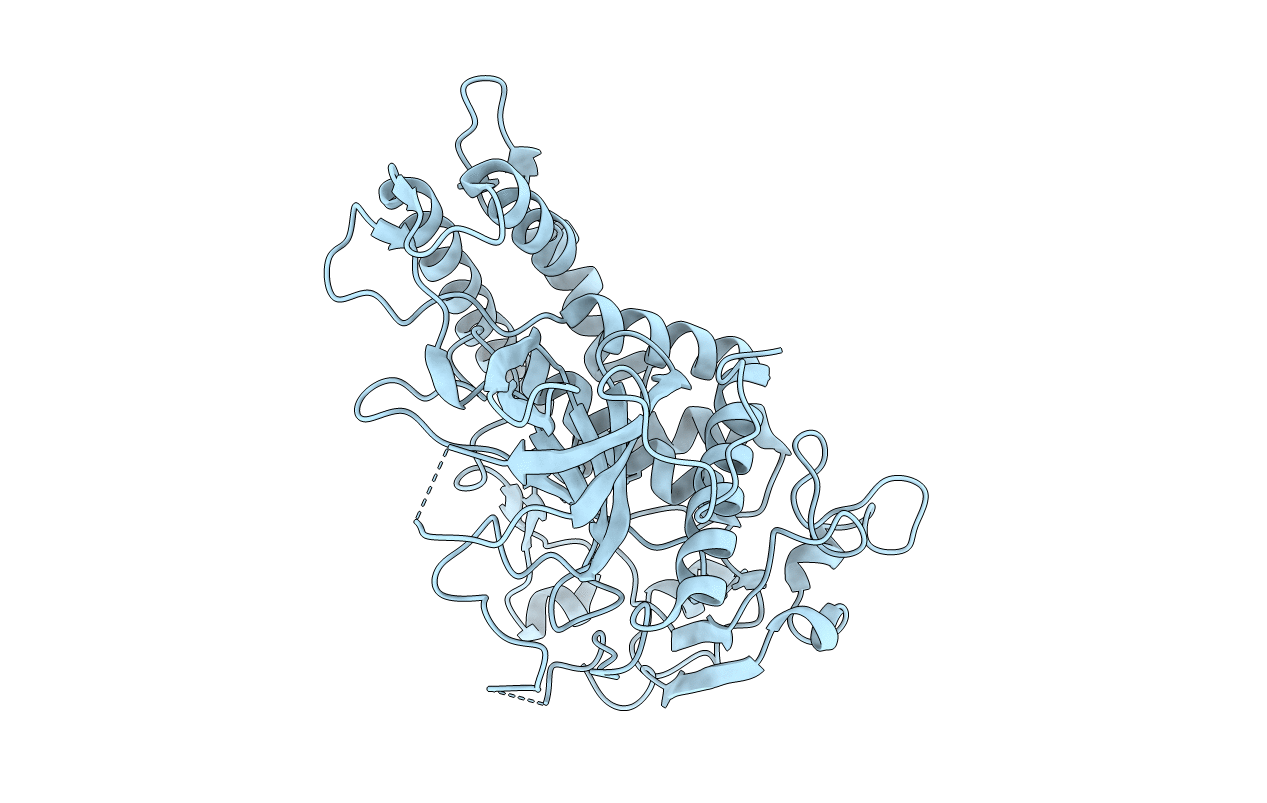
3BON image
Deposition Date 2007-12-17
Release Date 2008-05-20
Last Version Date 2023-08-30
Entry Detail
PDB ID:
3BON
Keywords:
Title:
Structure of the C. botulinum neurotoxin serotype A with Zn2+ cofactor bound
Biological Source:
Source Organism:
Host Organism:
Method Details:
Experimental Method:
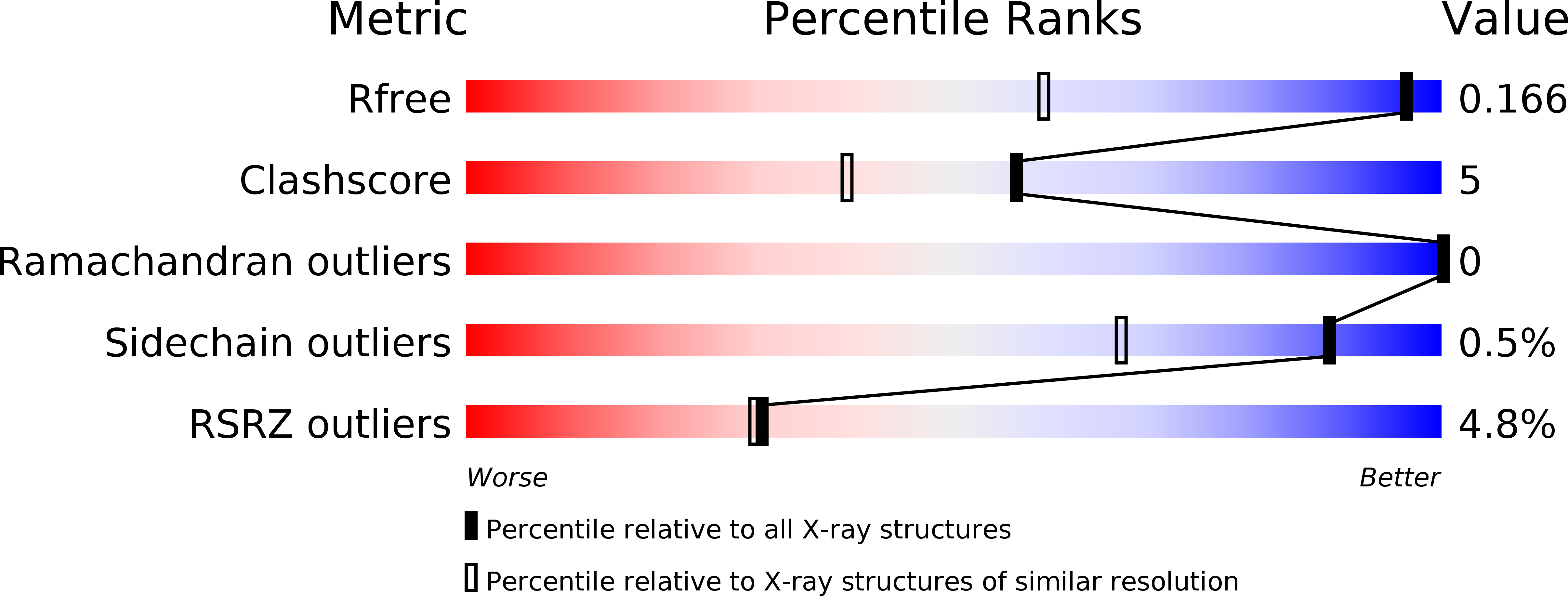
Resolution:
1.20 Å
R-Value Free:
0.16
R-Value Work:
0.13
R-Value Observed:
0.13
Space Group:
P 1 21 1
Macromolecular Entities
Structures with similar UniProt ID
Protein Blast
Polymer Type:polypeptide(L)
Molecule:Neurotoxin A
Chain IDs:A
Chain Length:425
Number of Molecules:1
Biological Source:Clostridium botulinum
Ligand Molecules
Primary Citation
Catalytic features of the botulinum neurotoxin A light chain revealed by high resolution structure of an inhibitory peptide complex.
Biochemistry 47 5736 5745 (2008)
PMID: 18457419 DOI: 10.1021/bi8001067

Abstact

The Clostridium botulinum neurotoxin serotype A light chain (BoNT/A-LC) is a Zn(II)-dependent metalloprotease that blocks the release of acetylcholine at the neuromuscular junction by cleaving SNAP-25, one of the SNARE proteins required for exocytosis. Because of the potential for use of the toxin in bioterrorism and the increasingly widespread application of the toxin in the medical field, there is significant interest in the development of small-molecule inhibitors of the metalloprotease. Efforts to design such inhibitors have not benefited from knowledge of how peptides bind to the active site since the enzyme-peptide structures available previously either were not occupied in the vicinity of the catalytic Zn(II) ion or did not represent the product of SNAP-25 substrate cleavage. Herein we report the 1.4 A-resolution X-ray crystal structure of a complex between the BoNT/A-LC and the inhibitory peptide N-Ac-CRATKML, the first structure of the light chain with an inhibitory peptide bound at the catalytic Zn(II) ion. The peptide is bound with the Cys S gamma atom coordinating the metal ion. Surprisingly, the cysteine sulfur is oxidized to the sulfenic acid form. Given the unstable nature of this species in solution, is it likely that oxidation occurs on the enzyme. In addition to the peptide-bound structure, we report two structures of the unliganded light chain with and without the Zn(II) cofactor bound at 1.25 and 1.20 A resolution, respectively. The two structures are nearly identical, confirming that the Zn(II) ion plays a purely catalytic role. Additionally, the structure of the Zn(II)-bound uncomplexed enzyme allows identification of the catalytic water molecule and a second water molecule that occupies the same position as the peptidic oxygen in the tetrahedral intermediate. This observation suggests that the enzyme active site is prearranged to stabilize the tetrahedral intermediate of the protease reaction.

Legend

Protein

Chemical

Disease

Primary Citation of related structures
Feedback Form
Name
Email
Institute
Feedback