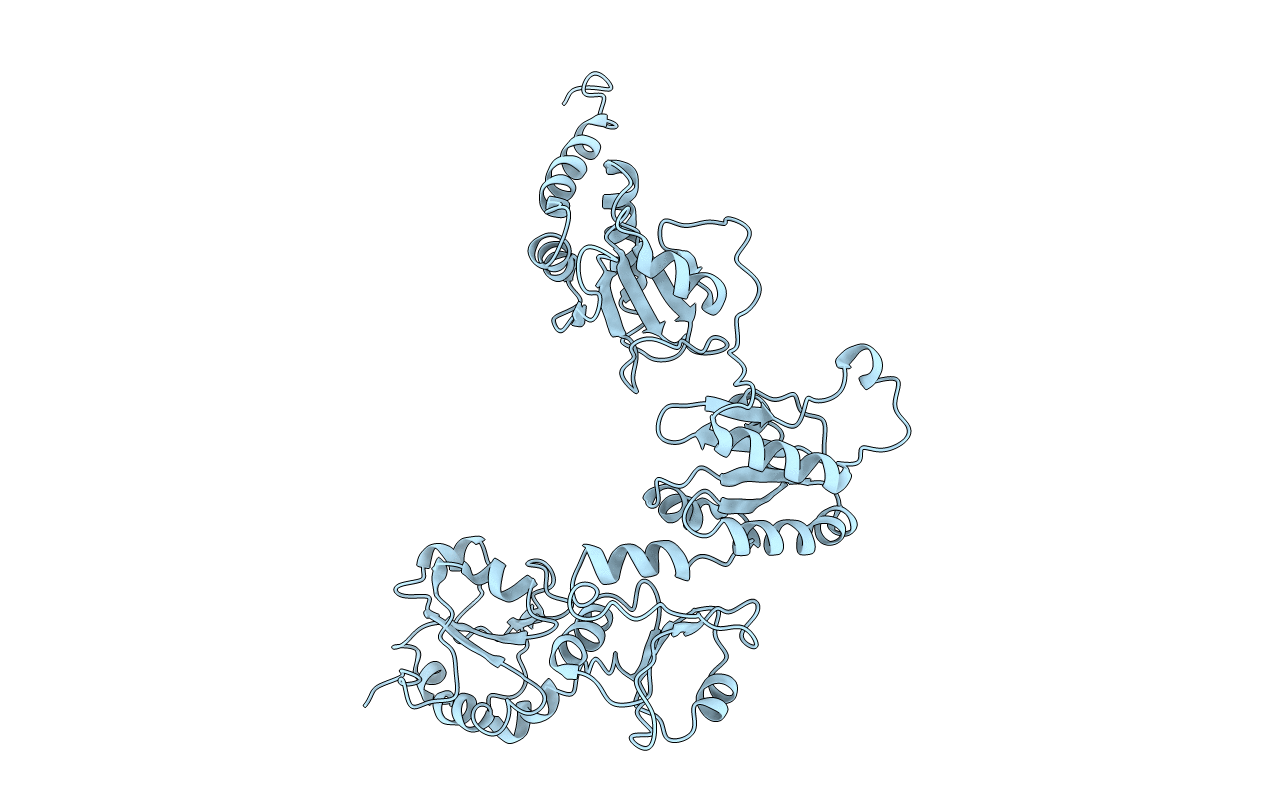
3BOA image
Deposition Date 2007-12-17
Release Date 2008-09-23
Last Version Date 2024-10-30
Entry Detail
PDB ID:
3BOA
Keywords:
Title:
Crystal structure of yeast protein disulfide isomerase.
Biological Source:
Source Organism:
Host Organism:
Method Details:
Experimental Method:
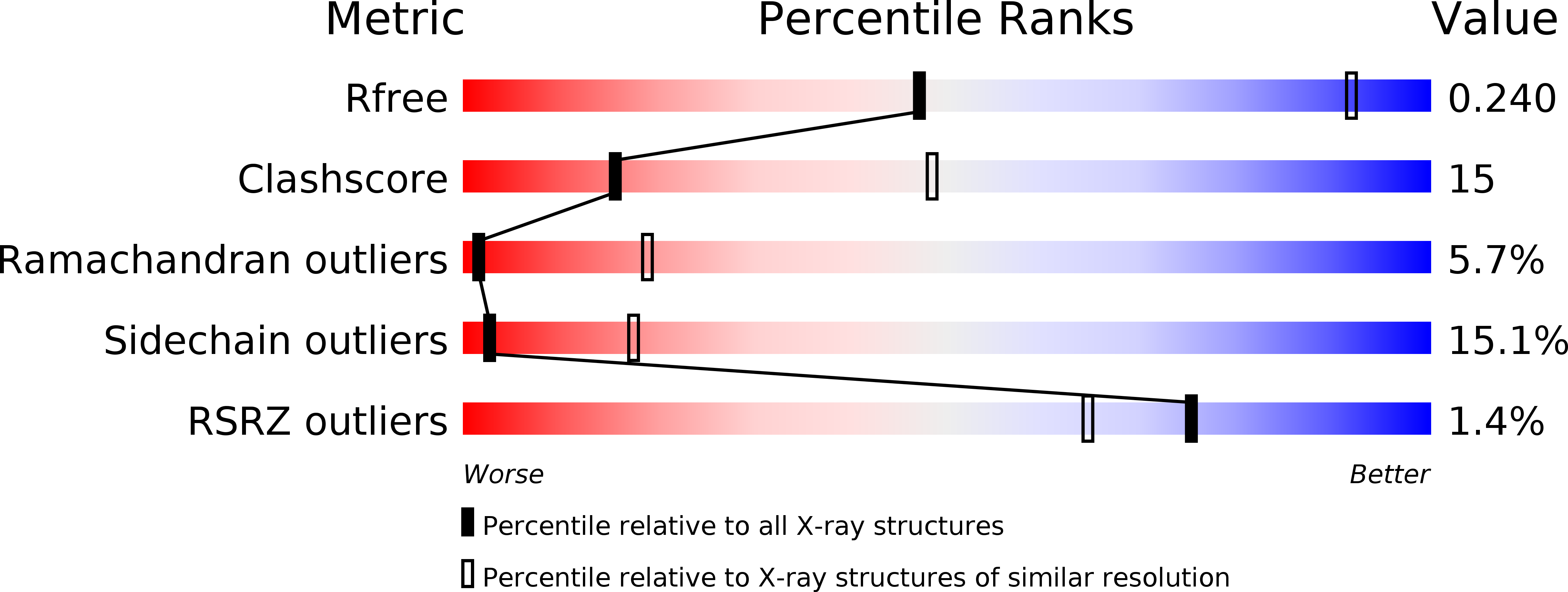
Resolution:
3.70 Å
R-Value Free:
0.33
R-Value Work:
0.23
R-Value Observed:
0.24
Space Group:
C 2 2 21
Macromolecular Entities
Structures with similar UniProt ID
Protein Blast
Polymer Type:polypeptide(L)
Molecule:Protein disulfide-isomerase
Gene (Uniprot):PDI1
Chain IDs:A
Chain Length:504
Number of Molecules:1
Biological Source:Saccharomyces cerevisiae
Ligand Molecules
Primary Citation
The Catalytic Activity of Protein-disulfide Isomerase Requires a Conformationally Flexible Molecule.
J.Biol.Chem. 283 33630 33640 (2008)
PMID: 18815132 DOI: 10.1074/jbc.M806026200

Abstact

Protein-disulfide isomerase (PDI) catalyzes the formation of the correct pattern of disulfide bonds in secretory proteins. A low resolution crystal structure of yeast PDI described here reveals large scale conformational changes compared with the initially reported structure, indicating that PDI is a highly flexible molecule with its catalytic domains, a and a', representing two mobile arms connected to a more rigid core composed of the b and b' domains. Limited proteolysis revealed that the linker between the a domain and the core is more susceptible to degradation than that connecting the a' domain to the core. By restricting the two arms with inter-domain disulfide bonds, the molecular flexibility of PDI, especially that of its a domain, was demonstrated to be essential for the enzymatic activity in vitro and in vivo. The crystal structure also featured a PDI dimer, and a propensity to dimerize in solution and in the ER was confirmed by cross-linking experiments and the split green fluorescent protein system. Although sedimentation studies suggested that the self-association of PDI is weak, we hypothesize that PDI exists as an interconvertible mixture of monomers and dimers in the endoplasmic reticulum due to its high abundance in this compartment.

Legend

Protein

Chemical

Disease

Primary Citation of related structures
Feedback Form
Name
Email
Institute
Feedback