3BJU image
Deposition Date 2007-12-04
Release Date 2008-02-05
Last Version Date 2023-08-30
Entry Detail
PDB ID:
3BJU
Keywords:
Title:
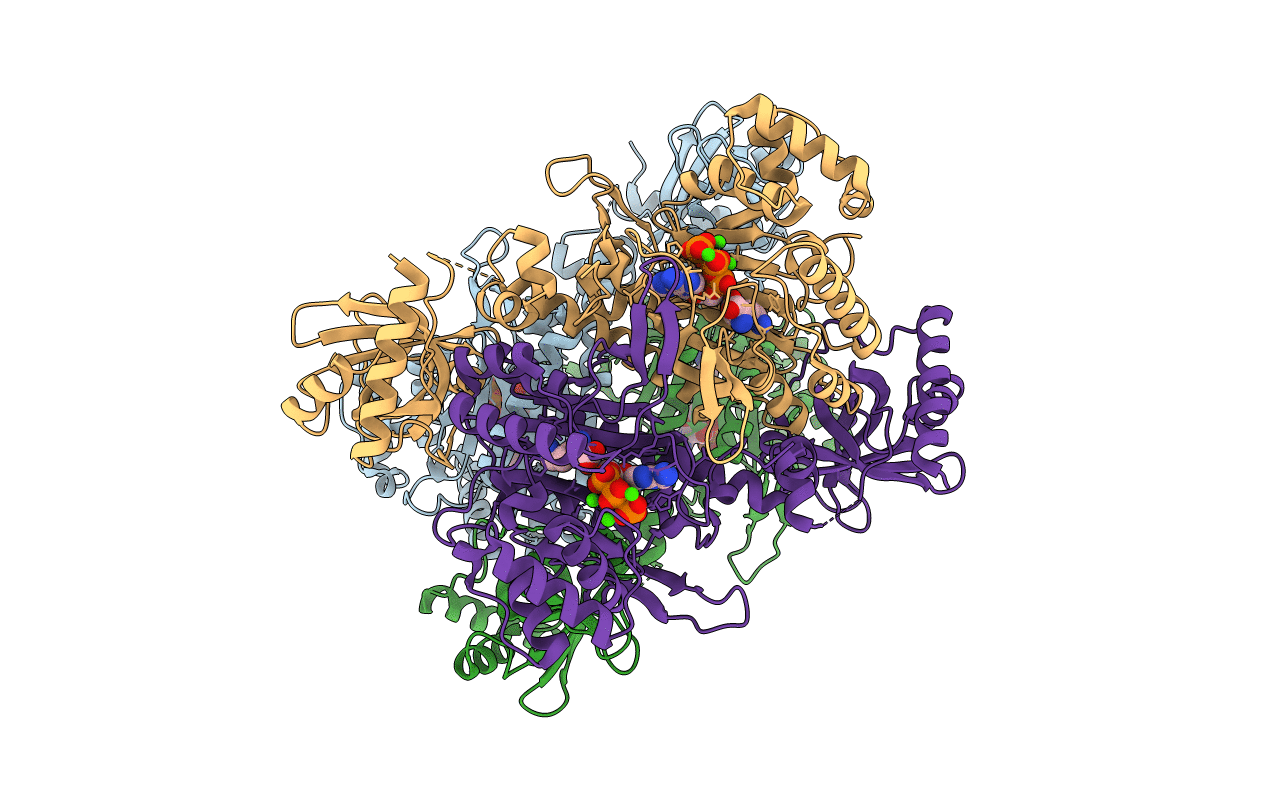
Crystal Structure of tetrameric form of human lysyl-tRNA synthetase
Biological Source:
Source Organism(s):
Homo sapiens (Taxon ID: 9606)
Expression System(s):
Method Details:
Experimental Method:
Resolution:
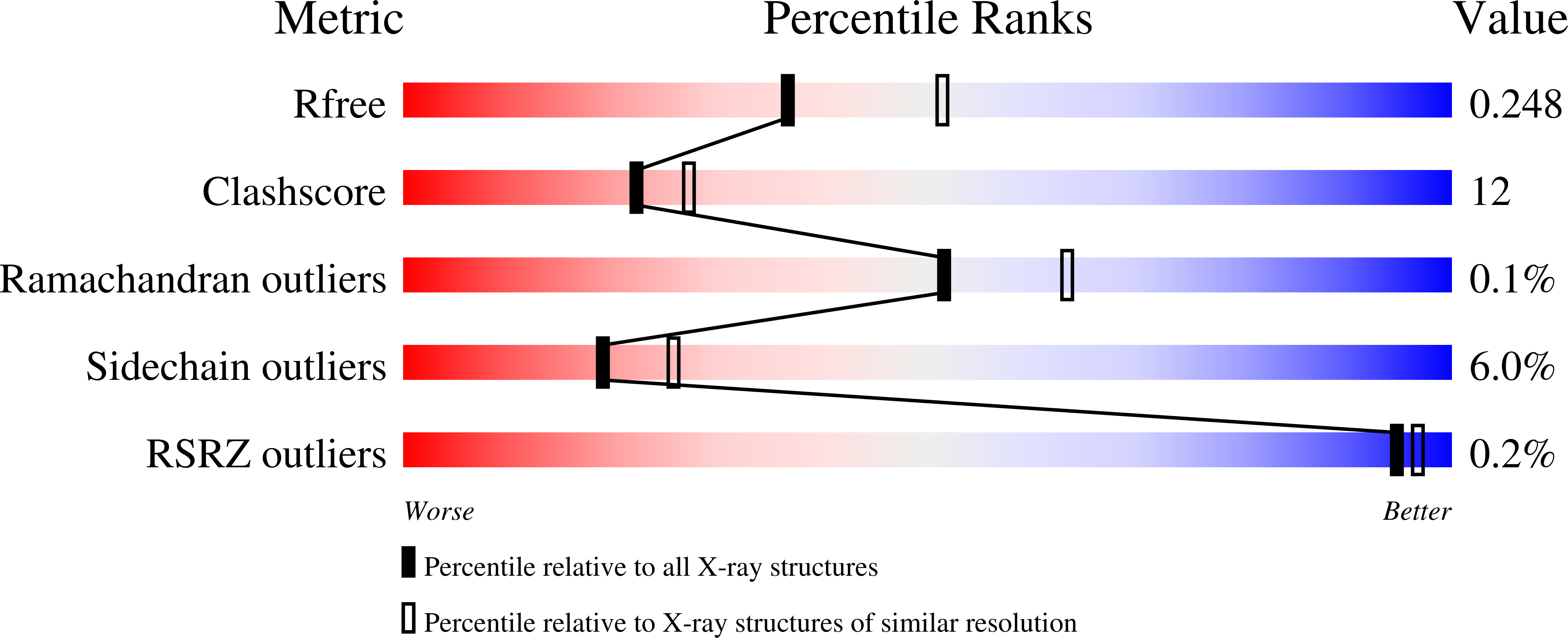
2.31 Å
R-Value Free:
0.25
R-Value Work:
0.19
R-Value Observed:
0.19
Space Group:
P 32
Macromolecular Entities
Structures with similar UniProt ID
Protein Blast
Polymer Type:polypeptide(L)
Molecule:Lysyl-tRNA synthetase
Gene (Uniprot):KARS1
Mutagens:V582L
Chain IDs:A, B, C, D
Chain Length:521
Number of Molecules:4
Biological Source:Homo sapiens
Primary Citation
Crystal structure of tetrameric form of human lysyl-tRNA synthetase: Implications for multisynthetase complex formation
Proc.Natl.Acad.Sci.Usa 105 2331 2336 (2008)
PMID: 18272479 DOI: 10.1073/pnas.0712072105

Abstact

In mammals, many aminoacyl-tRNA synthetases are bound together in a multisynthetase complex (MSC) as a reservoir of procytokines and regulation molecules for functions beyond aminoacylation. The alpha(2) homodimeric lysyl-tRNA synthetase (LysRS) is tightly bound in the MSC and, under specific conditions, is secreted to trigger a proinflammatory response. Results by others suggest that alpha(2) LysRS is tightly bound into the core of the MSC with homodimeric beta(2) p38, a scaffolding protein that itself is multifunctional. Not understood is how the two dimeric proteins combine to make a presumptive alpha(2)beta(2) heterotetramer and, in particular, the location of the surfaces on LysRS that would accommodate the p38 interactions. Here we present a 2.3-A crystal structure of a tetrameric form of human LysRS. The relatively loose (as seen in solution) tetramer interface is assembled from two eukaryote-specific sequences, one in the catalytic- and another in the anticodon-binding domain. This same interface is predicted to provide unique determinants for interaction with p38. The analyses suggest how the core of the MSC is assembled and, more generally, that interactions and functions of synthetases can be built and regulated through dynamic protein-protein interfaces. These interfaces are created from small adaptations to what is otherwise a highly conserved (through evolution) polypeptide sequence.

Legend

Protein

Chemical

Disease

Primary Citation of related structures
Feedback Form
Name
Email
Institute
Feedback