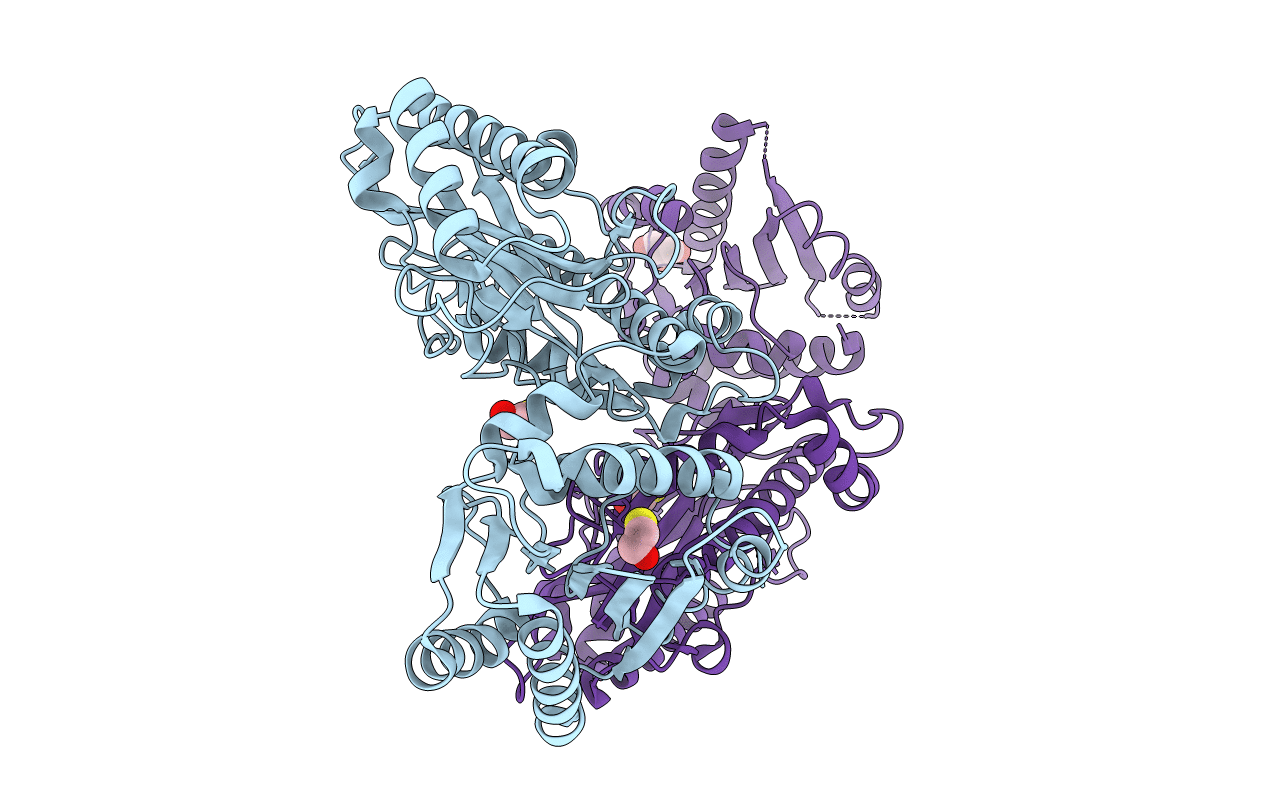
3BIT image
Deposition Date 2007-11-30
Release Date 2007-12-18
Last Version Date 2024-02-21
Entry Detail
PDB ID:
3BIT
Keywords:
Title:
Crystal structure of yeast Spt16 N-terminal Domain
Biological Source:
Source Organism:
Host Organism:
Method Details:
Experimental Method:
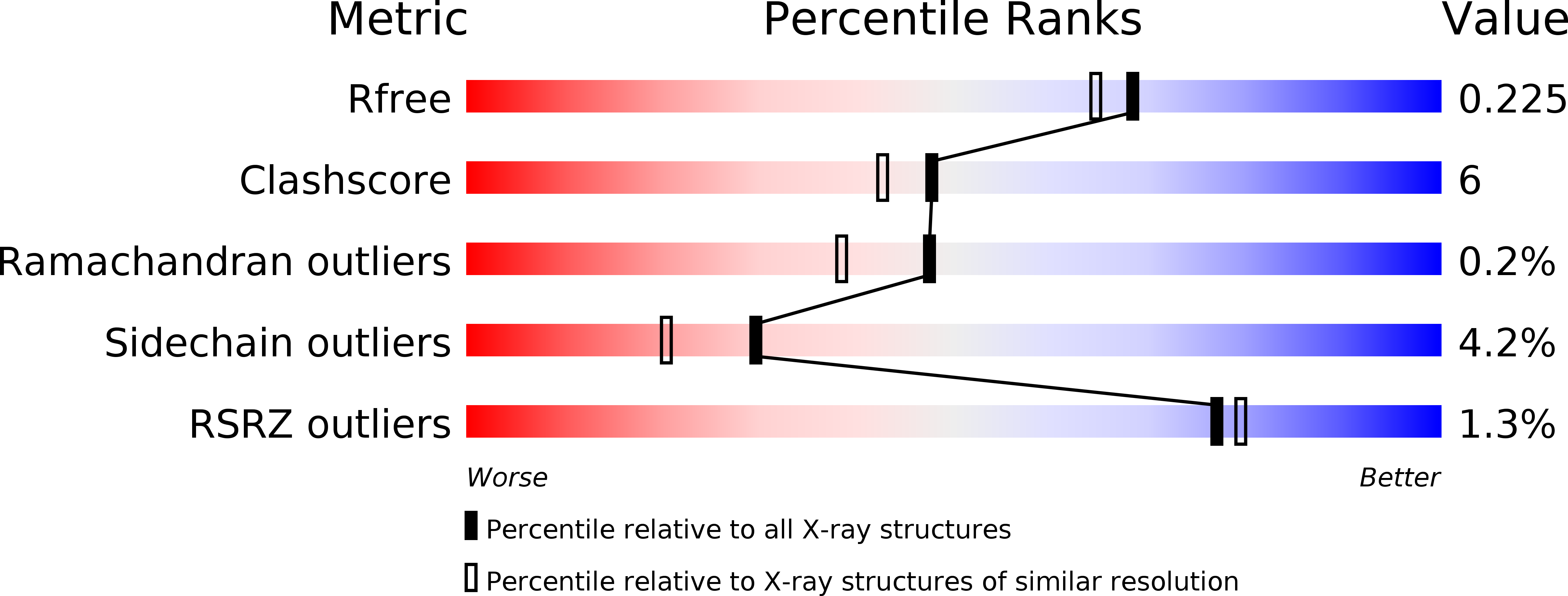
Resolution:
1.90 Å
R-Value Free:
0.22
R-Value Work:
0.16
R-Value Observed:
0.17
Space Group:
P 1 21 1
Macromolecular Entities
Structures with similar UniProt ID
Protein Blast
Polymer Type:polypeptide(L)
Molecule:FACT complex subunit SPT16
Gene (Uniprot):SPT16
Chain IDs:A, B
Chain Length:453
Number of Molecules:2
Biological Source:Saccharomyces cerevisiae
Modified Residue
Compound ID Chain ID Parent Comp ID Details 2D Image
MSE A MET SELENOMETHIONINE
Primary Citation
Structural and functional analysis of the Spt16p N-terminal domain reveals overlapping roles of yFACT subunits.
J.Biol.Chem. 283 5058 5068 (2008)
PMID: 18089575 DOI: 10.1074/jbc.M708682200

Abstact

yFACT (heterodimers of Saccharomyces cerevisiae Spt16-Pob3 combined with Nhp6) binds to and alters the properties of nucleosomes. The essential function of yFACT is not disrupted by deletion of the N-terminal domain (NTD) of Spt16 or by mutation of the middle domain of Pob3, but either alteration makes yeast cells sensitive to DNA replication stress. We have determined the structure of the Spt16 NTD and find evidence for a conserved potential peptide-binding site. Pob3-M also contains a putative binding site, and we show that these two sites perform an overlapping essential function. We find that yFACT can bind the N-terminal tails of some histones and that this interaction is important for yFACT-nucleosome binding. However, neither the Spt16 NTD nor a key residue in the putative Pob3-M-binding site was required for interactions with histone N termini or for yFACT-mediated nucleosome reorganization in vitro. Instead, both potential binding sites interact functionally with the C-terminal docking domain of the histone H2A. yFACT therefore appears to make multiple contacts with different sites within nucleosomes, and these interactions are partially redundant with one another. The docking domain of H2A is identified as an important participant in maintaining stability during yFACT-mediated nucleosome reorganization, suggesting new models for the mechanism of this activity.

Legend

Protein

Chemical

Disease

Primary Citation of related structures
Feedback Form
Name
Email
Institute
Feedback