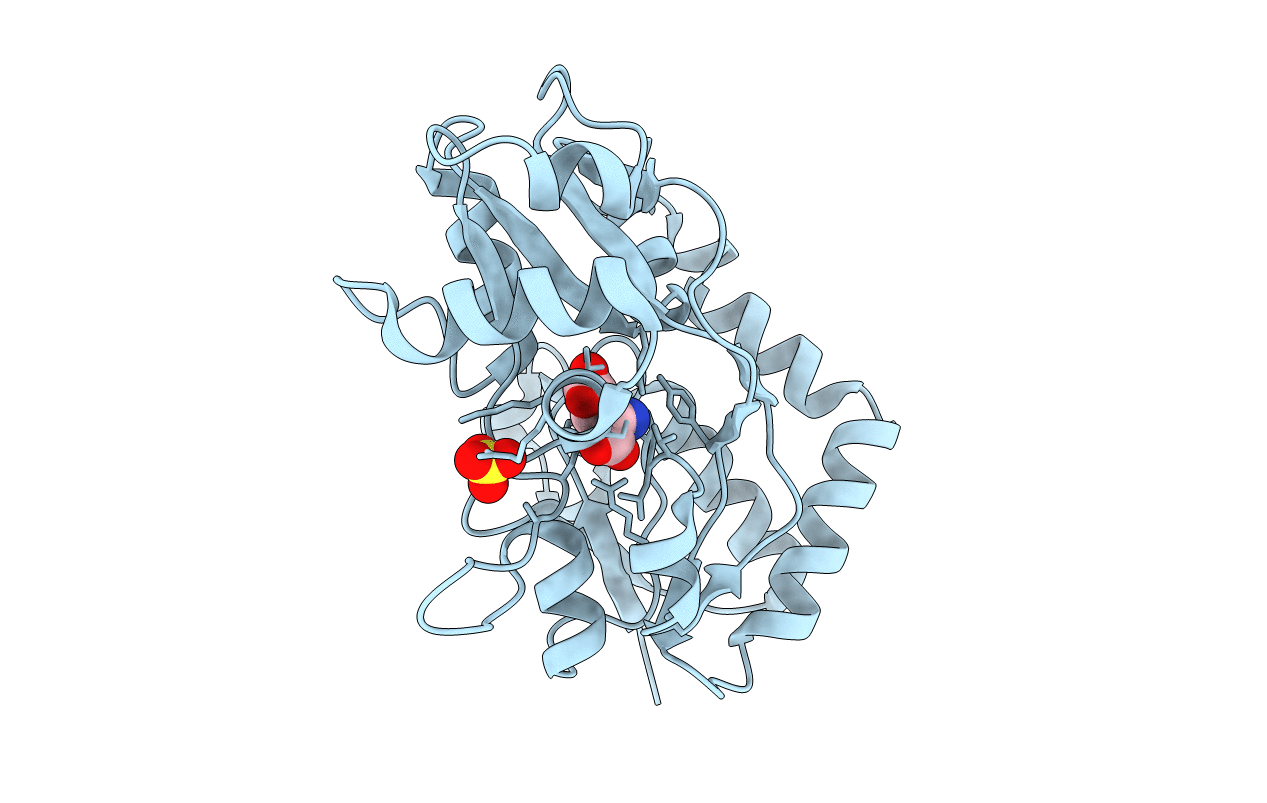
3B6Q image
Deposition Date 2007-10-29
Release Date 2008-02-05
Last Version Date 2024-11-20
Entry Detail
PDB ID:
3B6Q
Title:
Crystal Structure of the GLUR2 Ligand Binding Core (S1S2J) Mutant T686A in Complex with Glutamate at 2.0 Resolution
Biological Source:
Source Organism:
Host Organism:
Method Details:
Experimental Method:
Resolution:
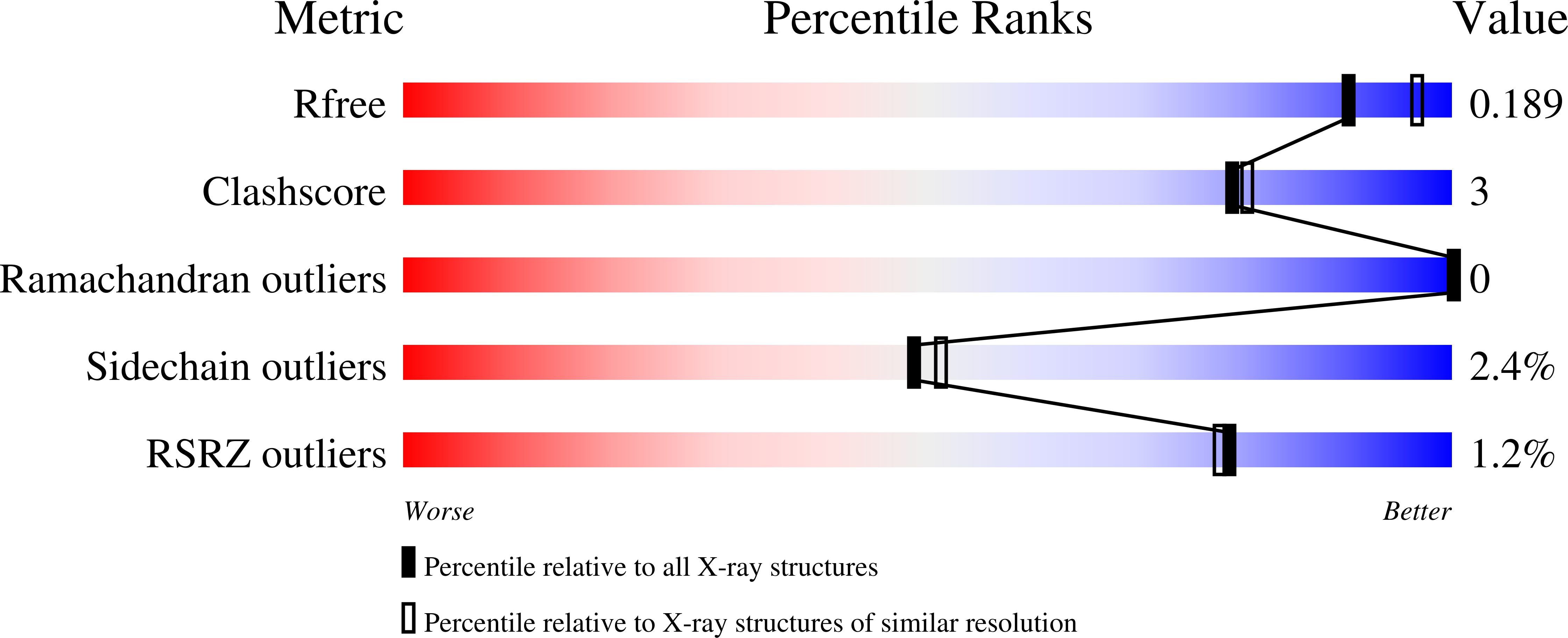
2.00 Å
R-Value Free:
0.22
R-Value Work:
0.18
R-Value Observed:
0.18
Space Group:
C 1 2 1
Macromolecular Entities
Structures with similar UniProt ID
Protein Blast
Polymer Type:polypeptide(L)
Molecule:Glutamate receptor 2
Gene (Uniprot):Gria2
Mutagens:T686A
Chain IDs:A
Chain Length:263
Number of Molecules:1
Biological Source:Rattus norvegicus
Primary Citation
Structural and single-channel results indicate that the rates of ligand binding domain closing and opening directly impact AMPA receptor gating.
J.Neurosci. 28 932 943 (2008)
PMID: 18216201 DOI: 10.1523/JNEUROSCI.3309-07.2008

Abstact

At most excitatory central synapses, glutamate is released from presynaptic terminals and binds to postsynaptic AMPA receptors, initiating a series of conformational changes that result in ion channel opening. Efficient transmission at these synapses requires that glutamate binding to AMPA receptors results in rapid and near-synchronous opening of postsynaptic receptor channels. In addition, if the information encoded in the frequency of action potential discharge is to be transmitted faithfully, glutamate must dissociate from the receptor quickly, enabling the synapse to discriminate presynaptic action potentials that are spaced closely in time. The current view is that the efficacy of agonists is directly related to the extent to which ligand binding results in closure of the binding domain. For glutamate to dissociate from the receptor, however, the binding domain must open. Previously, we showed that mutations in glutamate receptor subunit 2 that should destabilize the closed conformation not only sped deactivation but also altered the relative efficacy of glutamate and quisqualate. Here we present x-ray crystallographic and single-channel data that support the conclusions that binding domain closing necessarily precedes channel opening and that the kinetics of conformational changes at the level of the binding domain importantly influence ion channel gating. Our findings suggest that the stability of the closed-cleft conformation has been tuned during evolution so that glutamate dissociates from the receptor as rapidly as possible but remains an efficacious agonist.

Legend

Protein

Chemical

Disease

Primary Citation of related structures
Feedback Form
Name
Email
Institute
Feedback