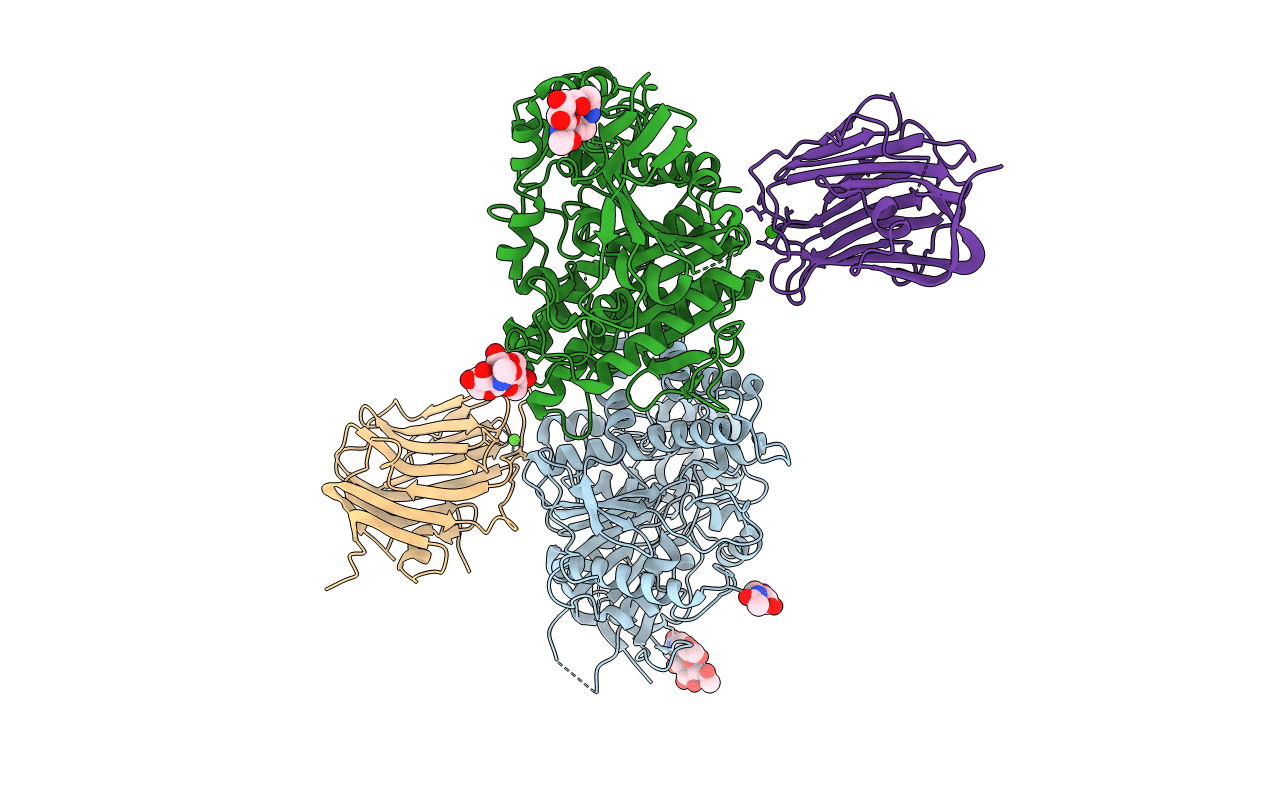
3B3Q image
Deposition Date 2007-10-22
Release Date 2008-01-15
Last Version Date 2024-10-09
Entry Detail
PDB ID:
3B3Q
Keywords:
Title:
Crystal structure of a synaptic adhesion complex
Biological Source:
Source Organism:
Mus musculus (Taxon ID: 10090)
Homo sapiens (Taxon ID: 9606)
Host Organism:
Method Details:
Experimental Method:
Resolution:
2.40 Å
R-Value Free:
0.26
R-Value Work:
0.24
R-Value Observed:
0.24
Space Group:
P 21 21 21
Macromolecular Entities
Structures with similar UniProt ID
Protein Blast
Polymer Type:polypeptide(L)
Molecule:Nlgn1 protein
Mutagens:N343Q
Chain IDs:A, B
Chain Length:577
Number of Molecules:2
Biological Source:Mus musculus
Structures with similar UniProt ID
Protein Blast
Polymer Type:polypeptide(L)
Molecule:NRXN1 protein
Chain IDs:C (auth: E), D (auth: F)
Chain Length:197
Number of Molecules:2
Biological Source:Homo sapiens
Modified Residue
Compound ID Chain ID Parent Comp ID Details 2D Image
ASN A ASN GLYCOSYLATION SITE
Primary Citation
Structural basis for synaptic adhesion mediated by neuroligin-neurexin interactions.
Nat.Struct.Mol.Biol. 15 50 56 (2008)
PMID: 18084303 DOI: 10.1038/nsmb1350

Abstact

The heterophilic synaptic adhesion molecules neuroligins and neurexins are essential for establishing and maintaining neuronal circuits by modulating the formation and maturation of synapses. The neuroligin-neurexin adhesion is Ca2+-dependent and regulated by alternative splicing. We report a structure of the complex at a resolution of 2.4 A between the mouse neuroligin-1 (NL1) cholinesterase-like domain and the mouse neurexin-1beta (NX1beta) LNS (laminin, neurexin and sex hormone-binding globulin-like) domain. The structure revealed a delicate neuroligin-neurexin assembly mediated by a hydrophilic, Ca2+-mediated and solvent-supplemented interface, rendering it capable of being modulated by alternative splicing and other regulatory factors. Thermodynamic data supported a mechanism wherein splicing site B of NL1 acts by modulating a salt bridge at the edge of the NL1-NX1beta interface. Mapping neuroligin mutations implicated in autism indicated that most such mutations are structurally destabilizing, supporting deficient neuroligin biosynthesis and processing as a common cause for this brain disorder.

Legend

Protein

Chemical

Disease

Primary Citation of related structures
Feedback Form
Name
Email
Institute
Feedback